Cloud API Management: How to Secure APIs Across Multiple Clouds
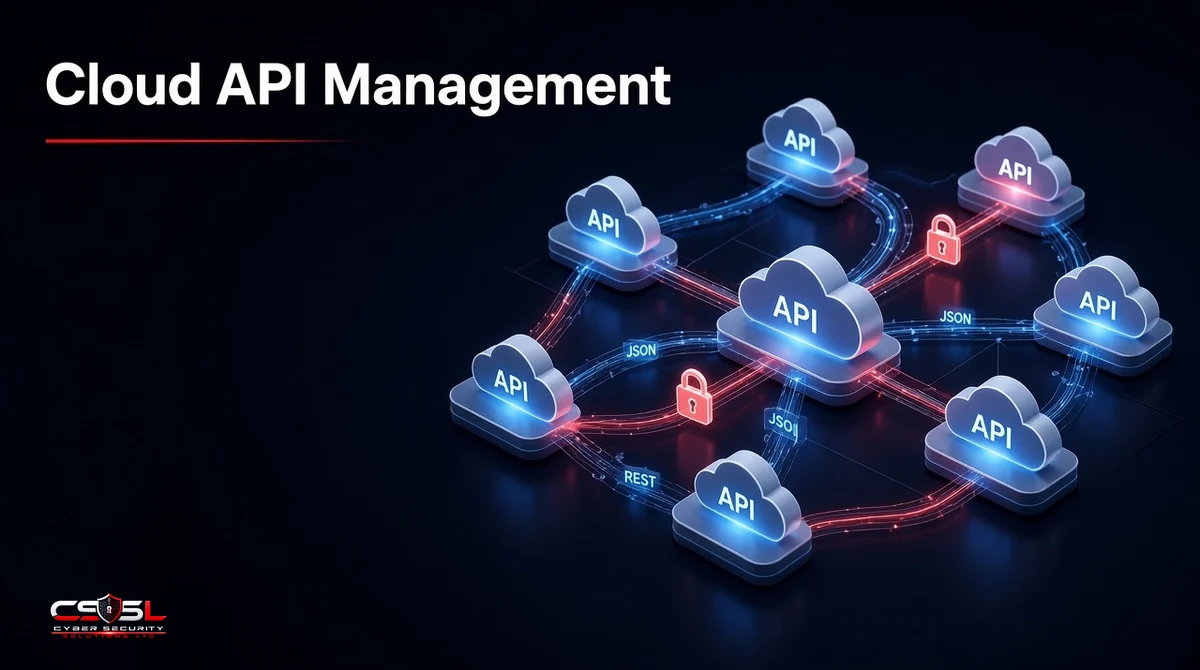
Your checkout API runs on AWS, your identity service sits in Azure and a partner integration lives behind Google Cloud. Each cloud has its own gateway defaults, logging and identity quirks. Cloud API management is how you bring those APIs under one set of security policies instead of hoping every team configures each cloud the same way.
What Is Cloud API Management?
Cloud API management secures and operates APIs across public clouds by routing calls through managed gateways that enforce authentication, rate limits and threat protection, while a central control plane handles policies, analytics and developer access. It covers the full lifecycle: publish, protect, monitor and retire APIs.
API Gateway vs API Management Platform
An API gateway is the data-plane component that receives each request and applies policies. An API management platform adds the management plane and usually a developer portal: product packaging, keys, analytics, versioning and self-service documentation. Most cloud offerings bundle both.
Management Plane, Data Plane and Developer Portal
The management plane is where admins define policies and products. The data plane is the gateway that enforces them at runtime. The developer portal is where internal or external consumers discover APIs, get credentials and read docs. Separating these planes lets you scale gateways without changing how you govern them.
Why API Security Gets Harder Across Multiple Clouds
Inconsistent Policies Between AWS, Azure and Google Cloud
Each provider names controls differently and ships different defaults for authentication, quotas and logging. Without a shared policy model, the same API can be strict in one cloud and open in another.
Shadow, Zombie and Undocumented APIs
Teams stand up endpoints for demos, old versions linger after a rewrite and undocumented APIs never appear in the inventory. Attackers look for exactly those gaps.
Vendor Lock-In and Fragmented Logging
Native gateways are excellent inside one cloud but make multi-cloud visibility harder. Logs land in different formats and consoles, which slows incident response.
How Gateways and Policies Secure APIs
Authentication and Authorization (OAuth 2.0, OIDC, mTLS)
Gateways validate tokens, enforce OAuth 2.0 and OpenID Connect flows, check scopes and roles, and can require mutual TLS between services. Authentication at the edge does not remove the need for object-level checks in the API itself.
Rate Limiting, Quotas and Bot Protection
Limits stop abuse, credential stuffing and noisy neighbors. Quotas protect paid or sensitive flows. Bot controls reduce automated scraping and fake account creation.
Schema Validation and Threat Protection
Rejecting requests that break the OpenAPI schema blocks many injection and mass-assignment attempts. Threat protection rules catch common payloads that a WAF alone may miss on API paths.
Encryption in Transit and Secrets Handling
TLS for every call is baseline. API keys, client secrets and certificates belong in a secrets manager, not in code or gateway config files checked into git.
Logging, Monitoring and Anomaly Detection
Central logs should capture caller identity, route, status and latency. Anomaly detection flags sudden spikes, unusual geographies or access to rare endpoints.
Multi-Cloud API Management Deployment Models
| Model | How it works | Trade-off |
|---|---|---|
| Single vendor gateway per cloud | Use Amazon API Gateway, Azure API Management or Apigee in each cloud | Strong cloud fit; policy drift risk |
| Cloud-agnostic gateway, central control | Kong, Tyk, Gravitee or similar with one control plane | Consistent policy; more ops ownership |
| Hybrid / federated | Mix native and third-party gateways under shared standards | Flexible; needs strong governance |
Single Vendor Gateway Per Cloud
Best when most APIs already live in one provider and you want native IAM and logging integration.
Cloud-Agnostic Gateway With a Central Control Plane
Best when the same policies must follow APIs across clouds and on-premises.
Hybrid and Federated Gateways
Common in large estates: native gateways for cloud-only services, a shared gateway for partner and multi-cloud traffic.
Mapping Controls to the OWASP API Security Top 10
The OWASP API Security Top 10:2023 lists the risks that matter most for APIs. Cloud API management helps with many of them, but not all:
| OWASP risk | What the gateway can do | What still belongs in the app |
|---|---|---|
| Broken object/property authorization | AuthN, coarse scopes | Per-object and per-field checks |
| Broken authentication | Token validation, mTLS, lockouts at edge | Secure token issuance |
| Unrestricted resource consumption | Rate limits, quotas | Expensive business-logic guards |
| Broken function-level authorization | Route and role maps | Admin vs user logic |
| Unrestricted sensitive business flows | Bot controls, step-up auth hooks | Abuse-resistant design |
| SSRF | Egress controls, allowlists | Safe URL handling |
| Security misconfiguration | Hardened policies, TLS, schema checks | Secure defaults in code |
| Improper inventory | Catalog, versioning, retirement | Discovery of shadow APIs |
| Unsafe consumption of APIs | Egress policies | Careful third-party trust |
API Management Best Practices
Build and Maintain a Complete API Inventory
Discover gateways, serverless endpoints and partner APIs. Retire zombie versions on a schedule.
Enforce Policy as Code Across Every Gateway
Store rate limits, auth and schema rules in version control and deploy them the same way everywhere.
Apply Zero Trust to API Traffic
Authenticate every call, grant least privilege and assume the network is hostile, including east-west service traffic.
Add Runtime API Security Beyond the Gateway
Gateways enforce entry policies. Runtime tools spot abuse patterns and data exposure that only appear in live traffic.
Popular Cloud API Management Platforms
Platforms below are listed for reference, not ranked. Confirm current names and features on each vendor’s site.
Amazon API Gateway, Azure API Management and Google Apigee
Native options that integrate deeply with each cloud’s identity, networking and monitoring.
Cloud-Agnostic Options: Kong, Tyk, MuleSoft and Gravitee
Useful when you need one policy model across several clouds or a mix of cloud and data center APIs.
US and UK Guidance and Compliance (NIST, CISA, NCSC, PCI DSS, GDPR)
NIST has published guidance on protecting APIs in cloud-native systems. CISA and the UK NCSC both stress inventory, strong authentication and monitoring for internet-facing services. PCI DSS applies when APIs handle card data; UK GDPR and related rules apply when APIs process personal data. Map gateway logs and access controls to those requirements in your control matrix.
Securing APIs Across Clouds: Next Steps
Cloud API management works when every API has an owner, a gateway policy and a retirement plan. This month:
- Inventory APIs in every cloud account you own.
- Put authentication and rate limits on anything internet-facing.
- Send gateway logs to one place your security team can search.
- Pick a deployment model and write policies as code.
For help designing multi-cloud API controls, contact Cyber Security Solutions Ltd through our contact page.
FAQs
An API gateway is the runtime proxy that enforces security and traffic rules on each call. API management is the broader platform that includes that gateway plus policy administration, analytics, product packaging and a developer portal. You can run a gateway alone; management platforms add the governance layer most businesses need at scale.
Cloud-managed gateways usually win for speed, elasticity and provider integration. On-premises or self-hosted gateways suit strict data residency, air-gapped networks or heavy customization. Many organizations run hybrid: cloud gateways for public APIs and private gateways for internal systems that cannot leave their network.
Azure API Management typically includes subscription keys, OAuth 2.0 and JWT validation, rate limiting, IP filters, policies for headers and payloads, and integration with Microsoft Entra ID and Azure Monitor. Exact features depend on the tier, so check Microsoft's current documentation for your SKU.
Usually yes for north-south traffic from clients and partners. Sidecars or service meshes can handle much of the east-west policy between services. Many teams use a gateway at the edge and mesh policies inside the cluster so external and internal calls both stay controlled.
No. Management platforms enforce authentication, quotas and schema rules well. Dedicated API security tools add deeper runtime detection, sensitive-data exposure checks and attack pattern analysis. Use management for consistent entry control and add runtime security where abuse risk is high or APIs handle regulated data.
Combine gateway inventories, cloud API discovery tools, traffic analysis and developer surveys. Look for public load balancers, serverless URLs and old DNS names that still resolve. Add every find to the catalog, put it behind a gateway or shut it down, and repeat on a fixed schedule.