Vulnerability Prioritization Software: Tools to Fix What Matters (2026)
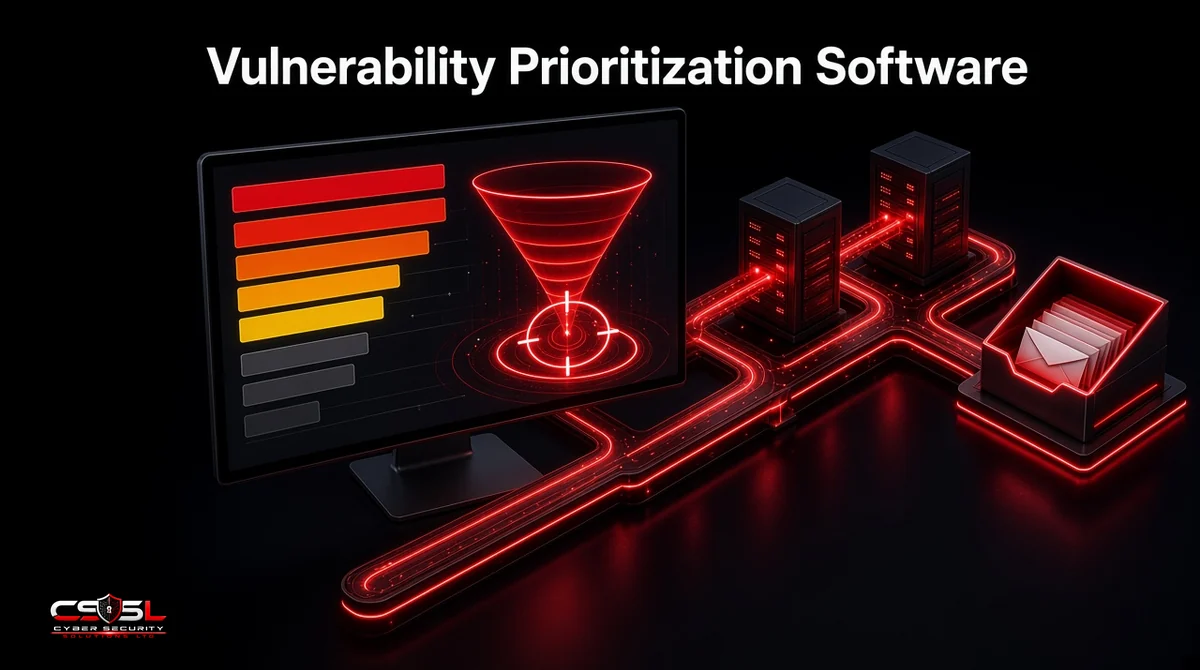
A scanner tells you that you have thousands of vulnerabilities. It does not tell you which dozen attackers will really use against you next week. That gap is why vulnerability prioritization software exists: it ranks findings by real-world risk so your team patches what matters first instead of working down a list sorted by severity alone.
What Is Vulnerability Prioritization Software?
Vulnerability prioritization software ranks security findings by how likely they are to be exploited and how much damage they could cause in your environment. It combines scanner results with threat intelligence, exploit data and asset context, then produces a short, ordered list of fixes and routes them to the right teams.
Prioritization vs Vulnerability Management
Vulnerability management is the whole cycle: discover assets, scan, prioritize, remediate and verify. Prioritization is one stage of that cycle, the decision about what to fix first. Many platforms cover both, but this guide focuses on the ranking layer.
Why CVSS Alone Isn’t Enough
CVSS measures how severe a vulnerability is in general, not how risky it is for you. Large numbers of findings score high or critical, but only a small share are ever exploited in the wild. Sorting by CVSS alone leaves teams patching vulnerabilities attackers ignore while missing ones they actively use.
Signals Good Tools Combine: EPSS, CISA KEV, Asset Criticality, Reachability
- EPSS: FIRST’s Exploit Prediction Scoring System estimates the probability a vulnerability will be exploited in the next 30 days.
- CISA KEV: the Known Exploited Vulnerabilities catalog lists flaws confirmed as exploited in real attacks.
- Asset criticality: a flaw on a payment server matters more than one on a test laptop.
- Exposure and reachability: internet-facing systems, and vulnerable code that is really loaded or reachable, rank higher.
Vulnerability Prioritization Software at a Glance (Comparison Table)
| Tool | Prioritization approach | Typical fit |
|---|---|---|
| Tenable | Vulnerability Priority Rating (VPR) alongside its scanning | Teams using Tenable scanners |
| Qualys VMDR | TruRisk scoring with asset context | Teams using Qualys agents and scanners |
| Rapid7 InsightVM and Exposure Command | Risk scoring with threat context | Teams using Rapid7 |
| Microsoft Defender Vulnerability Management | Risk-based ranking from Defender endpoint data | Microsoft-centric estates |
| CrowdStrike Falcon Exposure Management | Exposure ranking from Falcon sensor data | CrowdStrike endpoint customers |
| Wiz | Risk ranking across cloud and container workloads | Cloud-first teams |
| Nucleus Security | Aggregates many scanners into one ranked view | Teams with several scanners |
| Brinqa | Risk-based aggregation and workflow | Large, multi-tool programs |
| Ivanti Neurons for RBVM | Risk-based vulnerability management | Ivanti customers and mixed estates |
| XM Cyber | Attack path analysis | Teams wanting attack-path context |
Vulnerability Prioritization Tools in 2026
These tools are listed for reference, not ranked. Product names reflect current vendor naming as of October 2026; vendors rebrand often, so confirm before buying.
Tenable (Vulnerability Priority Rating)
Tenable adds its Vulnerability Priority Rating to scan results, weighing threat activity and exploit data alongside severity.
Qualys VMDR with TruRisk
Qualys combines detection with its TruRisk scoring, which factors in asset criticality and threat intelligence.
Rapid7 InsightVM and Exposure Command
InsightVM provides risk-scored vulnerability management; Exposure Command extends Rapid7’s view across cloud and attack surface data.
Microsoft Defender Vulnerability Management
Built into Microsoft’s endpoint security, it ranks weaknesses using threat and device data from Defender.
CrowdStrike Falcon Exposure Management
Uses data from the Falcon sensor to identify and rank exposures across endpoints and other assets.
Wiz (Cloud and Container Workloads)
Ranks vulnerabilities in cloud resources and containers by combining them with exposure, identity and data context.
Nucleus Security
Pulls findings from many scanners into one platform, removes duplicates and applies risk-based rules and automation.
Brinqa
Aggregates security findings and asset data from many sources and ranks them with configurable risk models.
Ivanti Neurons for RBVM
Ivanti’s risk-based vulnerability management product ranks findings using threat intelligence and business context.
XM Cyber (Attack Path Prioritization)
Maps how an attacker could chain weaknesses to reach critical assets, highlighting the fixes that break the most attack paths.
How We Evaluated These Tools
We included established, currently available products with a clear prioritization capability, and described each by approach and fit. We do not score or rank them and do not quote prices.
How to Choose Vulnerability Prioritization Software
Data Sources and Scanner Integrations
Confirm the tool ingests your scanners, cloud accounts, code scanning and endpoint data. Single-vendor tools work best with their own scanners; aggregators suit mixed estates.
Asset Context and Business Criticality
Check that you can tag assets by importance, owner and exposure, and that those tags change the ranking.
Ticketing, Patching and Remediation Workflow
Look for integrations with ticketing and patching tools, automatic routing to owners and tracking against deadlines.
Reporting, SLAs and Pricing for SMBs
Make sure you can set and report on remediation SLAs. Pricing is usually per asset or bundled with scanning, so ask vendors for quotes that match your asset count.
How to Prioritize Vulnerabilities Without a Dedicated Tool (Free Method with EPSS and KEV)
- Export scanner findings with their CVE IDs.
- Mark every CVE listed in the CISA KEV catalog; fix these first.
- Add the EPSS score for each CVE from FIRST’s free data.
- Tag each asset as internet-facing or internal, and critical or not.
- Fix in this order: KEV on exposed or critical assets, then high EPSS on exposed assets, then high CVSS on critical assets, then the rest.
- Review the list weekly as KEV and EPSS update.
US and UK Considerations (CISA BOD 22-01, NCSC, Cyber Essentials)
In the US, CISA’s Binding Operational Directive 22-01 requires federal agencies to remediate vulnerabilities in the KEV catalog within set deadlines, and CISA encourages all organizations to use KEV in their prioritization. In the UK, Cyber Essentials requires critical and high-risk security updates to be applied within 14 days of release, and the NCSC’s vulnerability management guidance supports a risk-based approach.
The Future of Vulnerability Prioritization Software
Vulnerability prioritization software is moving from ranking single findings toward exposure management: combining vulnerabilities, misconfigurations, identities and attack paths into one risk picture. Whatever tool you choose, the principle stays the same: fix what attackers will use, on the assets that matter most. For help building a risk-based remediation program, contact Cyber Security Solutions Ltd through our contact page.
FAQs
No. CVSS describes general severity, not the chance of exploitation or the importance of the affected system. Combine it with CISA's Known Exploited Vulnerabilities catalog, EPSS exploit probability, asset criticality and internet exposure. That combination focuses effort on the small share of vulnerabilities that create most real risk.
No. It means you fix them later, not never. Low-severity flaws can be chained into serious attacks, and exploitation trends change quickly. Set longer remediation deadlines for low-risk findings, track them, and revisit rankings regularly as new exploit data and threat intelligence appear.
The security team usually sets the ranking method and risk thresholds, but system and application owners must commit to fixing within agreed deadlines. Leadership should approve the SLAs and any accepted risks. Clear ownership prevents findings from sitting unassigned between security and IT operations.
Vulnerability management is the full process of finding, assessing, fixing and verifying vulnerabilities across your assets. Vulnerability prioritization is the step within it that decides which findings to fix first, based on exploitability, exposure and business impact. Prioritization makes the management process workable at scale.
Ideally continuously, or at least weekly. New vulnerabilities are published daily, exploits appear without warning, and CISA adds entries to the KEV catalog regularly. Most prioritization tools refresh scores automatically; if you use a manual method, rerun it after each scan and whenever a major vulnerability is announced.
Yes. A small team can combine scanner output with the free CISA KEV catalog and FIRST's EPSS data in a spreadsheet, then rank by exposure and asset importance. It takes more manual effort but covers the most important signals. Dedicated software becomes worthwhile as asset counts grow.