Zero Trust Network Security: What It Is and How to Implement It
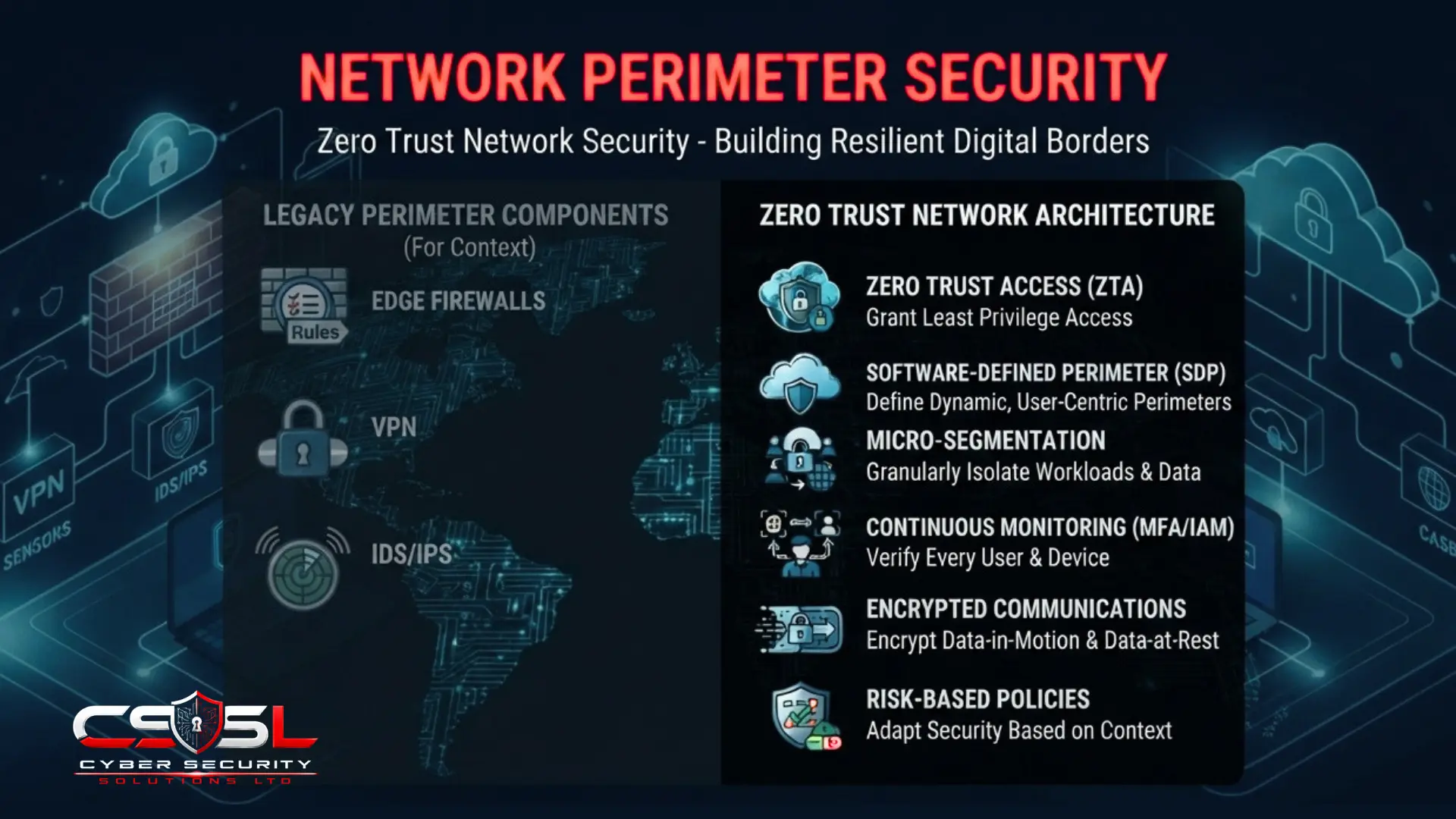
Zero trust network security requires continuous verification of every user, device, and connection, whether it comes from inside your office or halfway across the world. Nothing gets automatic trust just because it’s “internal.” Every access request gets checked, every time, based on real evidence rather than assumption.
If you’ve already accepted that boundary defense alone isn’t enough anymore, this is the architecture built to close that gap.
What Is Zero Trust Network Security?
Zero trust network security is built on one simple rule: never trust, always verify. Every user, device, and connection must be authenticated and authorized for every single access request, no matter where it originates.
This isn’t a minor tweak to your existing setup. It’s a full shift in thinking. Instead of trusting anything that made it past your network boundary, zero trust checks each request on its own merits, every time.
The idea traces back to security analyst John Kindervag, who popularized the term around 2010. His core insight was simple but genuinely uncomfortable for most IT teams at the time: internal network traffic deserves no more automatic trust than traffic coming from the public internet. A device sitting on your office network isn’t inherently safer than one connecting remotely, and treating it that way creates blind spots attackers know how to exploit.
What Are the Core Principles of Zero Trust?
Zero trust rests on four core principles that work together, not in isolation.
- Verify explicitly: Every access decision draws on multiple signals, including identity, device health, location, and how sensitive the resource is. A single password check at login isn’t enough anymore.
- Least privilege access: Access gets scoped as narrowly as possible for each specific task or session. Nobody gets broad, standing access just because their role sounds important.
- Assume breach: You design your architecture assuming a compromise will eventually happen. This is a genuinely different mindset from layering multiple types of defenses. Assume breach means removing implicit trust everywhere, including between two devices that sit right next to each other inside what used to be considered your safest internal zone.
- Continuous monitoring: Every user, device, and connection gets watched on an ongoing basis. You don’t verify someone once and then trust them for the rest of the day.
These four principles reinforce each other. Verify explicitly gives you the evidence. Least privilege limits the damage if that evidence turns out wrong. Assume breach shapes how you design around that possibility. Continuous monitoring catches what slips through.
Zero Trust Core Principles at a Glance
| Principle | What It Means | Example Control |
| Verify explicitly | Every decision uses identity, device health, location, and sensitivity | Contextual access policies |
| Least privilege | Access scoped narrowly to each session or task | Just-in-time access grants |
| Assume breach | Architecture designed expecting eventual compromise | Micro-segmentation |
| Continuous monitoring | Posture assessed constantly, not once | Session re-verification |
What Is Zero Trust Architecture and Where Does NIST SP 800-207 Fit In?
NIST SP 800-207, titled “Zero Trust Architecture,” is the most widely cited, vendor-neutral technical reference for zero trust available today.
What makes this document genuinely interesting is that it plays two roles at once. It’s a technical architecture document, describing specific components, data flows, and design logic an engineer can actually build from. It’s also a formally published federal standard, carrying the weight of an official government reference. Most frameworks fall clearly into one category or the other. SP 800-207 sits in both at the same time, and that dual identity matters more than most articles on this topic ever mention.
Here’s why this distinction has real, practical value. If you’re describing your zero trust posture to an auditor, a security-conscious partner, or a cyber insurance provider, referencing SP 800-207 directly gives you a shared, credible language. It’s the same reason organizations reference CISA’s Zero Trust Maturity Model or the UK’s NCSC guidance when communicating progress to stakeholders who need more than marketing language. Naming the actual standard signals you understand zero trust as an architecture, not a buzzword a vendor handed you.
From Zones to Micro-Segmentation: How Zero Trust Evolves Network Architecture
If you’ve grouped your network into broad trust zones before, zero trust doesn’t throw that thinking away. It pushes it to its logical extreme.
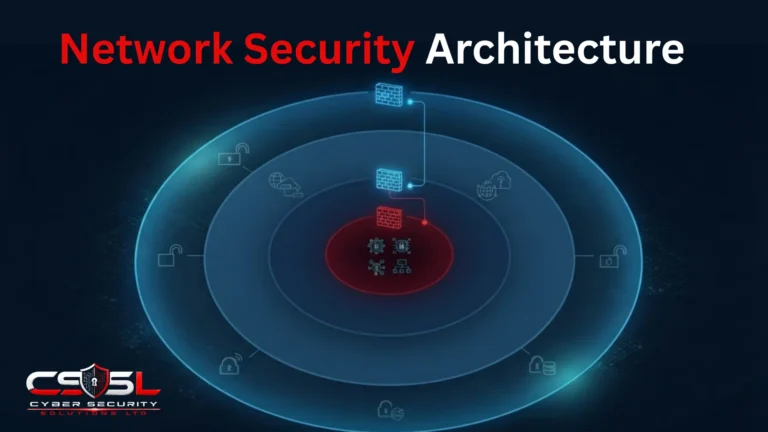
A traditional zone-based model groups resources into a handful of broad categories, something like untrusted, a semi-trusted buffer zone, an internal trusted zone, and a restricted zone for your most sensitive systems. That approach groups many different devices together under one shared trust level. The problem is that once an attacker gets into that trusted group, they often have relatively free movement across everything else inside it.
Micro-segmentation fixes exactly that problem. Instead of trusting an entire zone as one unit, it restricts communication down to the individual device, workload, or application level. Two servers sitting right next to each other inside what you’d normally call your “internal, trusted” zone still can’t talk to each other unless that specific communication is explicitly permitted.
Think about what this actually prevents. Say an attacker compromises one employee’s laptop through a phishing email. Under a traditional zone model, that laptop might have had implicit access to dozens of other systems in the same trusted zone: file servers, other workstations, internal applications. The attacker’s next move, lateral movement across your network, becomes easy. Verizon’s Data Breach Investigations Report has consistently flagged lateral movement as a major factor in how minor breaches turn into large-scale incidents.
With micro-segmentation, that same compromised laptop is boxed in. It can only reach the specific, narrow set of resources it was ever explicitly authorized to touch. The breach still happened, but the damage stays contained instead of spreading. This is genuinely the most practical, measurable benefit zero trust delivers, and it’s the direct evolution of zone-based thinking rather than some unrelated concept bolted on top of it.
ZTNA vs VPN: The Most Practical Implementation Question
A traditional VPN grants broad, network-level access the moment a connection is established. Zero Trust Network Access, or ZTNA, grants access only to the specific application a user is explicitly authorized for, checked freshly each session.
The clearest way to picture the difference: a VPN is like handing someone a master key to your entire building. Once they’re in, they can walk into almost any room. ZTNA is like escorting that same person to only the specific room they’re authorized to enter, then asking them to re-verify before letting them into anywhere else.
VPN vs ZTNA
| Criteria | VPN | ZTNA |
| Trust model | Implicit trust once connected | Explicit, per-session verification |
| Access granularity | Broad network-level access | Scoped to one application or resource |
| Blast radius if compromised | Large, much of the network reachable | Small, limited to authorized resources |
| Verification frequency | Once, at connection | Continuous, checked each session |
This distinction carries real stakes. If an attacker steals a legitimate employee’s VPN credentials, they inherit that same broad network reach the employee has. A stolen ZTNA session, by contrast, is boxed into a far narrower set of resources. That containment is exactly what the “assume breach” principle is designed to deliver.
How Does Zero Trust Change the Network Security Design Process?
Zero trust doesn’t replace how you design your network. It extends it with a more granular layer built on top.
A traditional design process typically starts by classifying assets based on sensitivity, then assigning them into zones. That inventory and classification work remains essential, and zero trust doesn’t skip it. What changes is the next step.
A zero trust-aligned design process starts with identity instead of zone assignment. Before you draw any boundary at all, you ask a more specific question: exactly who and what needs to communicate with whom? That answer shapes explicit access policies between specific identities and specific resources, regardless of which broader zone either one technically sits within.
This identity-first approach is genuinely more work upfront. It also produces far more precise access control than zone assignment alone ever could, because it’s built around actual communication needs rather than broad categories. This is the kind of design work the team at Cyber Security Solutions Ltd walks organizations through when moving from a zone-based network toward a genuinely zero trust-aligned one.
What Are the Genuine Limitations and Common Mistakes in Zero Trust Implementation?
Zero trust is not a single product you buy and install. Any vendor pitching it that way deserves a healthy dose of skepticism.
Legacy systems create one of the biggest practical headaches. Older applications weren’t built with modern, identity-aware access in mind, and retrofitting them can be genuinely expensive and slow. For most established organizations, full implementation realistically stretches across several years, not a single project sprint.
Complexity and friction are the other common trap. If re-verification steps are implemented poorly, employees start hunting for workarounds, which quietly undermines the entire model. The most common mistake of all: treating zero trust as finished once you’ve swapped VPN for a single ZTNA product, without touching micro-segmentation, continuous monitoring, or the identity verification work those principles actually depend on.
How Do You Implement Zero Trust Network Security Step by Step?
- Inventory every identity, device, and resource across your network. Accurate visibility is the foundation every later step depends on.
- Establish strong, verified identity for every user and device, with multi-factor authentication as the non-negotiable baseline.
- Deploy Network Access Control to verify device compliance before granting any access at all.
- Begin micro-segmenting your highest-value assets first, rather than attempting your entire network at once.
- Replace or supplement VPN with ZTNA for your highest-risk user populations first.
- Apply least-privilege access policies explicitly, reviewing and removing unnecessarily broad standing access.
- Enable continuous monitoring and logging across every zero trust-relevant control point.
- Roll out in deliberate, prioritized phases, starting with your most sensitive systems and highest-risk user groups rather than one organization-wide cutover.
Conclusion
Zero trust isn’t a switch you flip overnight, and treating it that way is exactly how implementations stall. Start with visibility, build strong identity verification, and expand segmentation deliberately from your most sensitive systems outward. If you want help mapping out where your organization actually stands and what a realistic rollout looks like, Cyber Security Solutions Ltd can walk through it with you.
FAQs
Zero trust is an architectural strategy, not a single product. Any vendor selling one tool as complete zero trust is oversimplifying. Real implementation combines identity verification, micro-segmentation, ZTNA, and continuous monitoring together.
A VPN grants broad network access once connected. ZTNA grants access only to specific, pre-authorized applications and re-verifies each session, sharply limiting what an attacker reaches if a credential gets compromised.
A firewall typically enforces rules at the network boundary. Zero trust extends verification to every individual connection everywhere, including between two devices already inside what used to be considered a trusted internal zone.
The four core principles are verify explicitly, least privilege access, assume breach, and continuous monitoring. Together they replace implicit trust in network location with ongoing, evidence-based access decisions.
Full implementation realistically takes several years for most established organizations, especially those carrying legacy systems. A phased rollout, starting with your highest-risk users and most sensitive systems, is the realistic approach.
Not necessarily all at once. Many organizations start by replacing or supplementing VPN with ZTNA for their highest-risk user populations first, then expand coverage as the rest of the implementation matures.