Cloud Vulnerability Management: Process, Tools and Tips
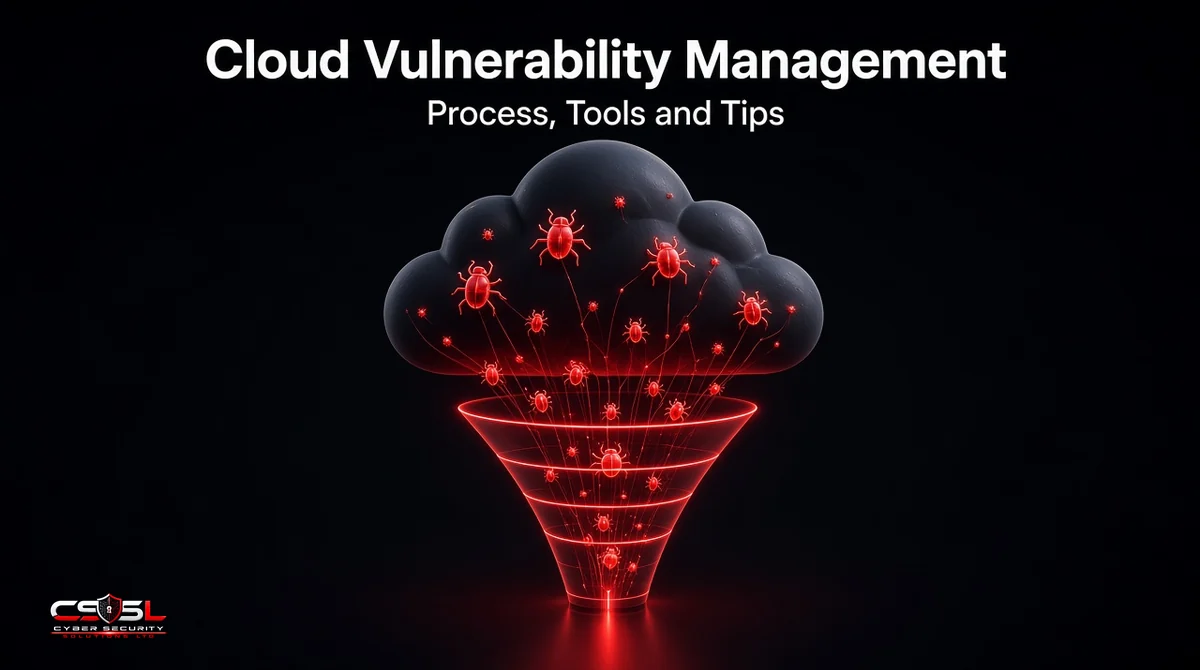
Cloud vulnerability management is the continuous process of finding, prioritizing and fixing software flaws and misconfigurations across your cloud accounts. Picture a familiar Monday: the scanner reports thousands of findings across AWS and Azure, the team has time to fix a few dozen, and nobody can say which few dozen attackers will try first.
What Is Cloud Vulnerability Management?
It is the ongoing cycle of discovering every cloud asset, scanning it for known flaws and risky settings, ranking each finding by how likely it is to be exploited and what it would expose, then fixing or mitigating it. It covers virtual machines (VMs), container images, serverless functions, APIs and identities across AWS, Microsoft Azure and Google Cloud.
How It Differs From Traditional Vulnerability Management
Traditional programs scan a fixed list of servers on a monthly schedule. In the cloud, assets appear and vanish in minutes, a single setting can expose a storage bucket to the internet, and identities matter as much as patches. The scanner has to read cloud provider APIs, not just IP ranges.
The Shared Responsibility Model: Who Patches What
AWS’s shared responsibility model states that the customer manages “the guest operating system (including updates and security patches)” on services such as EC2. Microsoft’s Azure documentation says that for every deployment type, “you own your data and identities.” In practice, the provider patches the hardware and hypervisor. You patch everything you install or configure.
Why Cloud Vulnerability Backlogs Keep Growing
The backlog problem is not a lack of scanning. It is the gap between what gets found and what gets fixed. Verizon’s 2026 Data Breach Investigations Report (DBIR) found that exploitation of vulnerabilities became the most common initial access vector, at 31% of known entry points in breaches outside error and misuse cases. The same report found only 26% of vulnerabilities listed in CISA’s Known Exploited Vulnerabilities (KEV) catalog were fully remediated in 2025, down from 38%, and the median time to full resolution rose to 43 days from 32.
Cloud environments make that gap wider in three ways:
- Ephemeral workloads: containers and auto-scaled VMs can live for hours, so a weekly scan never sees them.
- Alert overload: every base image carries old library flaws, and the same CVE (Common Vulnerabilities and Exposures) entry repeats across hundreds of copies.
- Multi-cloud sprawl: AWS, Azure and Google Cloud each report findings in different consoles and formats.
Common Cloud Vulnerabilities to Find and Fix
Most cloud findings fall into five groups. Scanners that only look at software packages miss the last three.
Misconfigurations and Publicly Exposed Storage
Storage buckets, databases and snapshots set to public access are the classic cloud exposure. They need no exploit at all, only a URL.
Unpatched VMs, Container Images and Serverless Dependencies
Outdated operating system packages on VMs, vulnerable libraries baked into container images and old dependencies inside serverless functions all carry known CVEs.
Insecure APIs and Exposed Management Ports
APIs without authentication or rate limits, and management ports such as SSH (Secure Shell) or RDP (Remote Desktop Protocol) open to the internet, turn an ordinary flaw into a reachable one.
Weak IAM, Overprivileged Identities and Leaked Secrets
Identity and access management (IAM) roles with wildcard permissions, unused access keys and secrets left in code repositories let an attacker move from one compromised workload to your whole account.
Shadow IT and Unmanaged Cloud Assets
Test accounts, forgotten subscriptions and projects created on a personal card never reach the scanner, so their flaws are invisible until someone else finds them.
Why CVSS Scores Alone Bury Small Teams
CVSS (Common Vulnerability Scoring System) measures how severe a flaw would be if exploited. It does not measure how likely exploitation is. When every “critical” gets the same deadline, a small team spends its week on flaws nobody is attacking while an exposed, actively exploited one waits in the queue.
A better approach stacks three signals. The first is the CISA KEV catalog, which listed 1,748 vulnerabilities in its October 16, 2026 release, each with confirmed exploitation in the wild. The second is EPSS (Exploit Prediction Scoring System), run by FIRST (the Forum of Incident Response and Security Teams), which publishes a daily probability that a CVE will be exploited in the next 30 days. The third is reachability: whether the vulnerable workload faces the internet, holds sensitive data or carries a powerful identity.
CISA itself has moved this way. Its Binding Operational Directive (BOD) 26-04, issued June 10, 2026, replaced the old fixed KEV deadlines with timelines driven by asset exposure, KEV status, exploit automation and technical impact. Of the 264 entries CISA added to KEV in 2026 through October 16, 139 carried a federal due date of three days.
| Priority | Signals | Suggested action |
|---|---|---|
| Fix now | On KEV and internet-facing | Patch or isolate within days |
| Fix this sprint | High EPSS, or KEV but internal only | Patch within your 14-day window |
| Schedule | High CVSS, low EPSS, not reachable | Fold into the next image rebuild |
| Accept or monitor | Low on all three | Record the decision and an owner |
The decision rule we give small teams is simple: anything on KEV that is reachable from the internet jumps the queue, regardless of its CVSS number.
The Cloud Vulnerability Management Process in 6 Steps
Once findings are ranked by real risk, the process runs as a loop, not a project.
Step 1: Discover and Inventory Every Cloud Asset
Connect every account, subscription and project, including dev and test. An asset you have not inventoried is an asset you cannot scan.
Step 2: Scan Continuously (Agentless, Agent-Based and IaC)
Use agentless snapshot scanning for broad coverage, agents where you need runtime detail, and IaC (infrastructure as code) scanning to catch flaws in templates before they deploy.
Step 3: Assess Risk With CVSS, EPSS and the CISA KEV Catalog
Enrich each finding with its CVSS score, EPSS probability and KEV status, so severity and likelihood sit side by side.
Step 4: Prioritize by Exposure, Reachability and Business Impact
Apply the tiers above. A KEV entry on an internet-facing workload with admin permissions is a different problem from the same CVE on an isolated build server.
Step 5: Remediate, Mitigate or Formally Accept the Risk
For containers and auto-scaled VMs, rebuild the image with the fixed package and redeploy, rather than patching running instances that will be replaced anyway. Where no fix exists, mitigate by closing ports or tightening IAM, and record any accepted risk with an owner and review date.
Step 6: Verify the Fix and Report Progress
Rescan to confirm the flaw is gone from every copy, then report against your service-level targets.
Cloud Vulnerability Management Tools
Tools fall into four groups, and most organizations end up combining two:
- Native cloud provider tools: Amazon Inspector, Microsoft Defender for Cloud and Google Security Command Center.
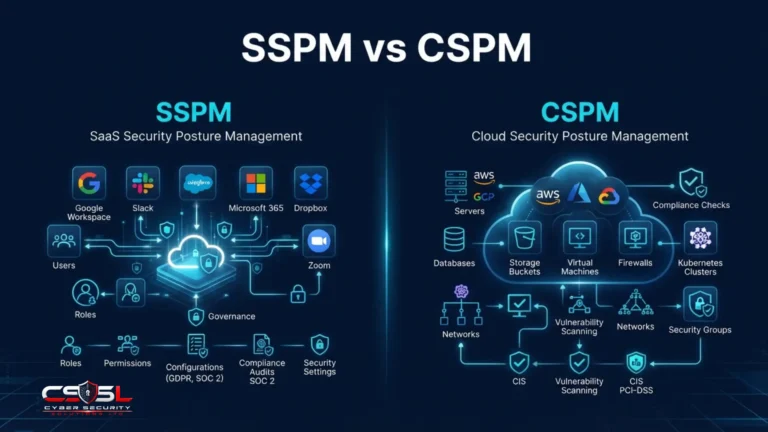
- CNAPP and agentless platforms: cloud-native application protection platforms such as Wiz, Orca, Prisma Cloud and CrowdStrike Falcon Cloud Security, which add CSPM (cloud security posture management) and CWPP (cloud workload protection platform) features on top of vulnerability scanning.
- Dedicated vulnerability scanners: Tenable, Qualys and Rapid7, strongest where you also need to cover on-premises servers.
- Open-source options: Trivy and Grype for container images, and Prowler for cloud configuration checks.
When comparing tools, look for multi-cloud coverage, EPSS and KEV enrichment, reachability or attack-path context, CI/CD (continuous integration and delivery) pipeline integration and ticketing that assigns every finding a named owner. CSPM focuses on configuration, CWPP on workloads at runtime, and CNAPP bundles both, so treat them as features of a program rather than replacements for one.
Remediation SLAs, KPIs and Compliance in the US and UK
Set service-level agreements (SLAs) by risk tier, then measure against them. Useful KPIs (key performance indicators) are mean time to remediate (MTTR) by tier, the share of KEV findings closed inside the SLA, scan coverage as a percentage of known assets, and the age of the oldest open critical.
In the UK, Cyber Essentials (requirements v3.3, April 2026) says updates fixing “critical” or “high risk” flaws, or those with a CVSS v3 score of 7 or above, must be applied within 14 days of release. It also states that cloud services cannot be excluded from scope. The NCSC’s Cloud Security Principles list vulnerability management under Principle 5, operational security.
In the US, NIST’s Cybersecurity Framework (CSF) 2.0, published in 2024, includes ID.RA-01: “Vulnerabilities in assets are identified, validated, and recorded.” BOD 26-04 binds federal civilian agencies only, but its risk-based timelines are a sound model for private firms. Confirm sector rules such as PCI DSS or HIPAA with your assessor or counsel.
Cloud Vulnerability Management for SMBs: Start With Native Tools
Most small and mid-sized businesses do not need a CNAPP on day one. In most SMB environments we review, the bigger gap is that the provider’s own scanner was never switched on, or was enabled in one account and forgotten in the rest. Start there.
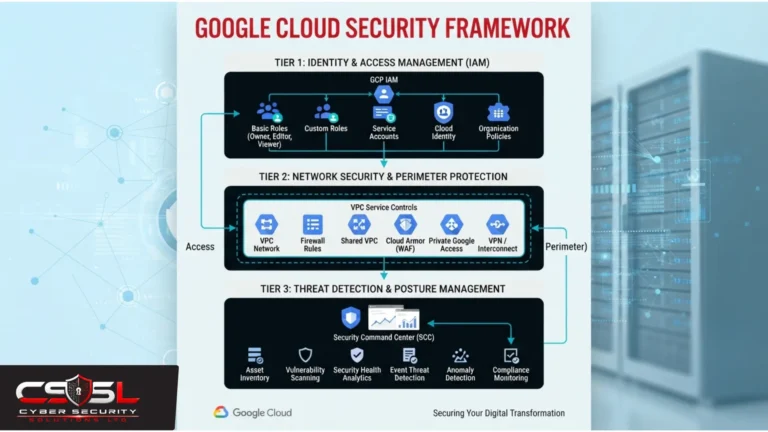
On AWS, Amazon Inspector automatically discovers and scans EC2 instances, container images in Amazon ECR and Lambda functions. In its default hybrid mode it combines agent-based scans with agentless scans of EBS snapshots, which run every 24 hours. On Azure, Microsoft Defender for Cloud can scan Azure VMs, AWS EC2 and Google Cloud instances without agents by analyzing disk snapshots. Google Security Command Center detects vulnerabilities and misconfigurations for Google Cloud.
Here is a practical first month. In week one, enable the native scanner in every account and region. In week two, export findings and tag each with its KEV status. In week three, fix every internet-facing KEV item and set a 14-day SLA for the rest of the critical and high findings. In week four, review coverage gaps. Consider a CNAPP only when you run three or more clouds, hundreds of workloads, or need attack-path analysis that native tools cannot provide.
Your First Five Moves This Quarter
Cloud flaws are not fixed by more alerts; they are fixed by a shorter, smarter queue. Use this checklist as your final step: switch on native scanning everywhere, tag findings with KEV and EPSS, patch internet-facing KEV items first, rebuild images instead of patching live containers, and track MTTR against a 14-day target. Cloud vulnerability management works when every finding has an owner and a deadline. For an outside view of where your program stands, Cyber Security Solutions Ltd offers a free, no-obligation cyber security assessment through our contact page.
FAQs
The five classic steps are identify, assess, prioritize, remediate and verify. You discover assets and scan them, score each finding for severity and exploitability, rank them by risk, fix or mitigate the most dangerous first, then rescan to confirm the fix worked. Cloud programs add continuous asset discovery because cloud resources change daily.
Patch or rebuild affected images first. If no fix exists, reduce exposure: close internet-facing ports, place the workload behind a firewall or private endpoint, and remove unnecessary IAM permissions. Turn on logging and alerts for the affected asset. Record any accepted risk with a named owner and a review date so it is not forgotten.
A cloud-based vulnerability scanner is a service, often delivered as software as a service (SaaS), that connects to your cloud accounts through APIs and checks workloads for known flaws and risky settings. Many scan disk snapshots without installing agents. Examples include Amazon Inspector, Microsoft Defender for Cloud and third-party platforms that cover several providers at once.
CSPM checks cloud configuration against security baselines, such as public storage, missing encryption or overly broad network rules. Vulnerability management is wider: it also covers software flaws in VMs, containers and serverless code, then prioritizes and tracks fixes. Most mature programs use CSPM findings as one input into the vulnerability management process.
Scan continuously or at least daily. Cloud assets change too fast for monthly scans. Amazon Inspector's agentless mode, for example, rescans eligible EC2 instances every 24 hours and checks for new instances hourly. Scan container images and IaC templates on every build, and rescan immediately when a new KEV entry affects software you run.
Responsibility is shared. The provider patches physical hosts, networks and the virtualization layer. You patch guest operating systems, applications, container images and code, and you own configuration, data and identities. For managed SaaS, the provider patches more, but you still control access settings, sharing permissions and user accounts.