Cloud Security Shared Responsibility Model: Who Is Responsible for What?
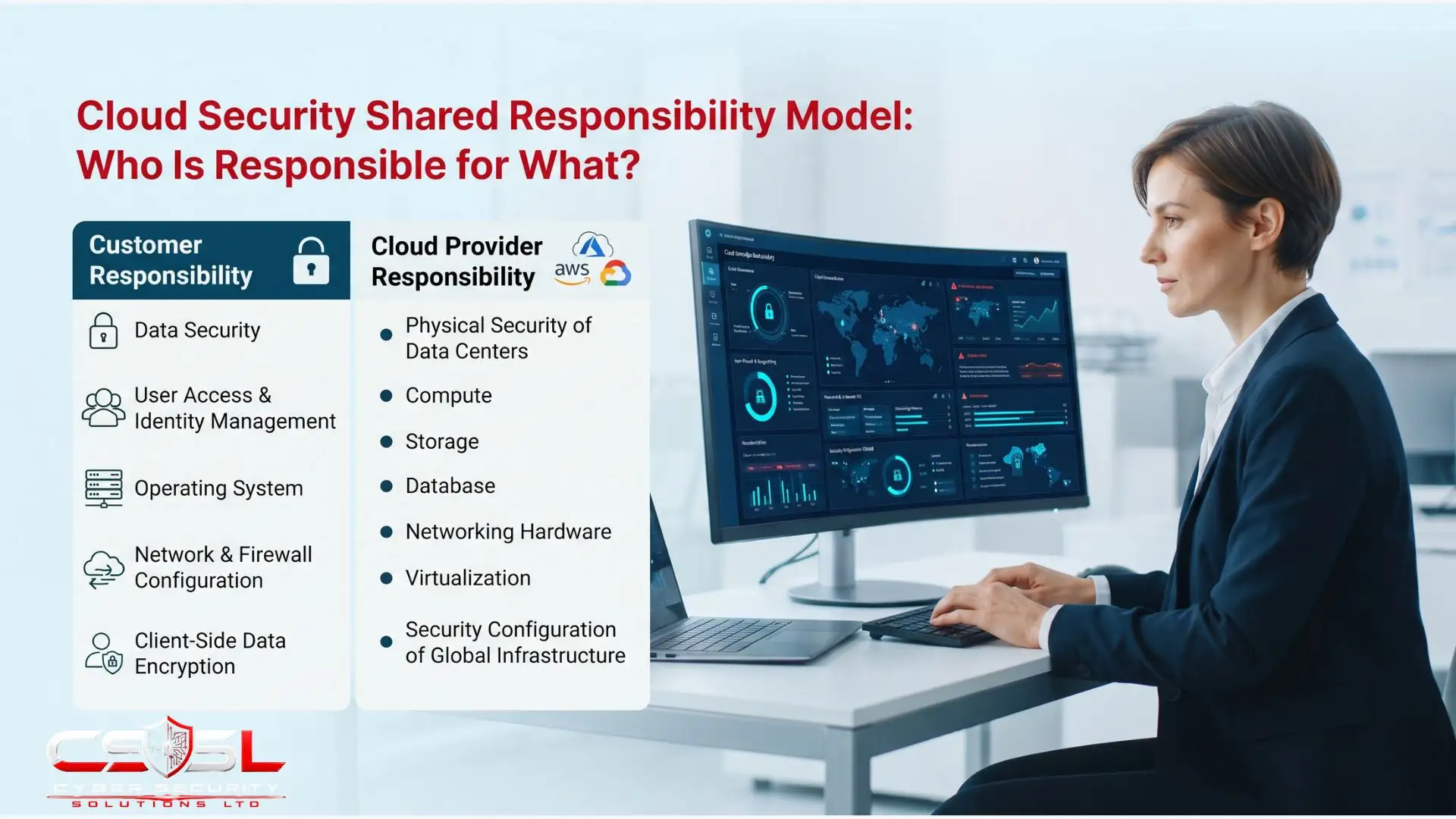
The cloud security shared responsibility model splits security duties between your cloud provider and you. The provider always secures the infrastructure. You always secure your data, identities and configuration. If your provider told you a breach was entirely your responsibility after a misconfigured setting, this is exactly why that answer was correct.
What Is the Cloud Security Shared Responsibility Model?
Post 3 introduced the basic concept and the IaaS, PaaS and SaaS split. Post 5 compared it against traditional on premise ownership. This post assumes both as read and goes deeper.
Here is why getting this model right matters more than almost anything else in cloud security. Misconfiguration is the leading cause of cloud incidents, and most of those failures trace back to a customer side responsibility someone assumed, incorrectly, belonged to the provider.
The one sentence version worth restating: the provider is always responsible for the security of the cloud, the physical infrastructure and platform. The customer is always responsible for security in the cloud, their data, configuration and identities. The specific line between the two shifts by service model.
What Does “Security of the Cloud” vs “Security in the Cloud” Mean Under AWS’s Model?
AWS’s own terminology is worth treating as the reference starting point, since it is the most widely searched and cited framing of the model. Security of the Cloud covers AWS’s responsibility for protecting the infrastructure running every AWS service: hardware, software, networking and the physical facilities housing AWS regions.
Security in the Cloud covers the customer’s responsibility, which varies by service. Depending on what you select, this can include operating system, network and firewall configuration, and platform and application management. Always, regardless of service type, it includes identity and access management, data encryption and client side data protection.
This framing is useful beyond AWS specifically. The of versus in distinction gives a clean mental test applicable across any provider: does this control protect the platform itself, or does it protect what an organization has put onto that platform?
How Do Azure and Google Cloud Frame Shared Responsibility Differently?
Microsoft documents responsibility across a sliding scale from on premises through IaaS, PaaS and SaaS, with identity and access management and data classification remaining the customer’s job at every tier. Google Cloud uses a related but distinct concept called shared fate, taking a more active role through secure by default configuration.
| Provider | Official Framing | Source |
| AWS | Security of the cloud vs security in the cloud | AWS Shared Responsibility Model |
| Microsoft Azure | Sliding scale across IaaS, PaaS, SaaS | Azure Shared Responsibility Model |
| Google Cloud | Shared responsibility plus shared fate | Google Cloud documentation |
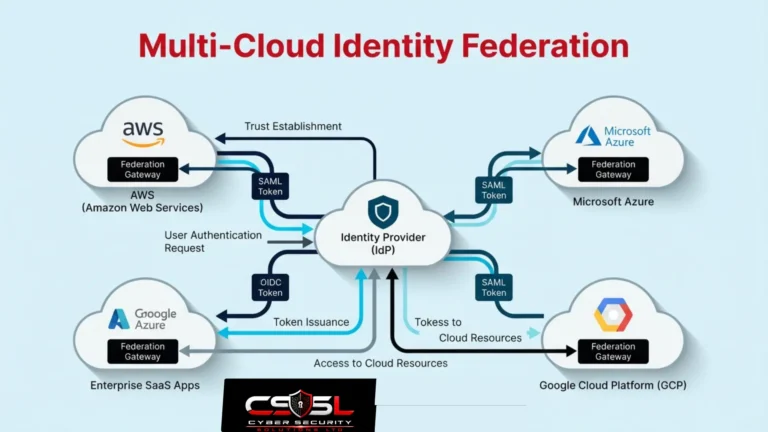
Most shared responsibility content shows one generic diagram and stops. Here is the underserved problem: an organization running AWS, Azure and Google Cloud simultaneously must actively translate between three vocabularies for the same underlying model.
AWS frames the split as of versus in the cloud. Azure frames it as a sliding scale, customer responsibility narrowing as more of the stack moves to Microsoft. Google frames it as shared fate, taking a more active role through secure by default configurations rather than a purely transactional handoff.
Each provider’s documentation and contractual language uses its own vocabulary. A security lead who only knows AWS’s framing can genuinely misread what Azure or Google actually promises.
Who Is Responsible for What: The Detailed Responsibility Matrix
Physical security and facilities are always the provider’s responsibility, across every service model, with no exceptions and no meaningful customer control or visibility.
| Control Area | IaaS | PaaS | SaaS |
| Physical security | Provider | Provider | Provider |
| Host and hypervisor | Provider | Provider | Provider |
| Network controls | Customer configures | Shared, narrowing | Provider |
| Operating system | Customer | Provider | Provider |
| Application and middleware | Customer | Customer | Provider |
| Identity and access management | Customer | Customer | Customer |
| Data classification and encryption | Customer | Customer | Customer |
Host infrastructure and the hypervisor are always the provider’s job too, covering the virtualization layer separating customer workloads from each other and from the underlying physical hardware. Network controls split by service model: the provider always secures the global backbone, while the customer configures virtual network rules and firewall settings in IaaS, narrowing through PaaS and largely disappearing at SaaS.
Identity and access management, and data classification and encryption decisions, are customer responsibility at every tier without exception. Only the customer knows who their own users are and what data they hold. Responsibility narrows as you move from IaaS toward SaaS, but identity and data never fully transfer to the provider, the single most important constant across this matrix.
Where Does Responsibility Get Genuinely Shared Rather Than Cleanly Split?
Several high-consequence controls require both parties acting correctly together, not each covering a separate half. Patching splits between hypervisor and guest operating system. Incident response needs prompt information sharing from both sides. Encryption requires the provider’s capability plus the customer’s decision to enable it.
Patching is a shared, coordinated process, not a clean handoff. In IaaS, the provider patches the hypervisor while the customer patches the guest OS. A single vulnerability affecting both layers can require coordinated action from both parties.
Incident response works the same way. When an incident spans both provider infrastructure and customer configuration, response depends on both parties sharing information promptly. Contractual SLAs around provider notification timing directly affect how fast a customer can begin investigating.
Encryption illustrates the shared nature well. The provider supplies the encryption capability and key infrastructure. The customer decides whether to enable it and, with customer managed keys, controls the IAM policy governing who can access them.
The diagram most competitor content uses implies a binary split. In practice, several of the highest consequence controls genuinely require both parties acting correctly together, not each independently covering their own half.
Is Shared Responsibility Just an Educational Diagram, or Is It Contractually Binding?
Shared responsibility is not merely an educational framing. It is typically referenced directly or reflected substantively within a provider’s Terms of Service, Acceptable Use Policy and service specific documentation, carrying genuine contractual and liability weight.
Here is what this means practically. When a customer side misconfiguration causes a data exposure, the provider’s contractual position generally places liability for that failure on the customer, regardless of how sophisticated the provider’s own infrastructure security may be.
This matters for cyber insurance and vendor risk conversations specifically. Insurers and procurement teams increasingly expect an organization to demonstrate concrete understanding of where its own responsibility begins, not just an acknowledgement that the model exists.
What Happens When the Model Is Misunderstood?
Picture a common, widely documented pattern. An organization migrates a database to IaaS, assumes the provider’s strong infrastructure reputation extends to their own configuration choices, and leaves the database’s network access rule set broader than intended. The resulting exposure is entirely attributable to a customer side decision the provider was never responsible for and had no visibility into.
This pattern is common, not an edge case. Industry research consistently attributes the substantial majority of cloud security failures to customer misconfiguration rather than provider vulnerability, a statistic that is functionally a direct measurement of shared responsibility misunderstanding at scale.
There is a support ticket pattern worth naming too. Organizations that discover a customer side misconfiguration frequently raise it with provider support first, expecting remediation, then get directed back to their own responsibility instead, a friction point clear internal understanding prevents entirely.
How Do You Turn Shared Responsibility Into Actual Internal Cloud Security Governance?
Map every cloud service’s customer side responsibilities onto named internal owners: who owns IAM configuration, network rules, OS patching and data classification for each service. This is governance, not documentation, since it requires accountability, review cadence and escalation paths.
Here is the genuine gap this section addresses, and the reason this post exists. Most organizations can recite the model in the abstract. A significant proportion have never mapped their own side of that line onto named internal teams with clear ownership.
The practical exercise looks like this. For every service in use, document which team owns identity and access configuration, which owns network and firewall rules, which owns OS patching, and which owns data classification decisions. Do not leave customer responsibility as an unassigned abstraction everyone assumes someone else covers.
This is governance, not just documentation. It means establishing accountability, review cadence and escalation paths for each internally owned responsibility, converting the external boundary into an internal operating model with named owners, rather than a diagram nobody operationalizes.
This exact ownership gap is what Cyber Security Solutions Ltd finds unassigned most often during a shared responsibility review. A team can describe the model perfectly and still have no answer when asked who owns firewall rule review for a given service.
What Common Myths About Shared Responsibility Put Businesses at Risk?
Four myths cause real damage.
- Myth: our cloud provider handles our security. Reality: the provider secures the infrastructure beneath the service, never the customer’s own configuration, identities or data, regardless of tier.
- Myth: SaaS means we have almost no security responsibility. Reality: identity, access and data sharing decisions remain customer responsibility even in fully managed SaaS.
- Myth: the model is the same across every provider. Reality: the principle is consistent, but terminology, boundaries and contractual language differ meaningfully between AWS, Azure and Google Cloud.
- Myth: understanding the model in principle means we have it covered. Reality: without the internal governance mapping above, abstract awareness provides no operational protection.
How Do You Audit Your Own Shared Responsibility Understanding Step by Step?
Auditing your understanding starts with listing every service and its model, retrieving each provider’s current documentation, mapping every responsibility onto a named owner, cross referencing against CSPM and CIEM findings to surface unassigned gaps, documenting the mapping formally, and reviewing it whenever a service or tier changes.
Here is a concrete step most competitor content skips entirely. Cross referencing your ownership map against existing CSPM and CIEM findings frequently reveals exactly where an assumed responsibility was never genuinely owned. A persistent misconfiguration finding sitting unresolved for months is often not a technical failure. It is the visible symptom of an unclaimed responsibility.
- List every cloud service in active use, noting the specific service model, IaaS, PaaS or SaaS, for each.
- Retrieve each provider’s current shared responsibility documentation rather than relying on assumptions carried over from a different provider.
- Map every customer side responsibility onto a named internal team, closing gaps where responsibility exists on paper with no actual owner.
- Cross reference this mapping against existing CSPM and CIEM findings, since these often reveal where a responsibility was never genuinely owned.
- Document the mapping formally as an input to your cloud security policy, rather than leaving it informal.
- Review the mapping whenever a new service is adopted or an existing service’s tier changes.
Conclusion
The cloud security shared responsibility model is not hard to understand. It is hard to operationalize, and that gap, not confusion about the concept, is where most breaches actually start. Map your side of the line onto named owners before a misconfiguration forces the conversation. To see exactly where your organization’s ownership gaps sit, visit cybersecuritysolutionsltd.com for a free shared responsibility review from Cyber Security Solutions Ltd.
FAQs
No. The provider always secures the infrastructure, physical facilities, hardware, networking and the host and hypervisor layer. The customer is always responsible for identity and access management, data classification and encryption, and how the service gets configured, regardless of service model.
It depends on the layer and service model. In IaaS, the provider patches the hypervisor while the customer patches the guest operating system. In PaaS and SaaS, the provider manages patching further up the stack, though identity and data decisions remain the customer’s job throughout.
Yes, in practice. It is typically reflected substantively within a provider’s Terms of Service and Acceptable Use Policy, carrying genuine contractual weight. When a customer side misconfiguration causes exposure, liability generally lands on the customer regardless of how strong the provider’s infrastructure security is.
No. Identity, access configuration and data sharing decisions remain customer responsibility even in fully managed SaaS platforms. This exact gap is why SSPM exists as a tool category, checking the configuration settings a customer still controls within a SaaS application they did not build.
The underlying principle is consistent, but the specific terminology differs. AWS frames it as security of versus in the cloud. Azure uses a sliding scale. Google Cloud uses shared fate. Multi-cloud organisations need to translate consistently between all three for what is functionally the same model.
List every cloud service in use, retrieve each provider’s current documentation, then map every customer side responsibility onto a named internal team or individual. Cross referencing existing CSPM and CIEM findings often reveals exactly where a responsibility was assumed but never actually assigned to anyone.