What Is CSPM? Cloud Security Posture Management Explained
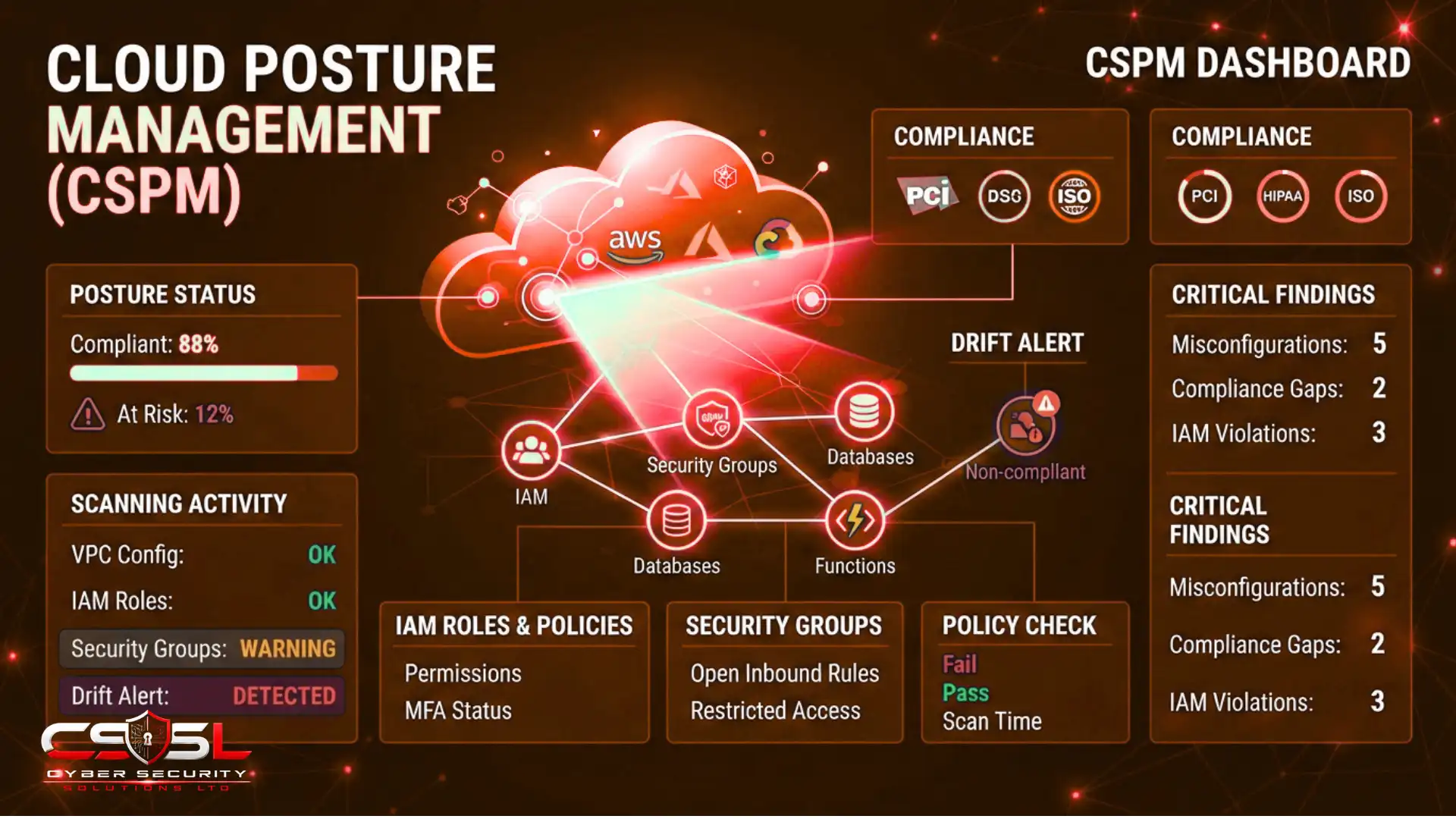
CSPM, or Cloud Security Posture Management, is a category of security tooling that continuously and automatically scans cloud environments for misconfigurations, compliance violations, and drift from secure baselines, automating a detection process that manual review cannot sustain at the scale and speed modern cloud environments change.
If you had a storage bucket publicly exposed for months before anyone noticed, or you keep encountering CSPM from vendors alongside CNAPP, CIEM, and DSPM and cannot distinguish between them, this guide explains what CSPM does, where its scope ends, and how to implement it without the common pitfalls that produce alerts but not actual risk reduction.
What Is CSPM?
Cloud Security Posture Management is a security tool category that continuously scans cloud environments for misconfigurations, compliance violations, and deviations from security best practice, then alerts on or remediates them. Gartner coined and popularized the CSPM category around 2019, in direct response to large-scale cloud data exposures caused not by sophisticated attacks but by avoidable configuration errors going undetected for months.
The core problem CSPM solves is practical: manual review of cloud configuration across hundreds of services and thousands of individual settings is not humanly sustainable at the speed modern cloud environments operate. CSPM automates that review continuously. It is not a firewall, not an endpoint agent, and not primarily a runtime threat detection tool. Its core function is configuration and compliance visibility.
See What Are the Security Risks of Cloud Computing? for the misconfiguration context that CSPM directly addresses.
What Is Cloud Security Posture, and Why Does It Need Managing?
An organization’s cloud security posture is the aggregate state of all its cloud configuration settings, permissions, network rules, and compliance status at any given moment. Posture is not a one-time fixed condition but a continuously shifting state requiring active monitoring, since cloud environments change constantly as resources are provisioned, modified, and decommissioned.
A mid-sized environment can contain tens of thousands of individually configurable settings across compute, storage, networking, and identity services, any one of which can silently degrade posture if changed incorrectly. Assessing whether any configuration is secure requires comparing it against a recognized standard such as CIS Benchmarks, the AWS Well-Architected Framework, Azure Well-Architected Framework, or Google Cloud Architecture Framework. This comparison is precisely what CSPM automates.
| Criteria | Manual Review | CSPM |
| Scan frequency | Periodic, quarterly or less | Continuous |
| Coverage at scale | Limited, sampling-based | Complete across all resources |
| Drift detection speed | Weeks to months | Hours to minutes |
| Audit trail quality | Manual, incomplete | Automated, timestamped |
| Remediation speed | Weeks after finding | Immediate alerting or automation |
How Does CSPM Detect Cloud Security Misconfiguration?
CSPM evaluates every discovered resource against a library of thousands of pre-built rules mapped to CIS Benchmarks, NIST SP 800-53, and cloud provider-specific well-architected frameworks, flagging any configuration that violates an applicable rule. Common detections include publicly accessible storage buckets, overly permissive security group rules, disabled encryption on storage resources, missing MFA enforcement, unused but active credentials, and disabled audit logging. Mature tools contextualize risk, prioritizing a publicly exposed bucket containing sensitive data far more urgently than a minor deviation on an isolated test resource.
The cloud account completeness prerequisite is the foundational requirement most CSPM implementation guidance skips entirely, and its omission creates a specific and dangerous form of false confidence. A CSPM tool can only assess what it has been given read access to. Any cloud account, subscription, project, or region not connected to the tool creates a blind spot the tool cannot report on and, critically, cannot flag as unknown. The dashboard appears complete while hiding material exposure.
Organizations with multiple cloud accounts, development subscriptions, or shadow cloud usage by individual teams frequently deploy CSPM only to the accounts the central IT team formally knows about. Shadow accounts provisioned by development teams, acquired company accounts not yet migrated, or personal developer accounts used for prototyping all represent real cloud environments with real data and real configuration entirely outside the tool’s visibility while the organization believes coverage is complete.
The CSPM deployment checklist must begin with a discovery exercise identifying every cloud account across every provider before connecting any of them. This completeness audit is a separate, necessary step rather than something the CSPM tool itself can perform before it has been given access.
What Is Cloud Security Drift Detection and Why Does It Matter?
Configuration drift is the gradual divergence of a cloud environment’s actual configuration from its intended secure baseline, typically occurring through manual changes, emergency fixes never reverted, or resources created outside standard provisioning processes. An environment can be perfectly secure at deployment, then silently degrade over subsequent weeks as individual changes accumulate. CSPM addresses drift by continuously rescanning the environment, detecting degradation as soon as it occurs rather than weeks later when the next manual review takes place.
Infrastructure as code drift deserves specific treatment as a distinct risk pattern most CSPM content addresses only generically, without naming the specific mechanism making it prevalent in DevOps-oriented teams that believe IaC adoption already solves their configuration consistency problem.
IaC tools like Terraform and CloudFormation exist to solve drift by codifying intended infrastructure state as version-controlled code. When used consistently and exclusively, they reduce drift significantly. The gap emerges at the boundary of consistent use. A security group rule gets opened urgently to diagnose a production issue. A developer makes a manual console change to test a configuration and does not delete the resource. An on-call engineer temporarily disables an encryption setting during incident response and forgets to re-enable it. In each case, the live environment now differs from what the IaC template defines, and neither the engineering team reviewing the repository nor operations monitoring deployments necessarily sees this divergence.
This IaC-to-live divergence is a form of drift that organizations using IaC often are not monitoring for, precisely because they assume IaC adoption prevents it. Some CSPM tools specifically detect IaC drift by comparing expected states defined in Terraform plan output or CloudFormation templates against actual live resource configuration. For organizations with significant IaC adoption, this capability deserves explicit evaluation in tool selection.
How Does CSPM Work Under the Hood?
Most modern CSPM tools connect to cloud environments via API using read-only permissions, without requiring any software agent installed on individual resources. The tool periodically queries cloud provider configuration APIs across every connected account and region, building and maintaining a current inventory of all resources and their configuration state. Each resource is evaluated against the rule library, with violations scored by severity and surfaced to a central dashboard.
Depending on the tool and organizational maturity, detected issues trigger simple alerts for manual review, automated ticket creation in Jira or ServiceNow, or in more advanced configurations, automated remediation correcting the misconfiguration without human intervention. Leading CSPM tools connect simultaneously to AWS, Azure, and Google Cloud, providing a single consolidated posture view across an organization’s full multi-cloud footprint rather than requiring separate tools per provider.
What Does CSPM Cover That Other Posture Tools Do Not?
| Tool Category | Primary Focus | What It Assesses |
| CSPM | Infrastructure and platform configuration | Storage, networking, compute, IAM settings across IaaS and PaaS |
| SSPM | SaaS application configuration | Microsoft 365, Salesforce, Google Workspace sharing and permissions |
| DSPM | Data classification and sensitivity | What data exists inside cloud storage and how sensitive it is |
| CIEM | Identity entitlement depth | Effective permissions across complex IAM role chains |
| CNAPP | Unified platform umbrella | Bundles CSPM, CWPP, CIEM, and often DSPM into one platform |
The boundary-mapping approach is the single most practically useful framing for CSPM, and most competitor content omits it entirely by treating CSPM as an isolated concept rather than one member of a family of tools buyers encounter together in the same evaluation. When organizations evaluate CSPM, they almost always simultaneously encounter SSPM, DSPM, CIEM, and CNAPP in the same vendor proposals. Without a clear mental model of where each category’s job begins and ends, buyers cannot evaluate whether a proposed bundle addresses their specific risk profile.
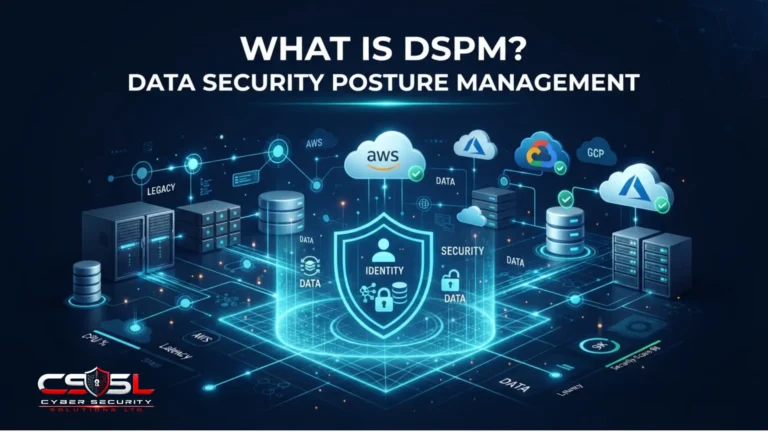
The practical boundary model: CSPM is the base layer, covering whether cloud infrastructure and platform resources are correctly configured. SSPM extends this to SaaS applications, covering Microsoft 365 and Salesforce configuration settings that CSPM does not natively assess. DSPM extends into the data inside storage, classifying sensitivity and tracking data movement, while CSPM only assesses whether the storage bucket is correctly configured without knowing what is in it. CIEM analyses effective permissions across complex IAM role chains to identify what users can actually do rather than what role assignments suggest. CNAPP bundles CSPM alongside CWPP for runtime workload protection and often CIEM and DSPM in a single integrated platform. Understanding these boundaries before vendor conversations gives buyers the framework to evaluate what they actually need rather than accepting a bundle defined by what a vendor happens to sell.
See SSPM vs CSPM, What Is DSPM, What Is CIEM, and What Is CNAPP for the full scope detail of each adjacent category.
What Are the Leading CSPM Tools Available in 2026?
Native cloud provider tools including AWS Security Hub, Microsoft Defender for Cloud, and Google Security Command Center provide built-in CSPM capability scoped to their respective platforms, offering a starting point for single-cloud environments without additional licensing cost.
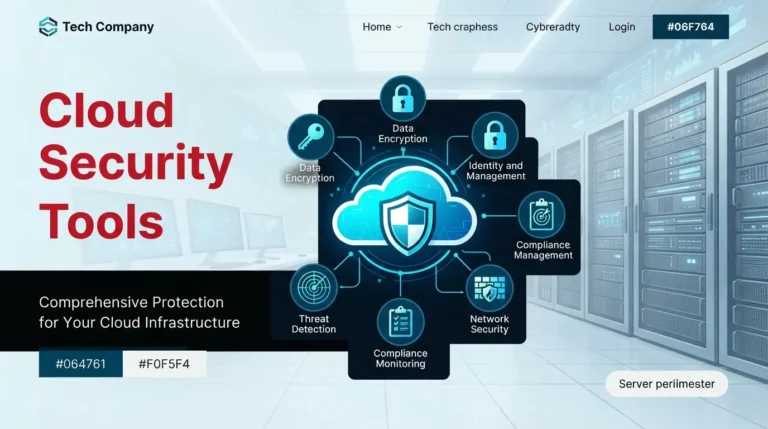
Dedicated multi-cloud CSPM and CNAPP platforms from Wiz, Palo Alto Networks Prisma Cloud, Orca Security, Lacework, and CrowdStrike Falcon Cloud Security provide consolidated posture management across AWS, Azure, and Google Cloud simultaneously. Evaluate tools on multi-cloud breadth, compliance rule library depth, risk prioritization quality, remediation automation capability, and integration with existing DevOps and ticketing workflows. See Cloud Security Tools: The Complete List for 2026 for the full comparative vendor landscape.
What Are the Benefits of Implementing CSPM?
Continuous automated visibility replaces periodic manual audits that inevitably leave gaps where drift and misconfiguration go undetected. CSPM significantly reduces mean time to detect misconfigurations, closing the window of exposure that attackers and automated scanning tools actively search for. Compliance evidence generation provides auditable, timestamped reports against CIS Benchmarks and regulatory frameworks, directly supporting audit preparation. Automating routine configuration detection frees security team capacity for higher-priority investigation and response rather than manual configuration review.
What Are the Limitations of CSPM on Its Own?
CSPM identifies configuration risk but does not detect active runtime threats or malicious behavior occurring within correctly configured resources, a gap addressed by CWPP. Alert volume in environments with significant existing technical debt can be substantial, requiring deliberate prioritization rather than expecting the tool to automatically resolve underlying problems.
The remediation ownership gap is the most common reason CSPM implementations produce accurate alerts but do not reduce actual risk, and it is almost entirely absent from competitor CSPM content that focuses on detection capability without addressing the organizational prerequisite determining whether detection translates to genuine security improvement.
A CSPM tool deployed without resolving who owns which findings produces a growing backlog of accurately identified issues that nobody consistently works through. The security team believes cloud engineers need to fix certain findings. Cloud engineers believe the security team should prioritize and direct remediation. The infrastructure team does not consider some findings in their scope to be their responsibility. Without explicit named ownership assigned to specific finding categories before deployment, each team correctly believes addressing the finding is primarily someone else’s problem, and findings remain open indefinitely.
This is a governance failure that the tool reveals but cannot solve. The practical resolution requires a deliberate step before deployment: identifying which categories of expected findings belong to which team, documenting ownership explicitly, and establishing SLA expectations for remediation timelines by severity level. Organizations completing this ownership mapping before generating their first batch of alerts are significantly more likely to achieve genuine risk reduction than those who deploy the tool and negotiate ownership reactively after findings appear.
How Do You Implement CSPM Step by Step?
Step 1: Inventory all cloud accounts, subscriptions, and projects across every provider in use before connecting anything to the CSPM tool.
Step 2: Select a CSPM or CNAPP tool appropriate to your cloud footprint, considering multi-cloud support, rule library depth, and integration requirements.
Step 3: Connect the tool via read-only API access to all identified cloud accounts, avoiding unnecessary write permissions during initial deployment.
Step 4: Review initial findings and prioritize remediation by severity and actual business risk rather than addressing every flagged issue simultaneously.
Step 5: Assign clear remediation ownership, specifying which teams are responsible for addressing findings in their area of the environment.
Step 6: Integrate alerting into existing ticketing systems and communication tools so findings reach the right people without requiring manual dashboard monitoring.
Step 7: Progress toward automated remediation for well-understood, low-risk misconfiguration types once manual remediation processes are proven reliable.
Step 8: Review and tune the rule set regularly as compliance requirements and organizational risk tolerance evolve over time.
Cyber Security Solutions Ltd provides free cloud posture reviews to identify existing misconfigurations before committing to a specific CSPM platform, since understanding actual exposure first makes tool selection significantly more targeted and cost-effective.
Conclusion
CSPM solves the specific problem that manual cloud configuration review cannot: providing continuous, automated visibility across a scale of settings no team can sustainably audit. Understanding where CSPM’s scope ends and where adjacent tools like SSPM, DSPM, and CIEM begin allows organizations to build a coherent, targeted tool stack rather than accumulating overlapping acronyms. Visit cybersecuritysolutionsltd.com for a free cloud posture review to identify your existing misconfigurations before committing to a specific CSPM platform.
FAQs
CSPM stands for Cloud Security Posture Management. It is a security tool category that continuously scans cloud environments for misconfigurations, compliance violations, and configuration drift from secure baselines. It automates the detection process that manual configuration review cannot sustain at the scale and speed modern cloud environments change.
CSPM is a specific tool category focused on cloud infrastructure and platform configuration assessment. CNAPP, or Cloud-Native Application Protection Platform, is a broader umbrella that bundles CSPM alongside CWPP for runtime protection, CIEM for entitlement management, and often DSPM for data security in a single integrated platform rather than separate point solutions.
CSPM covers IaaS and PaaS infrastructure configuration, assessing cloud storage, compute, and networking settings. SSPM covers SaaS application configuration, assessing Microsoft 365, Salesforce, and Google Workspace sharing settings and user permissions, a scope CSPM does not natively address at the SaaS application configuration layer.
Configuration drift is the gradual divergence of a cloud environment’s actual configuration from its intended secure baseline, typically through manual changes or emergency fixes never reverted. CSPM detects drift by continuously rescanning the environment, identifying degradation as soon as it occurs rather than weeks later during the next manual review.
Yes. Most modern CSPM tools use an agentless architecture, connecting to cloud environments via read-only API access without requiring any software agent installed on individual cloud resources. This enables rapid, low-friction deployment across multi-cloud environments without the operational overhead of managing agent installations across every resource.
Native tools including AWS Security Hub, Microsoft Defender for Cloud, and Google Security Command Center suit single-cloud environments at no additional cost. Multi-cloud CSPM and CNAPP platforms from Wiz, Palo Alto Networks Prisma Cloud, Orca Security, Lacework, and CrowdStrike Falcon Cloud Security provide consolidated posture management across multiple providers simultaneously.