Agentless Cloud Security: How It Works and Why It Matters
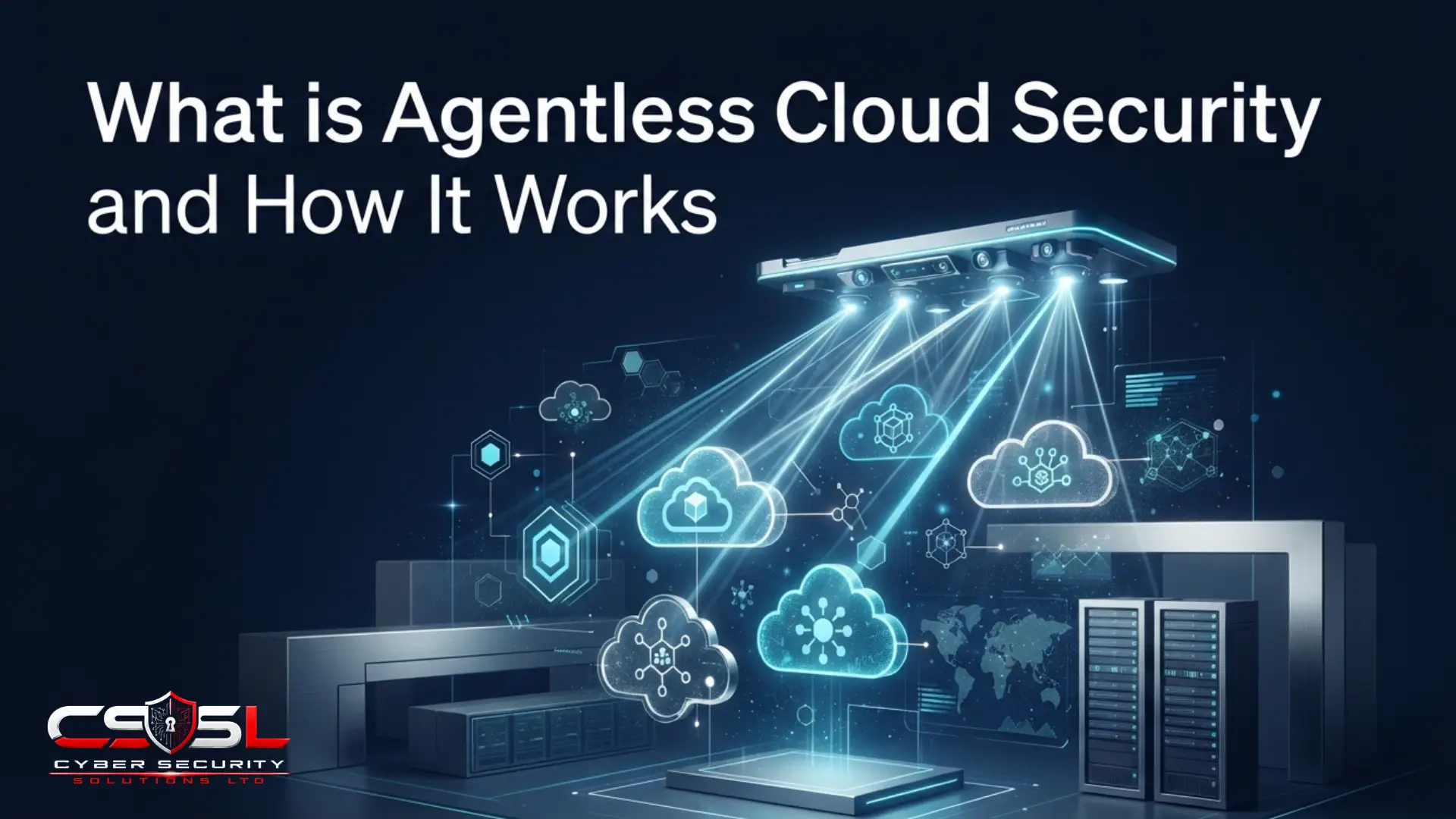
Agentless cloud security connects to your cloud accounts through the provider’s own APIs, scanning everything without installing software on a single server. No agents. No months-long rollout. If your team is still fighting to get security tools onto every workload, this is the model built to skip that fight entirely.
What Is Agentless Cloud Security?
This approach scans and checks your cloud accounts using the provider’s own APIs. Nothing gets installed on your servers, containers or other resources. The tool connects once, with read only access, and starts checking your setup right away.
Older tools need a small program, called an agent, running on every machine. Posture tools like CSPM (configuration checks), DSPM (data location tracking) and CIEM (access management) all ask the same question: is this resource set up safely? Cloud providers already expose that answer through their APIs, so nothing needs installing to get it.
One thing to clear up early. Agentless describes how a tool connects, not how deep it sees. A well built tool can still inspect data closely, through snapshot scanning, covered next. Agentless does not mean shallow.
How Does Agentless Scanning Actually Work?
Agentless scanning works in two steps. First, the tool signs into your cloud account with a read only role and asks the provider’s own inventory system for a full list of resources. Second, when it needs to look inside a resource, it takes a snapshot and scans that copy separately.
The first step is simple. The tool authenticates using a read only cross account role in AWS, a service principal in Azure, or a service account in Google Cloud, all limited, read only logins. From there, it asks services like AWS Config, Azure Resource Graph or Google Cloud Asset Inventory for the current state of every resource.
The second step is where most explanations stop too early. When a tool needs to look inside a resource, like checking a virtual machine for malware, it does not touch the live system. It takes a snapshot, a point in time copy of the storage volume, and scans that copy separately. Security teams call this out of band scanning. Your production system never slows down, since the scan never touches it.
This snapshot step is the part most explanations skip. It is also why agentless does not mean shallow. A tool built this way gets real content level answers, not just configuration checks. NIST’s continuous monitoring guidance, in SP 800-53, treats this kind of repeated automated checking as a baseline control.
Agentless tools repeat this process on a schedule instead of scanning once. That repeat cycle is what makes configuration drift detection possible. Your cloud setup changes constantly, and a resource safe yesterday can be exposed today. Continuous polling is how agentless tools catch that change early.
How Does Agentless Security Differ From Agent-Based Security?
Agentless connects through APIs with nothing installed anywhere. Agent based security installs a small program on every server, container or virtual machine, giving it live access to that one resource. The trade off is speed and breadth against deep, real time detail.
| Criteria | Agentless | Agent-Based |
| Deployment speed | Minutes to hours per account | Days to weeks per resource |
| Resource types covered | Anything with a provider API, including serverless | Only resources that can run a persistent process |
| Performance impact | None on the live resource | Uses CPU and memory on the host |
| Runtime visibility depth | Configuration and snapshot data | Live, continuous process and memory data |
| Maintenance burden | One connection per cloud account | An agent to update on every host |
| Best suited for | Posture, configuration and entitlement scanning | High value workloads needing real time detection |
Deployment effort shows the gap clearly. Agentless needs one API connection per account, live within minutes. Agent based deployment means installing an agent on every resource, a job that can take weeks and is never fully finished.
Resource type coverage matters too. Agentless can assess resources that cannot host an agent at all, including serverless functions and managed databases. Agent based tools are limited to resources that can run a persistent process, like virtual machines and containers.
Why Does Agentless Architecture Matter for Cloud Security Visibility?
Picture a mid sized company that spent four months installing agents across its servers, only to find its serverless billing functions still uncovered, since no agent could ever run there. That gap is exactly what agentless architecture closes.
Because agentless connects at the account level, not resource by resource, every existing and new resource becomes visible the moment it connects. There is no rollout queue and no dark, unmonitored assets waiting their turn.
There is also no performance risk. Nothing runs inside the resource, so there is no chance of an agent eating CPU or destabilizing a production system, a real, recurring problem with agent based rollouts.
Rollout friction disappears too. Agent based deployment needs approval from every team that owns a workload, often staying incomplete for months. Agentless needs one centrally approved connection instead, and it reaches short lived containers and serverless functions that exist for only seconds, resources an agent was never designed to reach.
What Cloud Security Metrics Does Agentless Scanning Make Possible?
Agentless scanning makes four metrics realistic to track. Coverage completeness shows what percentage of your cloud estate is actually being scanned. Time to first scan shows how fast a new account gets checked. Scan freshness shows how often each resource is rechecked. Mean time to detect, or MTTD, shows how long an exposure sits before anyone notices.
| Metric | What It Measures | Why It Matters |
| Coverage completeness | Percent of your cloud estate actively scanned | Shows how much of your environment is truly watched |
| Time-to-first-scan | How fast a new account gets its first check | Reveals how quickly new risk becomes visible |
| Scan freshness | How often each resource is rechecked | Determines how fast drift gets caught |
| Mean time to detect (MTTD) | Time between an exposure appearing and being found | Ties directly to how much damage a gap can cause |
Here is what most articles on this topic miss. These four numbers are not just technical trivia. They turn a security programme into something a board can actually understand.
Verizon’s 2026 Data Breach Investigations Report found that cloud permission misconfigurations took a median of almost eight months to resolve, a long time for a mistake to sit exposed. An agentless programme tracking scan freshness and MTTD turns that blind spot into a number leadership can see and act on.
This is the same set of numbers Cyber Security Solutions Ltd checks first in a cloud visibility assessment. Coverage completeness tells you if you are actually looking everywhere. MTTD tells you how much time an attacker gets before anyone notices, replacing guesswork with a number you can track.
What Are the Limitations of Agentless Security?
Agentless scanning runs on a polling cycle, not constant live observation. A threat that starts and ends entirely between two scans can go unnoticed until the next cycle runs. That is a real gap compared with an agent watching activity as it happens.
There are also signals agentless cannot see. In memory malware, live network connections and unusual process behavior only exist on a running system, invisible to a tool that only checks configuration and snapshots.
Snapshot scanning has its own costs too. Taking and scanning snapshots at scale uses cloud provider resources and API quota, with a small gap between the snapshot and finished analysis.
None of this makes agentless scanning a substitute for real runtime protection. For high value workloads where catching active exploitation in real time matters most, posture scanning alone is not equal to what a CWPP, short for Cloud Workload Protection Platform, provides.
Is Agentless Replacing Agent-Based Security, or Do They Work Together?
Agentless has become the default for posture, data and entitlement scanning, because those jobs do not need live runtime observation. Agent based tools remain necessary for a smaller, clearly defined set of workloads that need real time threat detection.
Most mature CNAPP platforms, short for Cloud Native Application Protection Platform, now use a hybrid model: broad agentless coverage across the whole estate, plus lightweight agents only on workloads that justify the overhead, like internet facing systems handling sensitive data. Analysts at Gartner have pointed to this hybrid approach as the direction most CNAPP platforms are heading.
The word selectively matters here. This is not a single organization wide choice between agentless or agent based. The right architecture depends on what question you are actually asking of each specific resource.
How Do You Evaluate Agentless Coverage Before Choosing a Tool?
Evaluating a vendor’s agentless coverage claims takes five specific questions, not a general sense of trust in their sales deck.
- Confirm exactly which resource types the tool can assess agentlessly. Coverage claims vary between vendors, especially for managed databases and serverless functions.
- Ask specifically how the tool performs content level scanning: genuine snapshot based inspection, or only configuration checks that cannot see inside a resource.
- Request the tool’s typical scan frequency and time to first scan for a newly connected account. These two numbers directly set your realistic detection latency.
- Clarify whether the tool supports optional lightweight agents for high value workloads, and how cleanly that fits the core platform.
- Verify the exact read only permissions the tool requests during connection. Access should be genuinely limited to what agentless scanning actually requires.
This is close to the sequence experienced security teams use when reviewing a client’s existing tooling. Most vendor claims about agentless coverage sound identical from the outside. The difference shows up once you ask about resource types, scanning method and permissions.
Conclusion
Agentless cloud security is not a stopgap measure anymore. It has become the default way modern teams get full visibility across their cloud estate, quickly and without disrupting production. Agents still matter for a small set of high value workloads that need real time protection, but they are the exception now, not the starting point. To see exactly how much of your environment is actually being scanned today, visit cybersecuritysolutionsltd.com for a free cloud visibility assessment from Cyber Security Solutions Ltd.
FAQs
For posture, configuration and entitlement scanning, agentless is generally just as effective, and often faster to deploy. For real time detection on specific high value workloads, agent based tools still provide deeper runtime visibility. Most mature programmes use agentless as the default and add agents selectively.
Yes, and this is one of its biggest advantages. Serverless functions and short lived containers often cannot host a software agent at all, since some exist for only seconds. Agentless tools assess them through the cloud provider’s own APIs instead, with no process required inside the resource.
Agentless tools typically request a read only cross account role in AWS, a service principal in Azure, or a service account in Google Cloud. These credentials only allow the tool to query configuration and inventory APIs. A legitimate tool never asks for write or administrative permissions.
Yes, through snapshot based scanning. The tool takes a point in time copy of the virtual machine’s disk and inspects that snapshot separately, away from the live system. This finds malware, vulnerabilities and exposed secrets on disk, though it cannot catch in memory threats that never touch storage.
Typically within minutes to hours. Because agentless tools connect once at the account level, a newly connected account is usually visible and included in the next scan cycle almost immediately, with no rollout step needed for each server inside it.
For most organizations, yes, but only for a narrow set of workloads. Agentless CSPM handles configuration, posture and entitlement visibility across the whole estate well on its own. Agents still add value on specific internet facing or sensitive systems, where real time detection matters more than broad coverage.