Cloud Application Security: How to Protect Cloud-Based Apps
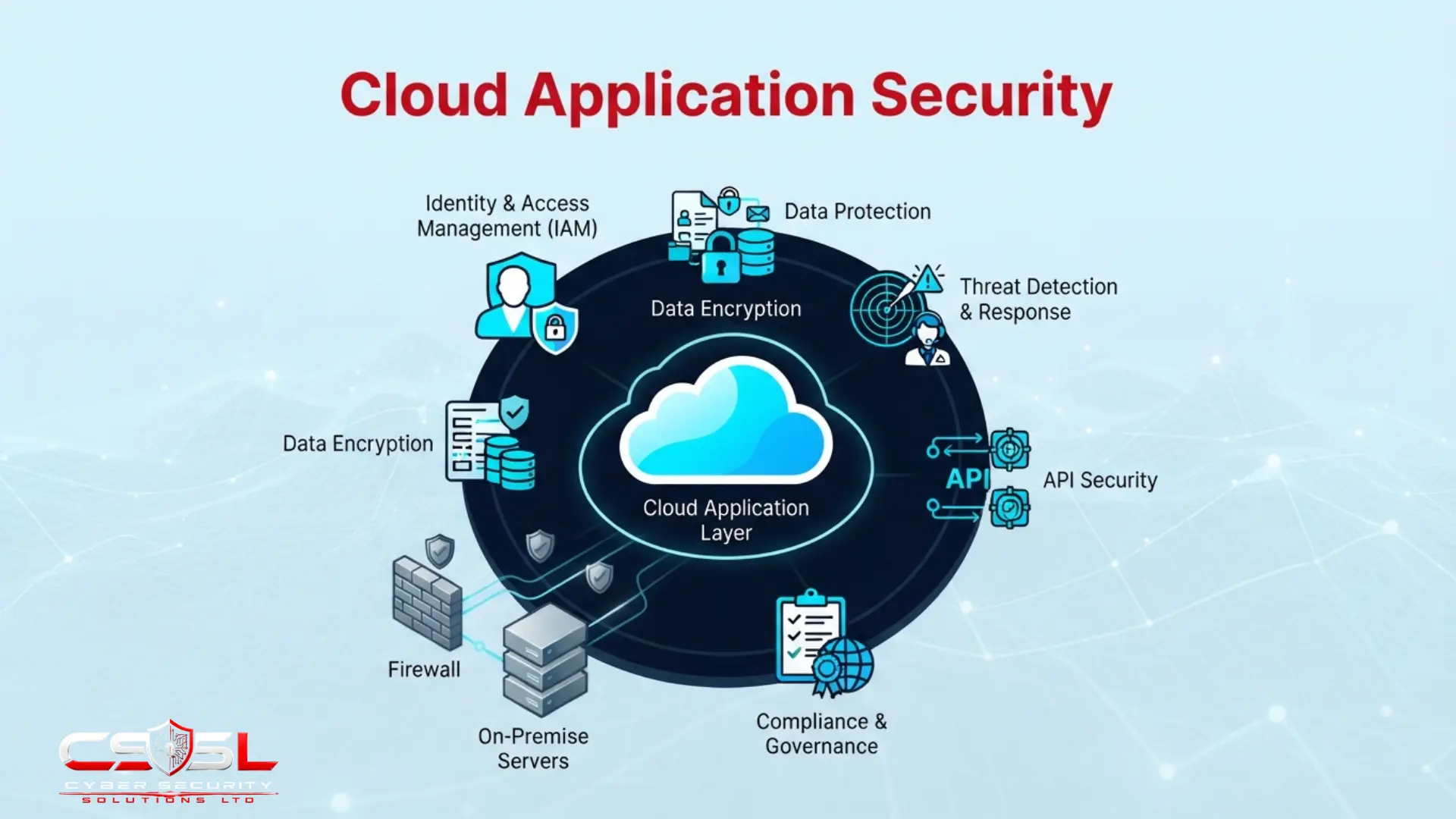
Cloud application security protects the actual code, logic and APIs of the applications you build, not the infrastructure they run on. If your infrastructure passed every scan and you still got breached through a flaw in your own application code, that gap is exactly what this guide addresses.
What Is Cloud Application Security?
This practice protects the actual code, logic and APIs of applications built to run in the cloud, covering how the application processes requests, handles authentication, manages data and talks to other services.
| Discipline | What It Secures | Related Post |
| SSPM | SaaS tools you consume as a customer | SSPM vs CSPM |
| CASB | Data and access to sanctioned and unsanctioned cloud services | CASB Guide |
| CWPP | Running workloads: VMs, containers, serverless | CWPP Guide |
| Container security | Docker images and Kubernetes clusters | Container security |
| Cloud app security | The application’s own code, logic and APIs | This guide |
Every tool category covered so far in this cluster protects the environment an application runs inside. This post protects the application itself, which can be entirely vulnerable even when everything around it is perfectly configured. If earlier posts answered whether the house is secure, this one asks whether you locked the specific door someone is actually trying.
Is “Cloud App Security” the Same as SaaS Security You Already Secure With SSPM?
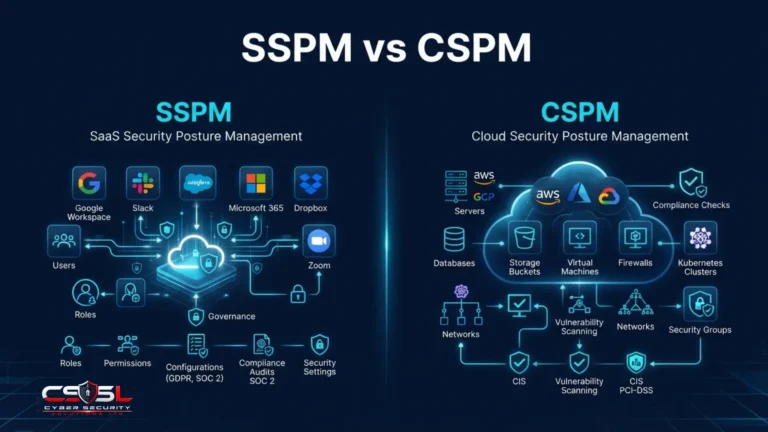
No. SSPM, covered in our SSPM guide, secures SaaS applications your organisation consumes as a customer, checking configuration inside Microsoft 365 or Salesforce. This post covers securing an application your organization builds and operates, whether sold as a SaaS product, used internally, or exposed to partners via API.
This distinction matters enough to state plainly. Both concepts sit under the umbrella of SaaS cloud security in casual search language, and most content never asks which one is actually meant.
The actual work involved is almost entirely different. Reviewing SSPM findings means checking whether a Salesforce sharing setting was left too open. Reviewing your own application means reading your authentication code and testing whether your authorization logic holds up under a crafted request.
These require different skills entirely. A security analyst comfortable auditing SaaS admin settings is not automatically equipped to review application authentication logic. Teams that conflate the two often end up with neither properly covered.
What Is Cloud API Security, and Why Has It Become the Primary Attack Surface?
Nearly every cloud-native application communicates through APIs, REST, GraphQL or gRPC, making the API surface the primary way both legitimate users and attackers interact with an application.
The OWASP API Security Top 10 catalogues vulnerability patterns specific to APIs, a distinct list from the general OWASP Top 10, since API vulnerabilities behave differently from traditional web flaws.
Broken Object Level Authorization sits at the top of that list for good reason. It happens when an API fails to check that the requesting user is authorized to access the specific record requested, letting one authenticated user reach another user’s data by changing an ID in the request.
API keys and tokens deserve scrutiny too, connecting back to the non-human identity governance already covered in our cloud IAM guide, since keys embedded in application code are routinely over-privileged and rarely rotated.
What Does “Cloud Based Endpoint Security” Actually Mean, Device, or API?
It depends on context. In traditional security, an endpoint means a physical device, laptop, phone, server, protected by EDR tooling. In application and API security specifically, an endpoint means a specific URL or route a client calls, like /api/users/{id}.
This collision causes real confusion in practice, not just an academic mix-up. A team told to review endpoint security has no way to know from that phrase alone which discipline is being asked for.
Device-level endpoint security means EDR tooling watching a laptop or server for malicious processes, an entirely separate pillar from anything covered in this cluster. API-level endpoint security means securing individual routes, each carrying its own authorization logic and its own vulnerability, exactly the territory this post covers.
Getting this wrong has a real cost. A review scoped to endpoint security that actually means device protection will completely miss API authorization flaws like BOLA, and the reverse is just as true. Clarify which meaning is intended before scoping any assessment.
What Are the Most Critical Cloud Application Vulnerabilities to Address?
Five vulnerability classes account for most of the risk in cloud-hosted applications.
- Broken authentication and session management: particularly relevant where an application implements custom authentication rather than relying on established cloud IAM or identity federation
- Injection vulnerabilities: SQL, NoSQL and command injection remain relevant regardless of where the application is hosted, since the coding flaw is unrelated to hosting location
- Insecure direct object references and broken access control: the application-level equivalent of the excessive permission problem CIEM addresses at the infrastructure layer, occurring in the application’s own authorization logic instead
- Server-Side Request Forgery: a successful attack against a cloud-hosted application can sometimes reach the provider’s internal metadata service, exposing the workload’s own cloud credentials
- Insecure deserialization and misconfigured CORS policies: classic web application risks that persist unchanged in cloud-native contexts
What Is RASP, and How Does It Differ From CWPP’s Runtime Protection?
CWPP, covered in our CWPP guide, monitors a workload’s process and network behavior from outside the application. RASP operates embedded inside the application’s own runtime, seeing function calls and data flow CWPP structurally cannot.
| Criteria | CWPP Runtime Protection | RASP |
| Where it operates | Outside the application, at container or VM level | Inside the application’s own runtime process |
| What it sees | Process behaviour, network connections, file activity | Function calls, data flow, application logic |
| Typical use case | Broad workload coverage across the estate | Highest-value, highest-exposure applications |
| Related post | CWPP Guide | This guide |
Here is the distinction most content blurs entirely, treating runtime protection as one interchangeable concept. It is not. CWPP watches a container or VM from the outside, looking at process behavior, network connections and file activity around the application.
RASP sits somewhere completely different: inside the application’s own running process. That gives it visibility into function calls and data flow no amount of infrastructure-level monitoring can reach, because the signal simply does not exist outside the application itself.
A concrete illustration makes this click. CWPP might detect that a container made an unexpected outbound network connection. RASP can detect that a specific application function received a malicious SQL injection payload as input, before that payload ever translates into an action a network monitor would notice.
RASP is not a universal replacement for infrastructure-level protection. It suits applications processing highly sensitive data or facing significant external exposure. For most applications, CWPP and the WAF layer covered next remain the right baseline.
How Do WAFs and API Gateways Protect Cloud Applications?
A Web Application Firewall sits in front of a web application, inspecting incoming HTTP traffic for known attack patterns, SQL injection signatures, cross-site scripting payloads, and blocking malicious requests before they reach the application.
An API Gateway serves a parallel function specifically for API traffic, adding authentication enforcement, rate limiting to prevent abuse, and threat detection tuned to the structured request patterns APIs follow rather than general web traffic.
Neither is a complete solution alone. Both operate primarily on known attack signatures and structural anomalies, catching a meaningful share of attacks but unable to substitute for genuinely secure code. A sufficiently novel or logic-based attack, like BOLA, often looks like a perfectly normal, well-formed request no signature-based tool would flag.
What Is Shadow API Risk, and How Is It Different From Shadow IT?
Shadow APIs are the application-layer equivalent of shadow IT, the unsanctioned SaaS applications covered in our CASB guide. Deprecated API versions left running after a supposed replacement launches, undocumented internal APIs built for one team’s convenience, and debug endpoints accidentally left accessible in production all create the same blind spot.
Because shadow APIs sit outside formal documentation and inventory, they typically get no security review, no monitoring and no consistent authentication enforcement, making them an attractive, low-effort target for anyone who finds one.
Shadow APIs are one of the most common findings Cyber Security Solutions Ltd turns up during an application security review, almost always older than the client expects. Finding them requires API discovery tooling that analyses actual network traffic to build a real inventory, rather than relying on documentation that is frequently incomplete.
How Does Microservices Architecture Change Application Security?
An application decomposed into many small, independently deployed services multiplies the number of network communication points, authentication boundaries and misconfiguration locations compared to a single, monolithic application.
Services calling other internal services need their own authentication and authorization model, distinct from how an external user authenticates to the application as a whole. This is service-to-service authentication, easy to overlook since it happens entirely behind the scenes.
Mutual TLS and a service mesh, technologies like Istio and Linkerd, increasingly provide encrypted, mutually authenticated communication between services automatically, handling that internal trust question at the infrastructure layer rather than requiring every service to implement it independently. Kubernetes Network Policies, covered in our container security guide, work alongside service mesh technology to restrict which services can communicate with which others.
How Do You Implement Cloud Application Security Step by Step?
Implementing this starts with a full inventory of built applications and APIs, then API discovery to surface shadow APIs, pipeline vulnerability scanning, a WAF and API gateway baseline, manual review for object-level access flaws, RASP for high-value applications, mTLS for microservices, and recurring inventory review.
- Inventory every application and API your organization has built and exposed, including internal-only tools, since these are frequently overlooked.
- Run API discovery against actual network traffic to surface shadow APIs not captured in existing documentation.
- Integrate automated vulnerability and dependency scanning into the development pipeline, catching known issues before deployment.
- Deploy a WAF and API gateway in front of externally-facing applications and APIs as a baseline protective layer.
- Review authorization logic specifically for object-level access control flaws, since these are rarely caught by automated scanning.
- Evaluate RASP for your highest-value, highest-exposure applications, rather than applying it uniformly.
- Implement mTLS or a service mesh for microservices architectures to secure service-to-service communication.
- Establish a recurring API and application inventory review, since shadow API risk reaccumulates without ongoing attention.
Conclusion
Cloud application security is the layer every earlier post in this cluster assumed was already handled somewhere else. It is not automatic. Infrastructure can be flawless and an application can still leak data through one unchecked permission in its own authorization logic. Review your code and your APIs with the same rigour you already apply to your infrastructure. To see whether your applications and APIs actually hold up under that kind of review, visit cybersecuritysolutionsltd.com for a free application security assessment from Cyber Security Solutions Ltd.
FAQs
Not necessarily. CSPM, CWPP and container security scans check the infrastructure and workloads an application runs on, not the application’s own code, authentication logic or API authorization. An application can be entirely vulnerable through flaws like BOLA even when everything around it is configured perfectly.
Broken Object Level Authorization happens when an API fails to verify a user is actually authorized to access the specific record requested. It lets one authenticated user reach another user’s data simply by changing an ID in the request, often without triggering any obvious error.
A WAF inspects general HTTP traffic for known attack signatures like SQL injection. An API Gateway serves a parallel role for API traffic specifically, adding authentication enforcement, rate limiting and threat detection tuned to structured API patterns rather than general web traffic.
Often, yes, for high-value applications. A WAF blocks known attack patterns before they reach the application. RASP operates inside the application itself, catching logic-based attacks a signature-based tool would miss. They protect different layers and work as complements, not substitutes.
Through API discovery tooling that analyses actual network traffic to build a real inventory of APIs genuinely in use, rather than relying on documentation, which is frequently incomplete or outdated. This surfaces deprecated versions and debug endpoints nobody remembered were still running.
It expands the attack surface, since more services mean more network communication points and authentication boundaries than a single monolithic application has. Mutual TLS and a service mesh address much of this automatically, but service-to-service authentication still needs deliberate design and review.