Microsegmentation Zero Trust: A Practical Implementation Guide
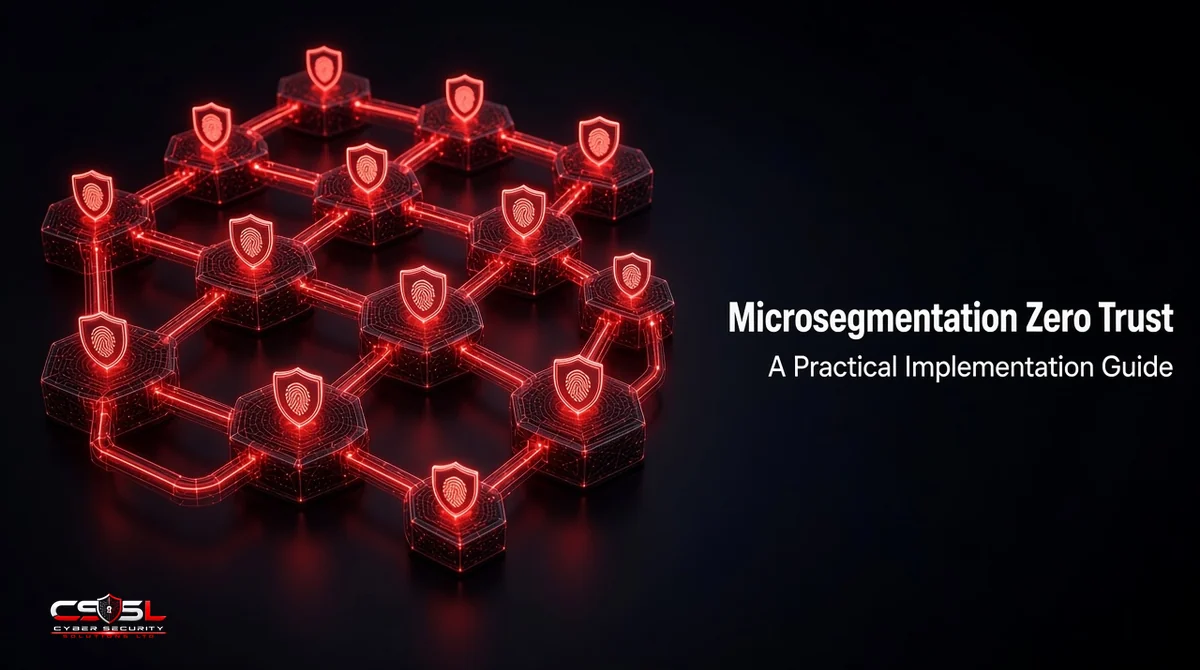
Most microsegmentation zero trust projects fail by starting with a tool and trying to segment everything at once. Start coarse instead. Ring-fence your most valuable systems with a handful of rules, watch the traffic, then tighten. This guide walks through that phased approach, from discovery to enforcement, without breaking production applications.
A Quick Recap: What Microsegmentation Does
Microsegmentation divides a network into small, isolated segments, down to individual workloads, and allows only the connections each one needs. Its job is to stop an attacker who gets in from moving laterally. Our companion guide covers the definition, types and use cases in full; this article covers how to put it into practice.
Where Microsegmentation Fits in Zero Trust
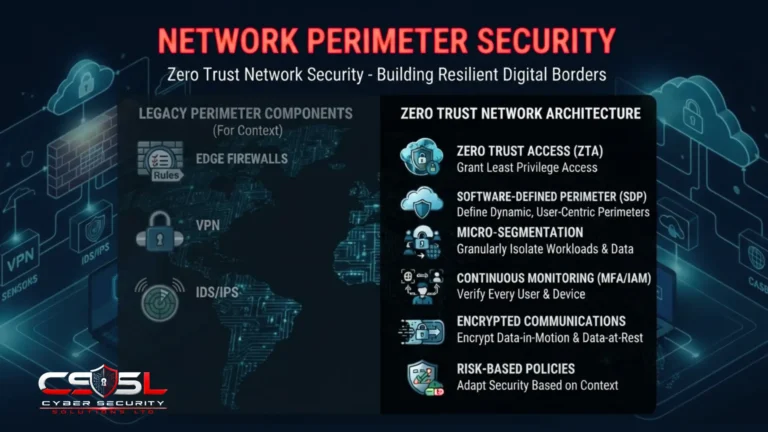
NIST SP 800-207 (2020) defines zero trust as an approach in which no user, device or network location is trusted by default, and access is granted per request based on policy. The CISA Zero Trust Maturity Model version 2.0 (2023) organizes this into five pillars: identity, devices, networks, applications and workloads, and data. Microsegmentation sits mainly in the networks pillar, and the maturity model’s more advanced stages describe moving from large perimeters toward isolated, application-specific networks.
In July 2025, CISA published Microsegmentation in Zero Trust, Part One: Introduction and Planning, which recommends a phased, iterative approach. The steps below follow that logic.
Why “Start Coarse” Beats “Segment Everything”
Trying to write workload-level rules for every system on day one creates three problems. You do not yet know every dependency, so rules break applications. The rule count becomes unmanageable before it protects anything. And teams lose confidence after the first outage, so the project stalls.
A coarse ring-fence around one high-value group, such as payment systems or a finance database, delivers real risk reduction with a few rules. It also teaches you how your traffic behaves before you go finer.
Step 1: Identify and Prioritize What to Protect
List the systems whose compromise would hurt most: payment and finance systems, databases holding customer or health data, domain controllers and identity systems, and backups. Then rank them by impact and by how exposed they are, for example to vendor accounts or internet-facing servers. Pick one or two to start. CISA’s guidance calls this choosing an initial scope.
Step 2: Discover Assets and Map Traffic Flows
You cannot write rules for flows you have not seen. Collect traffic data for your chosen systems over a period long enough to capture monthly and quarterly jobs, such as month-end reports or backup cycles. Sources include firewall logs, flow records from switches, cloud flow logs and host-based agents.
For each flow, record the source, destination, port and protocol, and the business reason. Flows nobody can explain are either undocumented dependencies or something worth investigating.
Step 3: Group Assets and Define Segments
Group systems that share a role and a risk level: for example, “payroll application servers,” “payroll database” or “vendor-managed building controls.” Label them by application, environment (production, test) and data sensitivity. Rules written against labels and identities survive server moves and scaling far better than rules written against IP addresses.
Step 4: Write Least-Privilege Policies
For each segment, write allow rules only for the flows you mapped and can justify. Everything else is denied by default. Keep rules readable, such as “payroll app may reach payroll database on its database port,” so owners can review them.
Policy Starting Points
| Segment | Allow | Deny by default |
|---|---|---|
| Payment or finance systems | Named application servers, admin jump host | All user laptops, guest and IoT networks |
| Databases | Their own application tier only | Direct user access, other databases |
| Domain controllers | Required directory and authentication traffic | Admin protocols from ordinary workstations |
| Backups | Backup server and agents | Interactive logins from the main network |
| Vendor or OT devices | The vendor’s management service only | Everything else on the corporate network |
Treat these as starting points to test against your own traffic maps, not fixed rules.
Step 5: Test in Monitor Mode Before Enforcing
Apply rules in log-only or monitor mode first. The system records what would have been blocked without blocking it. Review those logs with application owners. Every hit is either a missing rule to add or unwanted traffic to confirm as blocked. Move to enforcement only when the logs are quiet through at least one full business cycle.
Step 6: Enforce, Monitor and Maintain
Switch the first segment to enforcement, and keep logging denied traffic. Blocked attempts are useful signals: a workstation trying to reach a domain controller over an admin protocol is worth an alert. Send these logs to your monitoring or SIEM platform.
Assign every segment an owner, and add rule reviews to change management so a new application does not quietly open broad access. Then repeat steps 1 to 6 for the next priority group, gradually moving from coarse ring-fences to finer, workload-level rules.
Microsegmentation Zero Trust in Cloud and Kubernetes
Cloud environments make the same steps easier in some ways. Security groups and network access controls act as built-in enforcement points, and cloud flow logs supply discovery data. Define them through infrastructure as code so rules are reviewed like any other change.
In Kubernetes, network policies restrict which pods may talk to each other. The Kubernetes documentation notes that pods are non-isolated by default, accepting traffic from any source, until a policy selects them. A common pattern is a default-deny policy per namespace, followed by explicit allow policies for each service. Network policies only take effect if the cluster’s network plugin supports them, so confirm that first.
Measuring Progress and Common Pitfalls
Useful measures include the share of high-value systems inside an enforced segment, the number of open “any to any” rules removed, and how many blocked lateral connection attempts you detect.
Common pitfalls:
- Starting with the hardest legacy application instead of a contained, high-value one
- Skipping monitor mode and causing outages
- Writing rules by IP address that break when workloads move
- Forgetting management traffic such as backups, patching and monitoring
- Leaving segments without an owner, so rules drift
- Ignoring compliance scope: the PCI Security Standards Council’s 2016 scoping guidance says segmentation must be validated to reduce PCI DSS scope
Microsegmentation Zero Trust Next Steps for Your Network
Microsegmentation is moving toward identity-aware, label-based policies that follow workloads across data centers, clouds and containers, and CISA’s 2025 guidance signals that agencies are expected to make it part of their zero trust roadmaps. Organizations that start now with one coarse ring-fence will have the traffic maps and habits to go finer as tools mature. If you want help choosing your first segment and planning the phases, Cyber Security Solutions Ltd can review your environment; reach us through our contact page.
FAQs
It depends on scope. A coarse ring-fence around one high-value system can be in place within weeks, including a monitor period. Full workload-level segmentation across a larger environment is a multi-phase effort that runs over many months. Treat it as an ongoing program with priorities, not a single project with one finish date.
Not always. Many organizations start with what they already own: internal firewalls, host firewalls, cloud security groups and Kubernetes network policies. Dedicated platforms help with traffic visibility, labeling and managing rules at scale across mixed environments. Map your flows and test a first segment before deciding whether extra tooling is worth the cost.
Start with systems whose compromise would cause the most harm and that are reachable from risky sources. Typical first choices are payment or finance systems, sensitive databases, domain controllers and backups. Choose a contained group with known owners, so you can map its traffic, test rules and show results quickly before expanding.
Map traffic over a full business cycle, write rules only for documented flows, and run them in monitor mode before enforcing. Review would-be blocks with application owners and add missing rules. Roll out one segment at a time, keep a quick rollback plan, and add rule reviews to change management for new deployments.
Zero trust frameworks do not mandate one product, but limiting network access per workload is central to them. NIST SP 800-207 calls for per-request access decisions, and the CISA Zero Trust Maturity Model describes isolated, application-specific networks at its advanced stages. In practice, microsegmentation is how most organizations meet the networks pillar.
Track how many high-value systems sit inside enforced segments, how many broad "any to any" rules you have removed, and what your denied-traffic logs show. Penetration tests and attack simulations that try lateral movement from a compromised workstation give the clearest evidence. If testers cannot reach protected segments, the controls are working.