What Is CNAPP? Cloud-Native Application Protection Platform Explained
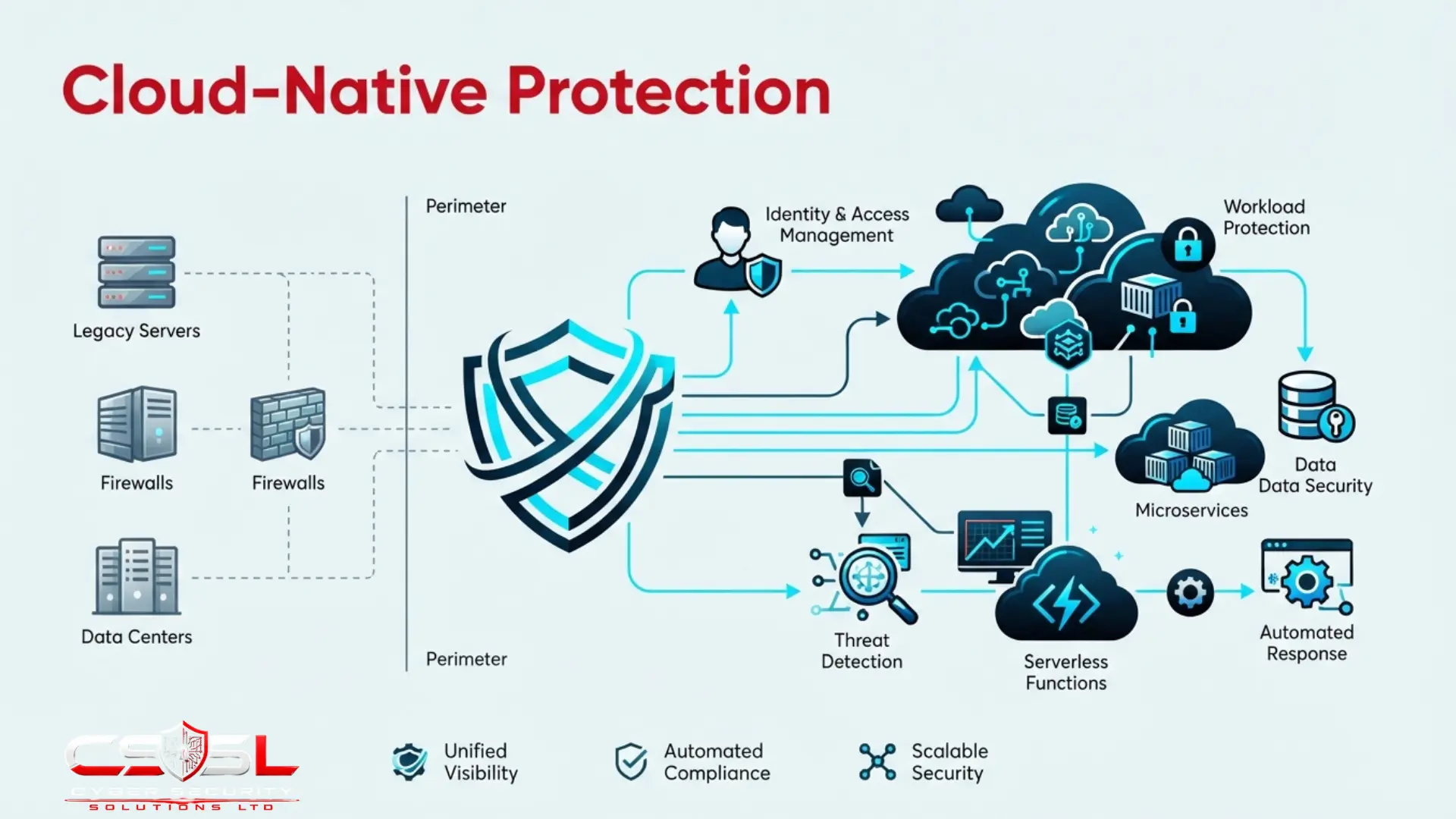
A CNAPP is a single platform that combines your cloud posture, workload and identity security tools, then correlates their findings together. If your team runs five separate tools and nobody has time to manually connect what each one is finding, this is exactly the gap CNAPP was built to close.
What Is CNAPP?
A Cloud-Native Application Protection Platform, CNAPP, is a consolidated security platform that unifies previously separate cloud security tool categories, most commonly CSPM, CWPP and CIEM, and often DSPM or CASB too, into one platform with shared data and correlated findings.
Gartner introduced the category around 2021, formalizing a consolidation trend vendors and buyers were already moving toward as separate point tools became genuinely hard to operate, budget for and correlate by hand.
CNAPP is not just a marketing bundle of unrelated products sold together. What is CNAPP actually for, then? The defining characteristic is that combined data from each component enables analysis no individual tool can perform alone.
What Is Cloud-Native Security, and How Does CNAPP Address It?
Cloud-native security is the broader discipline of securing applications built from containers, microservices, serverless functions and Kubernetes across their full lifecycle. CNAPP is the specific product category that emerged to deliver that discipline in practice.
Here is a distinction most content skips, treating the two terms as interchangeable. They are not. Cloud security is the discipline, and CSPM is the tool built for one piece of it. Cloud-native security follows the same pattern, and CNAPP is the tool.
Traditional applications were relatively static and long lived. You could scan them, patch them and move on.
Cloud-native applications are built from many small, frequently updated, ephemeral pieces. A container might live for minutes. A function might run for seconds and disappear. Security has to get built into the development pipeline itself, not just applied to a finished, deployed system.
That is the lifecycle framing worth understanding: code to cloud. How code gets written and scanned before it is even committed, how it gets built and packaged, and how it gets deployed.
How it behaves once it is actually running in production matters too. CNAPP is increasingly positioned as the platform covering that entire span, not just one stage of it.
What Does a CNAPP Platform Include?
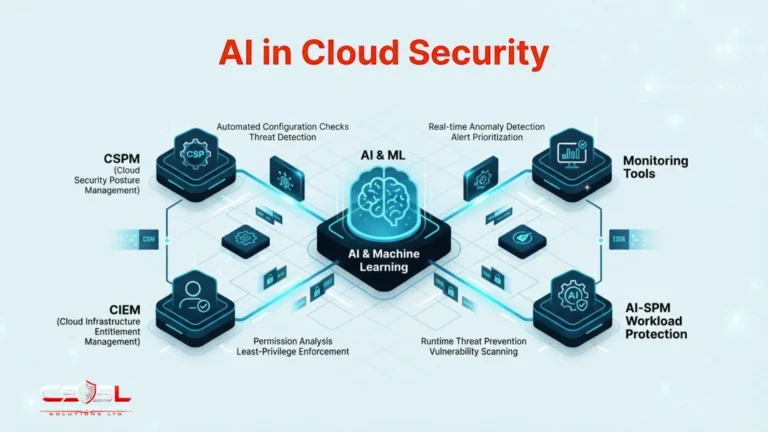
A CNAPP platform typically includes CSPM for configuration scanning, CWPP for runtime and vulnerability protection of workloads, and CIEM for entitlement analysis across identities.
| Component | What It Covers | Related Post |
| CSPM | Infrastructure and platform configuration scanning | What Is CSPM? |
| CWPP | Runtime protection and vulnerability scanning for workloads | What Is CWPP? |
| CIEM | Entitlement and effective permission analysis | What Is CIEM? |
| DSPM | Data discovery and classification | What Is DSPM? |
| CASB (sometimes) | SaaS access and data flow visibility | CASB Guide |
| IaC scanning | Terraform and CloudFormation templates checked pre-deployment | Increasingly bundled |
DSPM and CASB or SaaS-adjacent coverage often get included too, though this varies meaningfully between vendors and should never be assumed without checking directly. IaC scanning is increasingly included as well, checking Terraform and CloudFormation templates before anything deploys, reaching earlier into the pipeline than any runtime tool can manage alone.
CNAPP vs CWPP: Are They Rivals, or Is One Part of the Other?
CWPP is not a rival to CNAPP. CWPP existed first, focused specifically on protecting running workloads. As the industry recognized workload protection alone left dangerous gaps, CNAPP emerged to absorb CWPP as one core component.
Searching CNAPP vs CWPP usually returns content comparing them like competing options, resting on a common but incorrect assumption. CWPP came first, built around vulnerability scanning and runtime threat detection for virtual machines, containers and serverless functions.
As cloud environments matured, the industry realized workload protection alone, without configuration and identity context, left dangerous blind spots. A workload can be perfectly patched and still sit exposed by a misconfigured network rule nobody caught. That gap led to CNAPP’s emergence as the unifying category.
Here is what this means for buyers. A standalone CWPP remains the right choice for organizations wanting deep, specialized runtime protection without a full platform. A full CNAPP typically includes CWPP alongside CSPM and CIEM. The realistic choice is not CNAPP or CWPP. It is a specialized CWPP point tool versus CWPP as one module inside a broader platform.
What Does CNAPP Do That Individually Deployed Tools Cannot: Attack Path Analysis
Running CSPM, CWPP, CIEM and DSPM side by side still leaves a human analyst to manually connect their separate findings. CNAPP’s real differentiator is automatic correlation, revealing complete attack paths no single tool’s findings could show alone.
Here is a concrete example. A workload has a known vulnerability, a CWPP finding. That workload is publicly reachable due to an overly permissive network rule, a CSPM finding. Its identity holds excessive permissions to a separate storage resource, a CIEM finding. That resource has been confirmed to hold sensitive customer data, a DSPM finding.
Individually, each finding might rank as low or medium priority. Nobody gets paged for one overly broad permission, or drops everything for one unpatched vulnerability on a low-traffic workload. Correlated together, they form a critical, exploitable route from an internet-facing weakness straight to sensitive data.
This extends a principle already established for toxic combinations: sensitive data plus broad access plus exposure is the real risk signal. CNAPP’s attack path analysis is that same logic, extended across vulnerability and network reachability data that neither DSPM nor CIEM alone can see.
Most cloud environments generate far more findings than any team could realistically triage one by one. This is the exact pattern Cyber Security Solutions Ltd looks for first when triaging a client’s alert backlog, letting limited remediation capacity focus on the handful of findings that represent a genuinely complete route, instead of spreading thin across thousands of disconnected alerts.
What Does Cloud-Native Security Architecture Look Like With CNAPP as Its Foundation?
Mature cloud-native security architecture increasingly integrates CNAPP scanning directly into CI/CD pipelines, so IaC templates and container images get assessed before deployment, not only after resources are already running.
Rather than separate tools maintaining their own disconnected inventory, a CNAPP centred architecture maintains one consistent asset and risk graph spanning code, build artefacts, infrastructure configuration and runtime behavior.
This connects forward to the widely referenced Cloud, Cluster, Container and Code model of cloud-native responsibility. CNAPP is best understood as the platform built to provide coordinated visibility across all four layers at once, rather than requiring separate tooling per layer. CNAPP platforms also typically apply the same agentless-plus-agent hybrid approach used across cloud security generally: broad agentless scanning for posture and identity, targeted agents only where real-time runtime protection genuinely justifies it.
What Are the Leading Cloud-Native Security Platforms and Tools in 2026?
Leading dedicated CNAPP platforms in 2026 include Wiz, Palo Alto Networks through Prisma Cloud, Orca Security, Lacework and CrowdStrike Falcon Cloud Security, each spanning most or all of the components described above.
Microsoft Defender for Cloud and AWS Security Hub increasingly bundle posture, workload and entitlement capability within their own single cloud ecosystems, a relevant option if you are committed primarily to one provider.
When evaluating a platform, check the breadth and depth of each component, since a CWPP module should be judged on its own merits, not assumed adequate purely because it is bundled. Check the quality of attack path correlation output, CI/CD integration depth and multi-cloud consistency.
What Are the Benefits of Consolidating Onto a Single CNAPP Platform?
Consolidation brings real operational benefits: one vendor relationship and support channel instead of five or six, and one management console instead of separate dashboards each with their own login.
The analytical benefit is the attack path correlation described above, structurally impossible to achieve reliably when tools operate in isolation, however good each one might be on its own.
Correlated, prioritized findings also reduce alert fatigue, cutting the volume of disconnected alerts a team would otherwise triage manually. A shared data model makes consistent policy application across posture, workload and identity domains far more practical too.
What Are the Limitations and Risks of CNAPP Consolidation?
A bundled component is not automatically as deep as a dedicated point tool built to do only that job. With an acute need in one area, evaluate that component’s standalone capability directly rather than assuming platform breadth guarantees strength.
Migrating away from a fully consolidated platform later is a bigger undertaking than replacing a single point tool, since workflows and correlation logic accumulate around the platform over time.
Not every CNAPP includes every component. DSPM and CASB coverage varies between vendors, so buying a CNAPP does not automatically mean every domain gets addressed without direct verification.
Consolidation does not remove the need for a remediation process either. A more sophisticated platform surfaces better prioritized problems. It does not fix them automatically.
How Do You Evaluate and Implement a CNAPP Platform Step by Step?
Evaluating CNAPP starts with inventorying current tooling, defining which components matter most, then shortlisting platforms and testing attack path correlation directly during a proof of concept. Confirm CI/CD integration depth, plan a phased migration, and establish cross-functional ownership before findings start arriving.
| Criteria | Standalone Point Tools | Consolidated CNAPP |
| Vendor relationships | One per tool | Single vendor |
| Cross-tool correlation | Manual, if done at all | Automatic |
| Component depth | Often deeper per tool | Varies by module |
| Alert volume | High, disconnected | Lower, prioritized |
| Migration flexibility | Easy to swap one tool | Harder once adopted |
| Best suited for | Acute, specialized needs | Broad, ongoing coverage |
- Inventory your current cloud security tooling across CSPM, DSPM, CIEM and CASB, to understand what a CNAPP would replace or complement.
- Define which components matter most for your risk profile. Not every organization needs equally deep capability across all four.
- Shortlist platforms and evaluate each component’s standalone strength individually, not just the platform’s overall marketing.
- Specifically test attack path and correlation output during any proof of concept. This is what most distinguishes real value from a simple bundle.
- Confirm CI/CD and IaC scanning integration depth if shift-left security is a priority for your development teams.
- Plan a phased migration from existing point tools rather than a single cutover, validating findings match what you already catch.
- Establish clear, cross-functional ownership for acting on correlated findings, since they often span infrastructure, identity and application teams at once.
Conclusion
So what is CNAPP, in the end? Not a bigger box holding the same separate tools. It is what happens when those tools finally share data, turning thousands of disconnected alerts into a handful of attack paths worth acting on. Whether you consolidate now or keep specialized point tools a while longer, the components matter more than the label on the platform. To map your current tool sprawl against what a CNAPP would genuinely add, visit cybersecuritysolutionsltd.com for a free consolidation review from Cyber Security Solutions Ltd.
FAQs
No. CSPM is one component within a CNAPP platform, focused on infrastructure configuration scanning. CNAPP is the broader platform unifying CSPM with CWPP, CIEM and often DSPM, correlating findings together. CSPM alone cannot see workload vulnerabilities or identity permissions the way a full CNAPP can.
It depends on your need. A standalone CWPP remains the right choice for deep, specialized runtime workload protection alone. A full CNAPP adds configuration and identity context CWPP cannot see on its own, correlating everything into attack paths. Most organizations outgrow standalone CWPP as their footprint grows.
Running tools side by side still needs a human to manually connect findings. CNAPP automatically correlates data across components to reveal complete attack paths, like a vulnerable workload with excessive access to sensitive data, that no individual tool’s findings could show alone.
No. CNAPP correlates and prioritizes findings, surfacing the few that represent genuinely exploitable paths. Fixing what it finds still requires a committed remediation process spanning infrastructure, identity and application teams, exactly as with standalone CSPM, DSPM or CIEM findings on their own.
No. CSPM, CWPP and CIEM are close to universal, but DSPM and CASB coverage varies between vendors. Never assume a platform covers every domain without direct verification. Confirm the exact components included and evaluate each one’s standalone strength before buying anything.
Many mature platforms do, scanning IaC templates and container images before deployment rather than only after resources are already running. If shift-left security matters to your development team, confirm this integration depth specifically during evaluation, since it varies a lot between vendors.