What Is a Cloud Data Security Platform? How to Choose the Right One
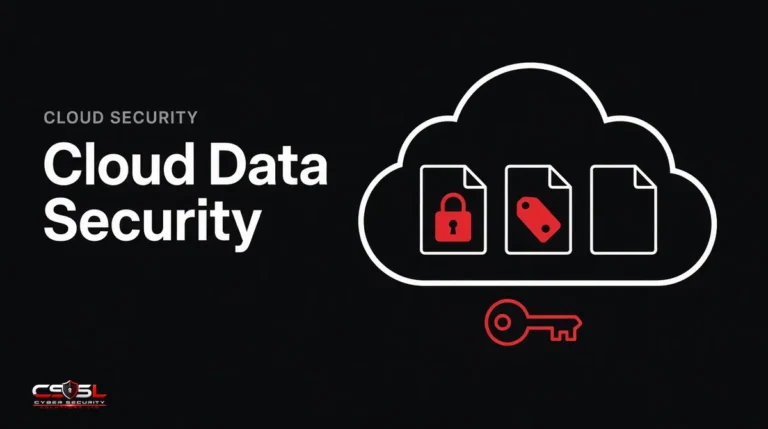
A cloud data security platform discovers, classifies, and monitors sensitive data across your cloud environment, then applies protective controls based on that data’s actual sensitivity. Many current platforms build on DSPM, data security posture management, as their foundational discovery layer.
If every vendor demo looks equally impressive and you’re not sure who should even be in the room for this decision, here’s a process that actually works.
What Is a Cloud Data Security Platform?
A cloud data security platform discovers where sensitive data actually lives across your cloud environment, classifies it by sensitivity, and applies protective controls based on that classification, rather than treating every piece of data identically.
Many current platforms build this on DSPM specifically, data security posture management, using it as the foundational discovery and classification layer that everything else, monitoring, access control, remediation guidance, gets built on top of.
Who Should Actually Be in the Room When You Choose One?
A genuine evaluation needs four distinct perspectives represented, not just whoever initiated the search.
Security needs to assess actual protective capability. IT operations needs to assess deployment complexity and ongoing maintenance burden. Legal or compliance needs to confirm the platform genuinely supports your specific regulatory obligations. And at least one business unit owner, someone whose actual data the platform will protect day to day, needs a seat at the table too, since they’ll spot practical friction the other three groups might miss entirely.
Leaving any of these voices out doesn’t just risk a worse decision. It risks discovering a critical gap only after the contract’s already signed, when a compliance requirement or an operational conflict surfaces that nobody in the room was positioned to catch earlier.
A Realistic 10-Week Evaluation Timeline, Step by Step
Here’s a concrete timeline worth following directly, rather than an open-ended process with no real structure.
Cloud Data Security Platform Evaluation Timeline
| Week | Activity |
|---|---|
| Weeks 1-2 | Define requirements and success criteria with all stakeholders |
| Weeks 3-4 | Research and shortlist 3-5 vendors against those requirements |
| Weeks 5-7 | Run proof of concept testing against real production data |
| Weeks 8-9 | Conduct reference customer calls and finalize comparison |
| Week 10 | Stakeholder sign-off and begin contract negotiation |
Two weeks defining requirements first, before looking at a single vendor, prevents the common trap of evaluating platforms against whatever features happen to look impressive in a sales pitch rather than what you’ve genuinely determined you need. Three weeks of proof of concept testing against real data matters more than any other single step; a platform’s marketing claims mean nothing until tested against your own messy, real-world environment.
Why Broader Discovery Isn’t Automatically Better
Here’s an honest tradeoff most vendor marketing never mentions directly. A platform claiming to discover data across dozens of source types often sacrifices classification accuracy for that sheer breadth, generating more false positives per source as it stretches to cover ground it wasn’t originally built to handle well.
Fewer, more accurately classified data sources frequently deliver more genuinely actionable protection than broad, shallow coverage spread thin across everything. A platform correctly classifying 95% of findings across five core data sources gives you something you can actually act on with confidence. A platform claiming coverage across twenty data sources but classifying only 60% correctly buries genuine risk inside a flood of unreliable findings nobody can confidently prioritize. When evaluating breadth claims, ask directly what accuracy rate the vendor achieves specifically on the sources that matter most to you, not their broadest, most generic marketing figure.
What Should Every Vendor Demo the Exact Same Way?
Every vendor should demo against the identical dataset and identical use case, your own representative sample if possible, not their own curated, clean demo environment built specifically to look impressive.
Standardizing the demo scenario across every vendor on your shortlist is the only way to genuinely compare classification accuracy and false-positive rates on equal terms. A vendor demoing on their own carefully prepared sample data will always look cleaner than one forced to work against your actual, messier production environment, and that gap tells you nothing useful about which platform will genuinely perform once deployed.
Public Cloud, Private VPC, or BYOC — How Deployment Model Connects to Your Sovereignty Requirements
Public cloud deployment offers the fastest setup and lowest implementation complexity, but means your data flows through the vendor’s own shared infrastructure, a genuine consideration if you carry strict data residency or sovereignty obligations.
Private VPC keeps processing within your own cloud account specifically, giving you more direct control over where data actually sits, at the cost of somewhat more setup complexity than a pure public cloud offering.
BYOC, Bring Your Own Cloud, gives you maximum sovereignty control, since the platform runs entirely within infrastructure you own and manage, though this comes with the most implementation complexity of the three options.
Deployment Models and Sovereignty
| Model | Sovereignty Control | Setup Complexity |
|---|---|---|
| Public cloud | Lowest | Lowest |
| Private VPC | Moderate | Moderate |
| BYOC | Highest | Highest |
If your business carries genuine data sovereignty obligations, whether regulatory or contractual, deployment model deserves evaluation with the same seriousness as classification accuracy, not treated as a minor technical footnote decided late in the process.
Common Mistakes That Derail Otherwise Good Evaluations
Skipping proof of concept testing on real production data is the single most common, most costly mistake. A platform that looks perfect against a vendor’s clean demo dataset can perform very differently once it meets your own genuinely messy environment.
Letting one stakeholder’s individual preference override the group’s own agreed evaluation criteria derails evaluations that started well. If requirements were genuinely defined collaboratively in weeks one and two, the final decision should trace back to those criteria, not to whichever vendor’s salesperson built the strongest individual relationship with one decision-maker.
Failing to test classification accuracy against your actual data, rather than clean, curated demo samples, is the third recurring failure, closely related to skipping proof of concept altogether but distinct enough to name separately, since some teams do run a proof of concept, just against data too tidy to reveal real accuracy problems.
What Should You Ask the Reference Customers?
Here’s specific, genuinely useful guidance most content skips, stopping at the vague advice to simply “check references.”
Ask directly about false-positive rate after tuning, not the vendor’s own marketing figure, but the reference customer’s genuine, lived experience once their team spent real time configuring the platform for their environment.
Ask how many hours weekly their team actually spends managing the platform post-deployment, since this reveals the real, ongoing operational cost no sales demo will volunteer.
Ask whether the vendor’s actual support response matched what sales originally promised, since support quality gaps between the sales pitch and lived reality are genuinely common and rarely surface unless you ask directly. Cyber Security Solutions Ltd routinely helps businesses build exactly this kind of pointed reference question set, since a vendor-selected reference customer will almost always answer generic satisfaction questions positively regardless of genuine platform quality.
A Compressed Version of This Process If You’re Not Running an Enterprise Procurement Team
A smaller business without a dedicated procurement function can run a genuinely compressed version in roughly three to four weeks rather than ten.
Define your top three requirements specifically, rather than attempting a comprehensive requirements document. Shortlist two vendors instead of five, based on how closely each matches those three priorities. Run one focused proof of concept specifically on your highest-risk data, rather than testing broadly across everything. Make one genuine reference call each, prioritizing depth on the specific questions above over breadth across many superficial conversations.
Conclusion
Choosing a cloud data security platform comes down to testing against your own real data, standardizing every vendor comparison fairly, and asking reference customers the specific questions that reveal genuine, lived experience rather than polished satisfaction. Build in real proof of concept time, get the right stakeholders in the room early, and don’t mistake breadth for accuracy. If you want help running this evaluation properly, Cyber Security Solutions Ltd can walk through it with you.
FAQs
A cloud data security platform discovers, classifies, and monitors sensitive data across your cloud environment, then applies protective controls based on that data's actual sensitivity, commonly built on DSPM as its foundational discovery layer.
DSPM, data security posture management, is the discovery and classification discipline underlying many cloud data security platforms, identifying where sensitive data lives and assessing its exposure before applying protective controls on top of that visibility.
Security, IT operations, legal or compliance, and at least one business unit owner whose actual data the platform will protect. Leaving any of these voices out risks discovering a critical gap only after signing.
A realistic full evaluation spans roughly 10 weeks: defining requirements, shortlisting vendors, running proof of concept testing, conducting reference checks, and stakeholder sign-off. A compressed version can run three to four weeks.
Public cloud offers the fastest setup but least sovereignty control. Private VPC balances control and complexity. BYOC gives maximum sovereignty control at the cost of the most implementation complexity, best suited to strict regulatory obligations.
Skipping proof of concept testing on real production data, letting one stakeholder's preference override agreed evaluation criteria, and testing classification accuracy against clean demo samples rather than your own genuinely messy environment.