Network Segmentation Security: Best Practices and Implementation Guide
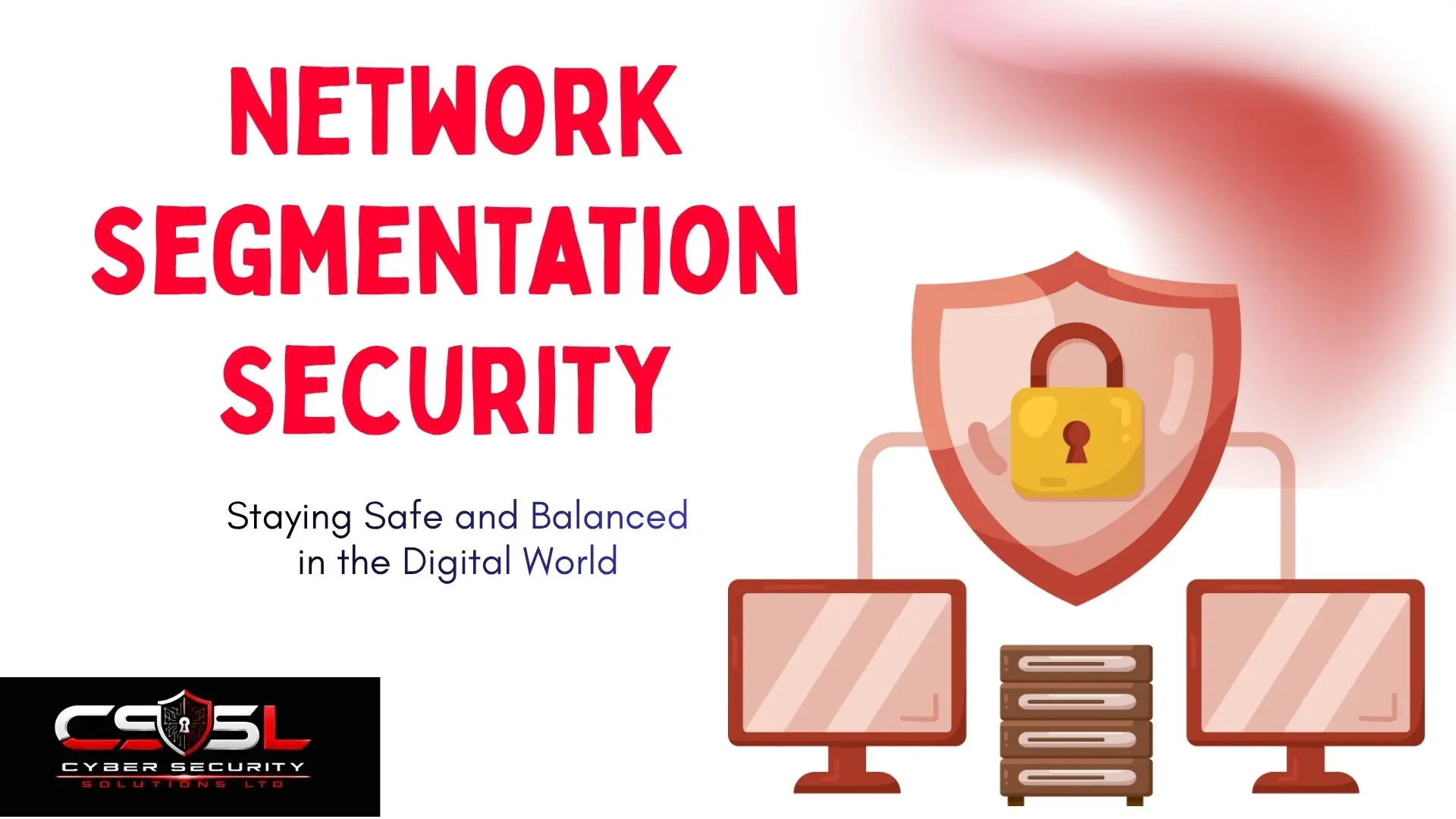
Network segmentation security divides your network into smaller, isolated sections using techniques like VLANs or SDN-enabled micro-segmentation, limiting how far an attacker can move if any one section gets compromised. But here’s the part most guides skip: a VLAN alone doesn’t secure anything until you enforce the traffic rules between segments.
If your VLANs feel more like organizational labels than real security boundaries, you’re not imagining it.
What Is Network Segmentation and How Does It Relate to Network Security Zones?
Network segmentation is the practice of dividing a network into smaller, isolated sections so traffic between them is deliberately controlled. If an attacker compromises one section, segmentation limits how far they can move from there.
You’ve likely already thought through your network in terms of broader zones: untrusted, a buffer zone facing the internet, internal systems, and your most restricted, sensitive assets. That conceptual model matters, but it’s only half the picture. A documented zone diagram on a whiteboard means nothing without the actual technical implementation enforcing it on your real network. That’s exactly what this guide covers: the hands-on mechanics of turning a zone diagram into something that genuinely works.
What Is a VLAN and How Does VLAN Tagging Work?
A Virtual LAN, or VLAN, logically divides one physical network into multiple separate virtual networks. Devices sitting on the same physical switch can be treated as though they’re on entirely different networks, without you running separate cables for each one.
Here’s the mechanism that makes this work. The IEEE 802.1Q standard defines how VLAN tags get inserted into Ethernet frames. Every tagged frame carries a VLAN ID, a small piece of data that tells switches and routers exactly which virtual network that traffic belongs to. Without this tag, a switch has no way of knowing which VLAN a given piece of traffic should stay within.
This is where two port types matter, and mixing them up causes real problems. An access port connects a single device, like a laptop or printer, to one specific VLAN. That device has no idea VLANs even exist; it just sees its own network. A trunk port is different. It carries tagged traffic for multiple VLANs simultaneously between switches, which is how VLAN information travels across your broader network infrastructure.
Misconfiguring the difference between these two port types is one of the most common, entirely avoidable causes of segmentation failure. A port accidentally left as a trunk when it should be an access port can expose traffic that was never supposed to cross VLAN boundaries in the first place. Understanding this distinction isn’t optional technical trivia. It’s the foundation for everything else in this guide, including both the real benefits VLANs offer and the real limitations you need to know about before trusting them completely.
How Do VLANs Improve Network Security?
VLANs improve security mainly through traffic isolation and reduced exposure. Devices in different VLANs can’t communicate directly unless traffic is explicitly routed and permitted between them, which delivers much of the isolation benefit of separate physical networks at a fraction of the cost.
There’s a quieter benefit too: broadcast traffic containment. Every device on a network occasionally sends broadcast messages that all nearby devices receive. Without VLANs, every device on that switch sees every broadcast. With VLANs, a device only receives broadcast traffic relevant to its own VLAN, meaning a compromised device has a smaller pool of directly visible neighbors to begin with. That’s a small detail with real consequences during an actual incident.
VLANs are also the practical, everyday mechanism most businesses actually use to build the guest, staff, server, and restricted zones you’ve likely already mapped out conceptually. If you’ve ever set up a separate guest WiFi network at your office, VLANs are the reason that guest traffic genuinely can’t reach your internal business systems. It’s not just a different password on the same underlying network. It’s a properly separated virtual network, assuming it’s configured correctly.
What Is VLAN Hopping, and Why Doesn’t “We Have VLANs” Automatically Mean “We’re Secure”?
Here’s the honest truth most vendor pitches gloss over: a VLAN is a segmentation mechanism, not an automatic security guarantee. Treating “we have VLANs” as equivalent to “we’re secure” is a genuine, common mistake that leaves real gaps.
VLAN hopping is the specific attack technique that exposes this gap. An attacker exploiting switch misconfiguration can potentially send traffic that crosses from one VLAN into another it was never supposed to reach. This typically happens two ways. Switch spoofing tricks a port into becoming a trunk port when it shouldn’t be one, opening the door to traffic that should have stayed contained. Double tagging nests one VLAN tag inside another, exploiting how some switches process nested tags, to sneak traffic past filtering it should never have passed.
Here’s the reassuring part: this is genuinely preventable, not some fundamental flaw baked into VLANs themselves. Disabling auto-trunking negotiation on every port closes the switch spoofing path. Never using the default or native VLAN for actual production traffic closes the double tagging path. Explicitly assigning every single port’s role, rather than relying on whatever the switch defaults to out of the box, closes both gaps at once. None of this requires exotic equipment. It requires deliberate configuration instead of default settings.
There’s a second limitation that has nothing to do with attacks at all, and it might matter even more day to day. VLANs alone do not control traffic between VLANs. That job belongs to a firewall or router applying deliberate rules at the boundary between segments. A VLAN with no enforced inter-VLAN policy gives you organizational tidiness, clean labels, and a nice diagram, but it doesn’t give you genuine security isolation. If any device on your guest VLAN can still freely reach your internal server VLAN because nobody set up firewall rules between them, you have VLANs in name only.
VLAN Misconfiguration Risks and Their Fix
| Risk | How It Occurs | The Fix |
| Switch spoofing | A port gets tricked into negotiating as a trunk port | Disable auto-trunking negotiation on all ports |
| Double tagging | An attacker nests one VLAN tag inside another to bypass filtering | Avoid using the native VLAN for actual traffic |
| Unenforced inter-VLAN traffic | No firewall or ACL governs traffic between VLANs | Apply explicit firewall or ACL rules at VLAN boundaries |
| Native VLAN misuse | Default VLAN left active and used for real traffic | Explicitly assign every port’s role and VLAN membership |
From VLANs to Genuine Micro-Segmentation: Delivering on the Promise
VLANs work well for a manageable handful of broad segments. They start to strain once you need segmentation to reach hundreds, or thousands, of individual workloads instead.
Think about what that administrative burden actually looks like. Manually managing VLAN assignments and trunk configurations for a few dozen devices is reasonable. Managing that same level of manual configuration for a thousand individual servers, each potentially needing its own narrow access rules, becomes genuinely unmanageable and error-prone fast.
This is where software-defined, centrally controlled segmentation changes the equation. Instead of relying on VLAN tags and switch-by-switch configuration, policy gets defined once, centrally, and enforced dynamically, often down to the individual workload or host level, regardless of which physical or logical segment that workload happens to sit within. This is what turns fine-grained micro-segmentation from a theoretical goal into something actually achievable at real scale.
There’s a further, complementary layer worth knowing about: host-based and hypervisor-level segmentation. This means enforcing segmentation rules directly on individual machines or within virtualized environments themselves, rather than relying purely on network infrastructure. The advantage is resilience. Even if something goes wrong at the network level, this host-level control still stands as an independent layer of protection.
What Are the Different Segmentation Approaches, and How Do You Choose Between Them?
There’s no single “best” segmentation approach. Each option carries real, different trade-offs, and the right choice depends entirely on what you’re actually protecting.
Physical segmentation means genuinely separate physical network hardware. It offers the strongest isolation possible, since there’s no shared infrastructure at all to misconfigure. It also comes with the highest cost and the least flexibility, which is why it’s most commonly reserved for the highest-sensitivity environments, like industrial control systems or fully air-gapped networks.
VLAN-based segmentation is the practical, everyday approach for most business networks. Properly configured and genuinely enforced with real inter-VLAN policy, it delivers strong isolation at a reasonable cost, which is exactly why it remains the most common segmentation method in use today.
SDN-enabled micro-segmentation offers the most granular, dynamic control available. It’s best suited to environments with genuine scale and complexity, or organizations actively working through a broader zero trust initiative that demands per-workload precision.
Here’s the practical guidance that matters most: most organizations don’t need to pick only one approach. A mature network commonly uses VLANs as its broad, foundational segmentation layer, then applies micro-segmentation specifically to its highest-value assets, like a customer database or payment processing system. Treating this as an all-or-nothing decision is where a lot of businesses waste money on complexity they don’t need, or leave gaps around assets that genuinely deserve tighter control.
Network Segmentation Approaches Compared
| Approach | Isolation Strength | Cost and Complexity | Best Suited For |
| Physical segmentation | Highest | Highest cost, least flexible | Industrial, air-gapped, highest-sensitivity systems |
| VLAN-based segmentation | Strong, once enforced | Moderate cost, manageable | Most business networks |
| SDN-enabled micro-segmentation | Most granular | Higher complexity, needs supporting infrastructure | Large-scale, zero trust-aligned environments |
Working through this decision with a team like Cyber Security Solutions Ltd helps match the right approach to each asset’s actual value, rather than over-investing everywhere or under-protecting what matters most.
What Are Network Segmentation Best Practices?
Apply least-access-by-default between every segment. Any traffic crossing a boundary should require an explicit, documented reason, not a default, convenient rule that happens to make things easier.
Document each segment’s purpose and expected traffic flows. Undocumented segmentation is genuinely difficult to audit or maintain over time, especially once the person who originally set it up has moved on.
Never rely on VLANs alone without enforced inter-VLAN firewall or ACL policy, for exactly the reasons covered above.
Review and audit segment boundaries on a recurring basis. Segmentation that was correct when first designed frequently drifts as your network changes, new devices get added, and old rules get forgotten but never removed.
If your business handles payment card data, segmentation carries direct compliance weight too. The PCI Security Standards Council explicitly recognizes proper segmentation as one of the primary, legitimate ways organizations reduce the scope of systems subject to full cardholder data environment requirements. Get segmentation right, and your compliance burden shrinks along with your actual risk.
How Do You Implement Network Segmentation Step by Step?
- Inventory assets and map required traffic flows. Know what you have and what genuinely needs to talk to what before configuring anything.
- Assign systems to VLANs based on function and sensitivity, following your existing zone logic.
- Configure trunk and access ports explicitly and deliberately. Never rely on default switch behavior to make this decision for you.
- Disable auto-trunking negotiation and avoid using the default or native VLAN for actual traffic, closing the VLAN hopping risk covered earlier.
- Apply explicit firewall or ACL rules governing exactly what traffic is permitted between VLANs, rather than leaving inter-VLAN routing open by default.
- Layer SDN-enabled or host-based micro-segmentation onto your highest-value assets specifically, rather than attempting it network-wide immediately.
- Document the resulting segmentation design and review it on a recurring, scheduled basis, since drift is the norm, not the exception.
Conclusion
Segmentation only works when the mechanism matches the intent behind it, and that means going beyond simply turning VLANs on. Map your traffic, enforce your boundaries, and review the design on a real schedule instead of setting it up once and forgetting it. If you want a second set of eyes on whether your current segmentation is doing what you think it’s doing, Cyber Security Solutions Ltd can walk through it with you.
FAQs
VLANs isolate traffic and reduce broadcast exposure, which genuinely helps. But a VLAN alone doesn’t secure inter-VLAN traffic. You need explicit firewall or ACL rules governing what’s allowed to cross between VLANs for real security.
VLAN hopping is an attack technique where a device crosses from one VLAN into another it shouldn’t access, typically through switch spoofing or double tagging. It’s preventable by disabling auto-trunking and avoiding the native VLAN for real traffic.
An access port connects a single device to one specific VLAN. A trunk port carries tagged traffic for multiple VLANs simultaneously between switches. Misconfiguring the two is a common, avoidable cause of segmentation failure.
No. A VLAN is a segmentation mechanism, not a complete security guarantee. Inter-VLAN traffic still needs deliberate firewall or ACL enforcement, or the VLAN only provides organizational tidiness without real isolation.
VLANs segment at the network level using tags and switch configuration, which becomes unwieldy at scale. SDN-enabled micro-segmentation defines policy centrally and enforces it dynamically at the individual workload level, regardless of physical segment.
Properly implemented segmentation isolates systems handling cardholder data from the rest of the network. That isolation is one of the primary ways organizations legitimately reduce which systems fall under full PCI DSS compliance requirements.