Best Cloud Security Solutions in 2026: Top Platforms Compared
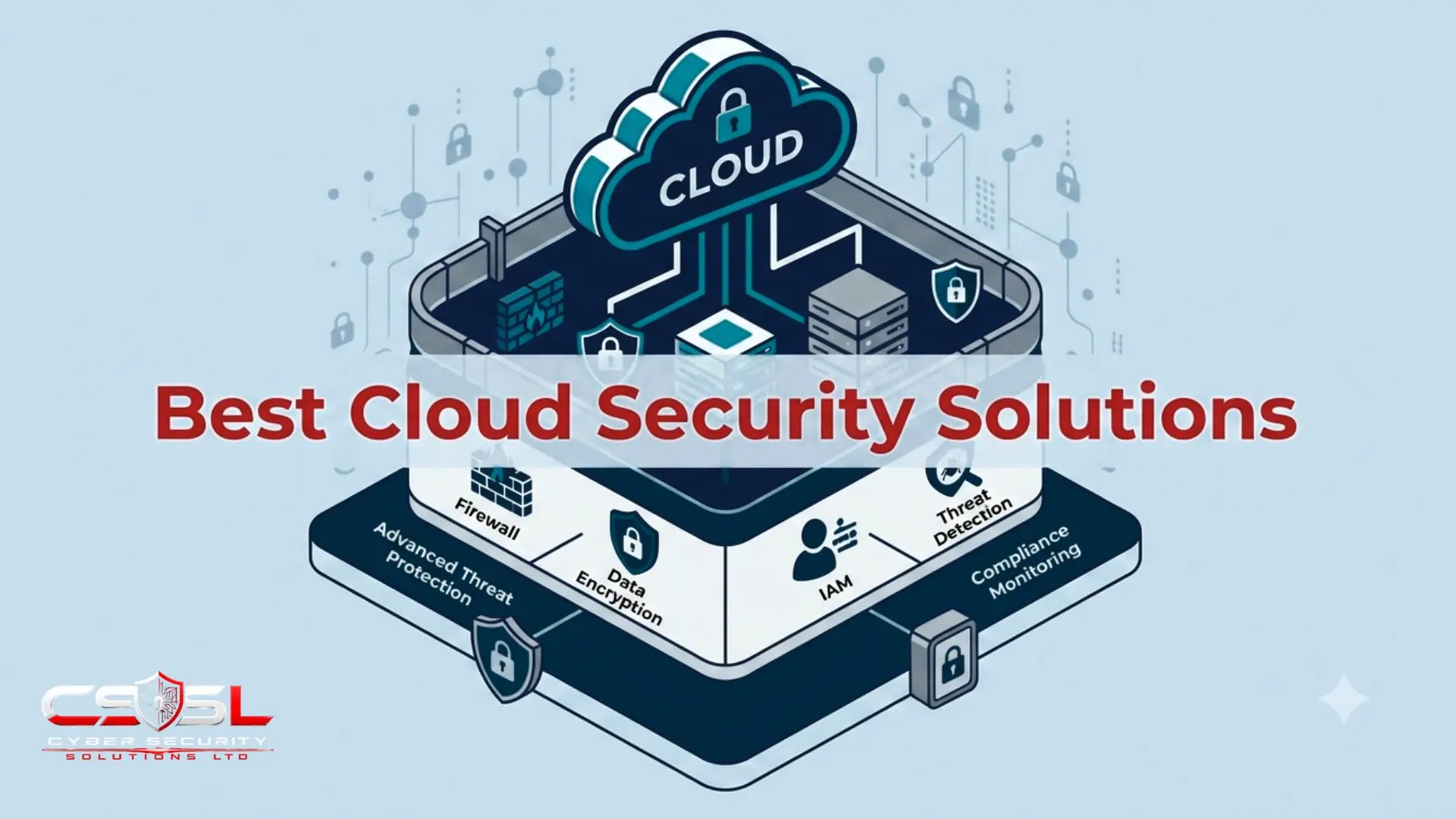
The best cloud security solutions in 2026 depend on your cloud provider mix, workload type and existing security stack, not a single universal winner. If every vendor’s website claims to do exactly the same thing and you cannot tell genuine attack path correlation from a nice demo visualisation, this guide gives you a working way to actually compare them.
What Makes the Best Cloud Security Solution in 2026?
The market has moved decisively toward consolidated platforms, and the months right before this guide was written proved it. Google closed its 32 billion dollar acquisition of Wiz in March 2026. Palo Alto Networks rebranded Prisma Cloud into Cortex Cloud, consolidating it with Cortex XDR’s cloud capabilities. This is not an abstract trend statement. It is what happened to two of the eight platforms compared here.
A strong 2026 platform bundles CSPM, CWPP and CIEM, increasingly DSPM too, with genuine cross tool correlation surfacing compound, toxic combination risk rather than isolated findings. It runs agentless first for full estate coverage, adding selective agent depth only for high value workloads. It supports AWS, Azure and Google Cloud with genuinely equal depth, not one primary provider and two afterthoughts. It maps natively to CIS, NIST and ISO 27017.
Here is what best does not mean in this guide: the broadest feature checklist or the biggest brand name. A platform with real, deep strength in the specific components your organization actually needs frequently beats a broader, shallower alternative.
How We Evaluated These Cloud Security Platforms
Five criteria decided every ranking below, the same criteria this series has already taught you to look for, not a generic ease of use and pricing checklist invented for this article.
Attack path correlation: does the platform genuinely connect posture, entitlement and workload findings into compound, prioritized risk, or simply display separate findings side by side. Component depth: CSPM, CWPP and CIEM capability assessed on its own merits, not assumed adequate because it comes bundled. Deployment architecture: agentless coverage breadth, and how cleanly the platform supports selective, high value workload agent deployment on top of it.
Multi cloud consistency: genuine, equally deep support across AWS, Azure and Google Cloud, not one primary provider with lighter secondary coverage. Compliance mapping: native alignment to CIS Benchmarks, NIST and ISO 27017.
Independent validation gets referenced only at the level that third party testing and analyst coverage exists. We do not assert any vendor’s specific Gartner or Forrester quadrant position here; that fuller, properly sourced treatment lives in a separate guide.
Best Cloud Security Solutions
Here is the full comparison before the individual profiles below.
| Platform | Primary Architecture | CNAPP Components | Multi-Cloud Support | Best For |
| Wiz | Agentless-first, graph-based | CSPM, CWPP, CIEM, DSPM | Strong across AWS, Azure, GCP | Full CNAPP with attack path correlation |
| Cortex Cloud (Palo Alto) | Hybrid, acquisition-assembled | CSPM, CWPP, CIEM, IaC | Strong, broad | Platform breadth, network integration |
| Microsoft Defender for Cloud | Hybrid, Azure-native | CSPM, CWPP | Deep on Azure, lighter elsewhere | Azure-centric estates |
| CrowdStrike Falcon Cloud Security | Agent-based, EDR heritage | CWPP-led, growing CSPM/CIEM | Present, workload-focused | Runtime protection, existing Falcon users |
| Orca Security | Agentless-first | CSPM, CWPP, CIEM, DSPM | Strong across all three | Fast, low-friction visibility |
| Aqua Security | Hybrid, container-native | CWPP-led, container/K8s | Present, secondary focus | Container and Kubernetes depth |
| AWS Security Hub / GuardDuty | Native, agentless | Posture aggregation, threat detection | AWS only | AWS-native environments |
| Google Security Command Center | Native, agentless | Posture, threat detection, compliance | Google Cloud only | Google Cloud-native environments |
Wiz: Best for Full CNAPP Coverage and Attack Path Correlation
Wiz is a cloud native security platform built from inception around agentless scanning and graph based risk correlation across the full estate.
Standout strengths: genuinely broad CSPM, CWPP, CIEM and DSPM coverage within one connected data model, strong attack path visualisation surfacing exactly the toxic combinations this series has covered, and strong multi cloud parity across all three major providers.
Here is the update most competing lists will not have. Google closed its acquisition of Wiz in March 2026. Wiz keeps its brand and states it remains committed to multi cloud support across AWS, Azure, Google Cloud and Oracle Cloud, and is now integrating deeply with Google’s own security tools. If vendor neutrality matters to your evaluation, factor in that Wiz’s parent company is now one of the three clouds it is meant to cover.
Limitations: a full platform commands a significant licensing investment. Best for: organizations wanting the fullest expression of the correlated CNAPP model, particularly multi cloud estates.
Palo Alto Networks Cortex Cloud: Best for Platform Breadth and Enterprise Network Integration
Palo Alto Networks Cortex Cloud is what most of the market still calls Prisma Cloud, now rebranded and consolidated with Cortex XDR’s cloud capabilities under the Cortex Cloud name.
Standout strengths: genuinely wide capability breadth spanning CSPM, CWPP, CIEM and IaC scanning, strong integration with Palo Alto’s network security portfolio, and mature enterprise deployment processes built over years of real rollouts.
Limitations: breadth this size, assembled from several acquired products, can mean visible seams between modules and a steeper learning curve. Credit based licensing also makes cost forecasting harder without a dedicated account team.
Best for: larger enterprises, particularly those already running Palo Alto network security infrastructure, wanting one vendor relationship spanning network and cloud security.
Microsoft Defender for Cloud: Best for Azure-Native and Microsoft Ecosystem Environments
Microsoft Defender for Cloud is Microsoft’s own cloud security offering, natively integrated with Azure and extending coverage to AWS and Google Cloud.
Standout strengths: the deepest possible integration with Microsoft Entra ID, Sentinel and Purview, meaningful cost efficiency if already licensed into the Microsoft security stack, and native CSPM and CWPP without a separate vendor relationship for Azure centric estates.
Limitations: AWS and Google Cloud coverage, while genuinely present, is generally considered less deep than the platform’s native Azure capability.
Best for: organizations with Azure as their dominant cloud, especially those already invested in the Microsoft security stack.
CrowdStrike Falcon Cloud Security: Best for Unified Endpoint and Cloud Protection
CrowdStrike Falcon Cloud Security extends the company’s established endpoint detection and response heritage into cloud workload and posture protection.
Standout strengths: genuinely strong CWPP runtime protection drawing on mature EDR behavioral detection, single console visibility spanning endpoint and cloud for existing Falcon customers, and strong container and Kubernetes runtime coverage. Newer additions map cloud exposures directly to real adversary tradecraft rather than scoring misconfigurations in isolation.
Limitations: CSPM and CIEM capability, while present and improving, is generally viewed as less mature than the platform’s core runtime protection strength.
Best for: organizations prioritizing runtime threat detection who already use CrowdStrike for endpoint security.
Orca Security: Best for Agentless-First Deep Workload Scanning
Orca Security was built specifically around agentless, snapshot based scanning as its core architectural principle.
Standout strengths: genuinely deep agentless vulnerability and configuration scanning, rapid low friction deployment with minimal operational overhead, and a unified data model connecting posture, workload and entitlement findings. A 2025 acquisition added agentic AI powered remediation, moving the platform from observation into automated action.
Limitations: as with any agentless first platform, a small number of scenarios genuinely requiring live, continuous runtime observation may still warrant a complementary agent based tool.
Best for: organizations prioritizing fast, low friction estate wide visibility without extensive agent deployment overhead.
Aqua Security: Best for Container and Kubernetes-Specific Depth
Aqua Security specializes in container, Kubernetes and cloud native application security.
Standout strengths: genuinely deep container image scanning and Kubernetes specific runtime protection, strong software supply chain security including SBOM generation through its widely used open source Trivy scanner, and dedicated serverless function protection.
Limitations: broader CSPM and CIEM capability outside the container and Kubernetes domain is generally less central to the platform’s core strength.
Best for: organizations with container and Kubernetes heavy workloads wanting genuine specialist depth rather than broader, shallower coverage.
AWS Security Hub and GuardDuty: Best for AWS-Native Environments
AWS Security Hub and GuardDuty are AWS’s own native posture and threat detection services: Security Hub for posture aggregation and compliance, GuardDuty for threat detection.
Standout strengths: the tightest possible native integration with AWS services and IAM, no additional vendor relationship required for baseline coverage, and direct integration with AWS Config and CloudTrail for audit evidence.
Limitations: multi cloud coverage is not the design intent here.
Best for: organizations running predominantly on AWS wanting a native starting point before considering third party consolidation.
Google Security Command Center: Best for Google Cloud-Native Environments
Google Security Command Center is Google Cloud’s own native security and risk management platform, covering posture management, threat detection and compliance reporting scoped to Google Cloud.
Standout strengths: deep native integration with Google Cloud IAM and the platform’s own audit logging, and direct alignment with Google’s own security best practice guidance.
Worth noting given the Wiz acquisition above: SCC and Wiz are now both Google Cloud products, and Google has been actively integrating them, expanding SCC’s own tier while feeding Wiz findings into Google’s security operations tooling. A Google Cloud primary organization should ask directly whether to start with native SCC or with Wiz, rather than assuming these are simply two unrelated options.
Limitations: multi cloud coverage beyond Google Cloud itself is limited.
Best for: organizations running predominantly on Google Cloud wanting native, tightly integrated posture and threat detection.
How to Choose the Right Cloud Security Solution for Your Business
Choosing the right platform starts with your provider mix, your dominant workload type, whether attack path correlation or specific component depth matters more for your risk profile, and your existing security stack.
Running a proof of concept against your own real environment, not a vendor’s demo environment, is exactly what Cyber Security Solutions Ltd insists on before recommending any platform.
- Identify your primary cloud provider mix, since native tools may be sufficient starting points for single provider environments.
- Identify your dominant workload type. Container and Kubernetes heavy environments may favour specialist depth; broad, mixed estates may favour a full platform.
- Assess whether attack path correlation or a specific component’s depth matters more, referencing your own risk assessment rather than a generic checklist.
- Consider your existing security stack, since organizations already running CrowdStrike or Palo Alto gain real integration value from staying within that vendor’s cloud offering.
- Request a proof of concept against your actual environment, since genuine differentiation is often most visible against your own real risk profile.
- Weigh build, buy or managed service as a parallel decision, since the strongest platform still requires operational capacity to act on what it surfaces.
- Build the business case using an ROI methodology, treating your shortlisted platform as one part of a broader, coordinated portfolio.
| Business Scenario | Recommended Primary Platform |
| Full multi-cloud CNAPP need | Wiz or Cortex Cloud |
| Azure-centric environment | Microsoft Defender for Cloud |
| AWS-centric environment | AWS Security Hub and GuardDuty |
| Google Cloud-centric environment | Google Security Command Center |
| Container/Kubernetes-heavy workloads | Aqua Security |
| Existing CrowdStrike or Palo Alto investment | Falcon Cloud Security or Cortex Cloud |
Conclusion
The best cloud security solution for your organization is the one that matches your actual cloud footprint, workload type and team capacity, not the platform with the biggest marketing budget. Use the five criteria above in your next vendor conversation, and ask directly about ownership and roadmap given how much this market has consolidated recently. To get a vendor neutral platform assessment scored against your specific environment, visit cybersecuritysolutionsltd.com.
FAQs
No. Google completed its 32 billion dollar acquisition of Wiz in March 2026. Wiz keeps its brand and continues supporting AWS, Azure, Google Cloud and Oracle Cloud, but is now a Google Cloud company, worth factoring into any vendor neutrality evaluation.
Yes. Palo Alto Networks rebranded and consolidated Prisma Cloud with Cortex XDR’s cloud capabilities under the Cortex Cloud name. If you see Prisma Cloud referenced anywhere else, it refers to the exact same underlying platform now sold as Cortex Cloud.
Native tools like Microsoft Defender for Cloud, AWS Security Hub or Google Security Command Center are often enough for single provider environments. Multi cloud estates, or organizations needing cross tool attack path correlation, typically benefit from a dedicated CNAPP platform instead.
This is an editorial, capability based comparison using a working evaluation method, not a reproduction of any analyst firm’s own quadrant position. A separate, dedicated guide covers the Gartner Magic Quadrant specifically, sourced directly from each individual vendor’s own public disclosures.
Wiz and Palo Alto Networks Cortex Cloud both offer genuine multi cloud parity across AWS, Azure and Google Cloud within one connected data model. Native single cloud tools are not designed to provide this same level of consistency across multiple different providers at once.
Often yes, if unified visibility matters to you. Falcon Cloud Security shares a console with CrowdStrike’s endpoint protection, giving correlated detection across both domains. Its CSPM and CIEM depth is improving but still generally less mature than dedicated CNAPP platforms.