Enterprise Cloud Security: Building a Mature Security Programme

Enterprise cloud security introduces coordination challenges general cloud security guidance never has to address: federated governance across business units, M&A due diligence, and architecture built for multiple regional regulations at once. If you acquired a company and only discovered their real cloud security posture six months later, this guide explains how that gap gets closed.
What is Enterprise Cloud Security?
Three separate prior points in this series each deferred the identical scope to this exact post, not by coincidence. One post on strategy deferred applying it across business units and regions. One post on government cloud stated plainly this post was coming. One post on remote work named the same three pillars again: multi-business-unit coordination, global operations, M&A integration.
The genuine distinguishing condition here is not a bigger version of any single organization already discussed. It is an organization containing multiple, semi-autonomous business units or recently acquired entities that must be governed consistently while retaining legitimate local variation. Every technical control and single-organization methodology already covered in this series is assumed established here.
| Complexity Driver | What It Introduces | Related Guide |
| Multi-business-unit governance | Federated policy and landing zone consistency | Cloud Security Strategy guide |
| M&A integration | Due diligence, post-close audit and migration | Cloud Security Audit, Risk Assessment guides |
| Divestiture | Access revocation and data separation | Cloud Migration Security guide |
| Multi-region regulatory architecture | Simultaneous regional deployment variants | Cloud Security Architecture guide |
| Tool sprawl | Overlapping, uncoordinated platform procurement | CNAPP, Best Solutions guides |
How Do You Build a Federated Cloud Security Programme Across Multiple Business Units?
Full centralization creates a bottleneck that slows every business unit down to the pace of the slowest approval process. Full autonomy recreates the exact architectural drift risk already named early in this series, now multiplied across every business unit independently.
The federated resolution extends this series’ own policy structure directly: a mandatory, group-wide core policy covering the non-negotiables, MFA, encryption baselines, incident reporting obligations, with business-unit-specific technical standards layered on top.
| Criteria | Centralized | Federated (CCoE) | Fully Autonomous |
| Consistency | High | Moderate to high | Low |
| Speed of business unit decisions | Slow | Fast for routine work | Fast |
| Risk of drift | Low | Low to moderate | High |
| Best suited for | Small, single-region estates | Multi-business-unit enterprises | Rarely recommended alone |
A single, centrally maintained landing zone template that every business unit’s new accounts get provisioned against prevents the exact “every team built it differently” failure mode this series opened by naming.
What Is a Cloud Center of Excellence, and How Does It Govern Without Becoming a Bottleneck?
A Cloud Center of Excellence is a central, cross-functional team responsible for setting cloud security guardrails, maintaining the shared landing zone and reference architecture, and providing consultative support to business units, without directly owning or approving every individual decision.
The concept originates from the same AWS Cloud Adoption Framework already cited elsewhere in this series as the source of the 6 Rs migration model. Azure and Google Cloud maintain closely parallel Cloud Adoption Framework guidance, including their own CCoE-equivalent structures.
What genuinely prevents bottleneck behavior? The CCoE sets guardrails and reviews exceptions, but does not sit in the approval path for routine business unit activity, mirroring the same “set guardrails, then get out of the way” principle already established at the technical policy layer elsewhere in this series. It typically reports to a board-level risk function.
Why Must Enterprise Cloud Security Maturity Be Measured as a Portfolio, Not a Single Score?
A single, organization-wide maturity score is actively misleading, not just imprecise, at enterprise scale. This is the structurally identical extension of a portfolio argument already made elsewhere in this series for ROI, applied one level up to maturity itself.
That earlier argument established that cloud security ROI must be justified as a connected portfolio of tools, not tool by tool in isolation, since isolated justification systematically undersells the case. Maturity needs identical treatment. A newly acquired fintech subsidiary may sit at the Initial stage while an established manufacturing unit sits at Managed, and averaging the two obscures exactly the information a CCoE needs to prioritize its limited attention.
The maturity heat map is the practical tool this section introduces. Plot each business unit against the existing five-stage model independently, then prioritize attention toward the intersection of low maturity and high business criticality, extending the domain-sequencing logic already established for a single organization’s seven domains, now applied across business units.
Picture this concretely. A newly acquired entity handling sensitive financial data at low maturity is a materially more urgent priority than an established, low-risk internal-tooling unit at that same stage. Only a heat map surfaces that distinction.
How Do You Conduct Cloud Security Due Diligence During an M&A Transaction?
Apply existing risk assessment methodology to a due diligence target before the deal closes, not after. Identify the target’s cloud footprint, tool stack, entitlement sprawl and incident history using the same likelihood and impact scoring already established elsewhere in this series, feeding directly into deal valuation and negotiated warranties rather than being discovered only after closing.
This is the direct payoff of an audit trigger this series named but never developed: a merger or acquisition bringing new cloud environments into scope.
What should due diligence specifically surface? Whether the target has any documented shared responsibility mapping at all, what compliance regimes it claims to satisfy and whether that claim can actually be evidenced, and what its entitlement structure looks like against the toxic combination risks already established elsewhere in this series.
Why does this stage-gate the integration timeline that follows? A target with minimal existing governance requires a materially longer integration period than one already operating a mature programme. The acquirer needs that information before, not after, agreeing deal timelines. Finding this out six months post-close, instead of during due diligence, is exactly the mistake this section exists to prevent.
How Do You Integrate an Acquired Company’s Cloud Environment After the Deal Closes?
The period between deal close and full technical integration involves two entirely separate companies’ security cultures, identity systems and tooling operating side by side, structurally parallel to the hybrid migration risk already named elsewhere in this series but organizationally distinct.
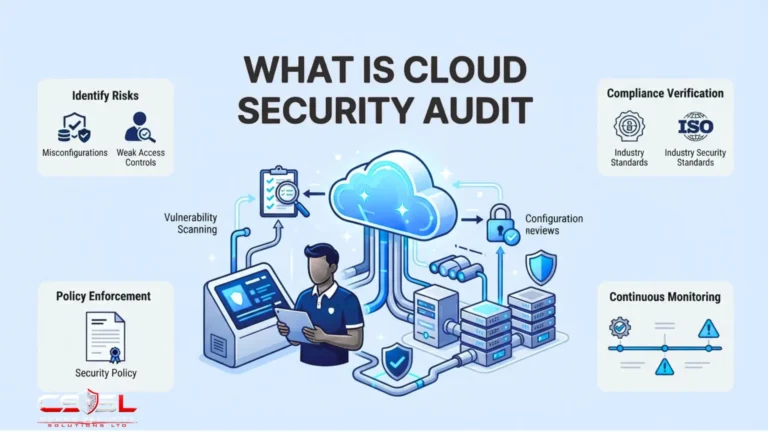
A formal audit of the acquired environment against the acquirer’s own policy and framework alignment is the concrete first integration step, producing the findings that drive the integration roadmap.
Identity federation or migration is the foundational decision, extending this series’ own IAM guidance directly. Cross-account trust relationships established during this period represent a fresh instance of the exact shadow access risk already named elsewhere in this series. Bringing the acquired environment onto the acquirer’s own landing zone template is the medium-term goal, treating the acquired accounts as a migration project in their own right.
What Happens to Cloud Access and Data When You Divest a Business Unit?
Divestiture is the direct, symmetric reverse of the acquisition integration process just covered, mirroring the repatriation-as-reverse-of-migration pattern already established elsewhere in this series.
Access revocation is the non-negotiable first step. Every identity, credential and cross-account trust relationship connecting the divested unit to the parent’s environment must be explicitly and verifiably revoked, not merely assumed to lapse naturally.
Data separation matters equally, extending the data discovery discipline already established elsewhere in this series. Confirm no shared data stores or analytics pipelines retain the divested unit’s data, or the parent’s data accessible to the divested unit, after separation is supposedly complete.
This deserves equal weight to the acquisition side despite receiving far less attention in practice. An incompletely divested environment represents an ongoing, unmonitored access risk for both parties indefinitely.
How Do You Design Cloud Architecture for Multiple Simultaneous Regional and Regulatory Regimes?
A prior post in this series addressed one employee’s ad hoc, circumstantial relocation. This section addresses the deliberate, structural decision to run simultaneous regional deployments by design, a genuinely different problem.
Concrete instances already named individually across this series now matter together as one enterprise’s simultaneous requirement: US government-adjacent regions, a UK health-sector-relevant deployment, and an EU financial-sector-relevant footprint, all potentially required within one organization depending on its combination of markets and sectors.
This is a landing zone design decision, not a compliance afterthought. An enterprise landing zone template serving multiple regulatory regimes should build the relevant regional variants into the template itself from the outset, rather than retrofitting compliance-specific architecture onto an already-established single-region design later.
How Do You Rationalize Cloud Security Tool Sprawl Across Business Units and Acquisitions?
Independent procurement across business units, or the acquisition integration process just covered, routinely results in an enterprise running several different, overlapping CNAPP or point-solution platforms simultaneously, none chosen with the others in mind.
Why does this recreate the shadow IT problem at the security-tooling layer itself? It is structurally identical to the unsanctioned SaaS adoption a CASB discovers, already established elsewhere in this series, except the sprawling asset here is security tooling itself, discovered through inventory and license audit rather than network traffic analysis.
The consolidation decision applies existing platform evaluation criteria at portfolio scale. Rather than defaulting to whichever platform happens to be most widely deployed, evaluate each existing platform’s genuine component depth, applying the established caution against assuming platform breadth guarantees depth, before selecting the enterprise-wide standard.
Plan a phased migration consistent with existing build, buy or managed guidance, applied business unit by business unit rather than one disruptive rip and replace. A financial services unit inheriting three different CNAPP platforms through three acquisitions is not unusual. It is the expected starting point, and a phased consolidation plan is what actually fixes it.
How Do You Build a Mature Enterprise Cloud Security Programme Step by Step?
Building a mature programme means running the eight steps below in sequence, starting with governance structure and ending with tool consolidation.
Designing a Cloud Center of Excellence, running M&A cloud security due diligence, or building a business-unit maturity heat map is exactly the work Cyber Security Solutions Ltd does with organizations facing this scale of complexity.
- Establish a Cloud Center of Excellence with a clear, board-reporting mandate, defining precisely which decisions it owns centrally versus which remain with individual business units.
- Assess maturity per business unit independently using the five-stage model, building a heat map rather than a single organization-wide score.
- Prioritize CCoE attention toward the intersection of low maturity and high business criticality across that heat map.
- Build cloud security due diligence into every M&A process using established risk assessment methodology, before deal terms are finalized.
- Treat every acquisition’s post-close integration as a formal audit followed by a structured migration project onto the group’s own landing zone.
- Build and test a divestiture checklist covering access revocation and data separation with the same rigor applied to acquisition integration.
- Design landing zone templates that build in the specific regional and regulatory variants your organization’s market and sector combination requires.
- Inventory existing security tooling across every business unit and plan a phased, evidence-based consolidation rather than defaulting to the most widely deployed platform by accident.
Conclusion
Enterprise cloud security is not a bigger version of what smaller organizations already do. It is a coordination problem across business units, transactions and regions that needs its own deliberate structure. Build the Cloud Center of Excellence first, measure maturity as a portfolio, and treat M&A due diligence and divestiture with equal seriousness. To get help designing a CCoE, running M&A cloud security due diligence, or building a business-unit maturity heat
FAQs
Enterprise cloud security introduces coordination challenges across multiple business units: federated governance, M&A due diligence, divestiture access revocation and multi-region regulatory architecture. General cloud security guidance assumes one organization; enterprise cloud security assumes many semi-autonomous units needing consistent but not identical treatment.
A central, cross-functional team that sets cloud security guardrails, maintains the shared landing zone template, and provides consultative support to business units, without approving every individual decision. It typically reports to a board-level risk function and originates from major hyperscalers’ own Cloud Adoption Framework guidance.
Because averaging business units at genuinely different maturity stages obscures what needs attention. A newly acquired unit at low maturity handling sensitive data is a far more urgent priority than an established unit at the same score handling low-risk tooling, a distinction only a heat map surfaces.
Whether the target has any documented shared responsibility mapping, what compliance regimes it claims to satisfy and whether that can be evidenced, and what its entitlement structure looks like against known toxic combination risks. This should feed into deal valuation and timelines, not surface after closing.
Explicitly verify every identity, credential and cross-account trust relationship was revoked, not assumed to lapse naturally. Confirm no shared data stores, backups or analytics pipelines retain either party’s data. This deserves the same rigor as acquisition integration, though it commonly receives far less attention in practice.
Evaluate each existing platform’s genuine component depth individually, rather than defaulting to whichever is most widely deployed by accident of history. Plan a phased migration business unit by business unit, applying the same build, buy or managed decision framework used for any single cloud security capability.