Cloud Security Certifications: Which Ones Are Worth Getting in 2026?
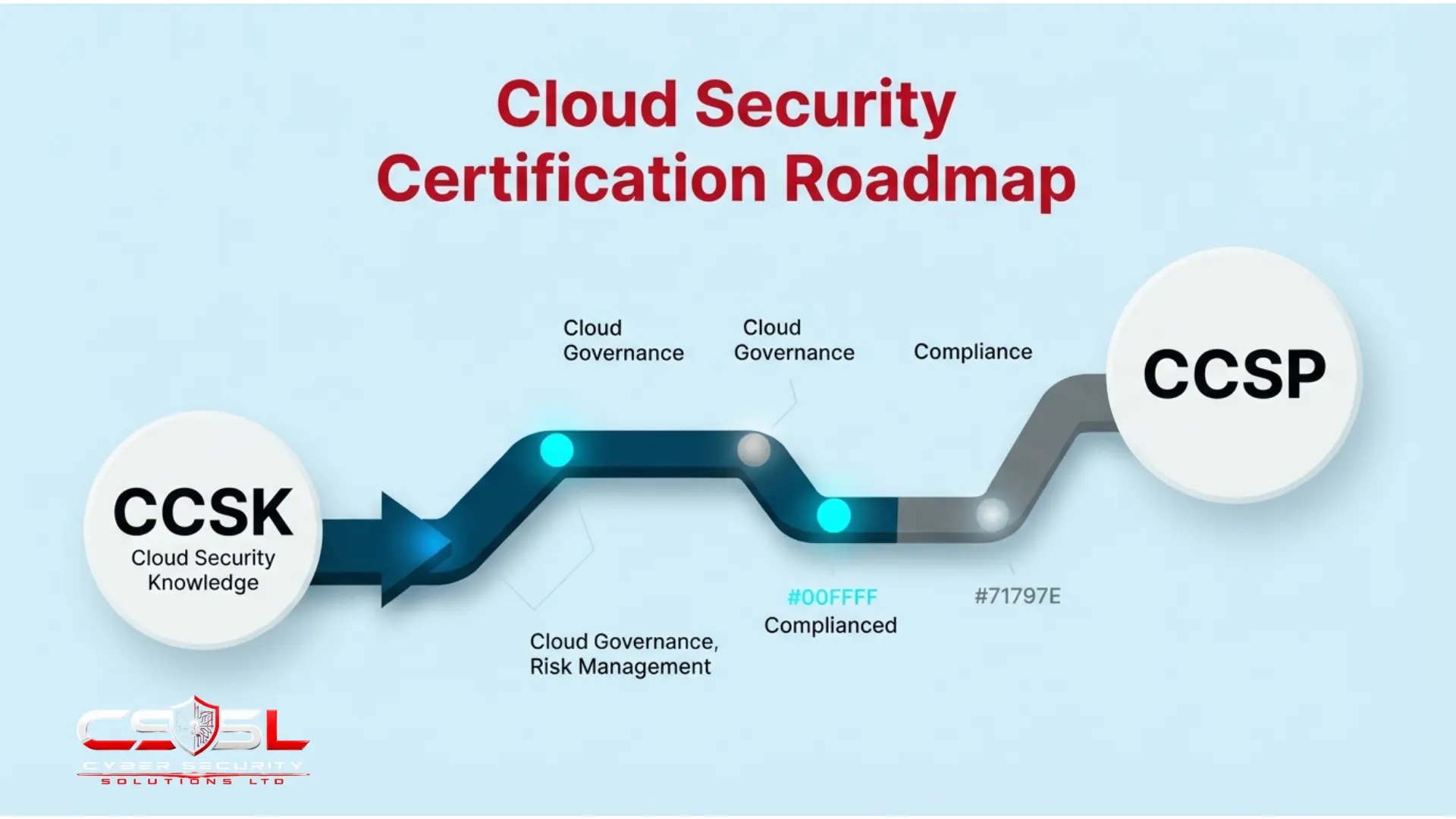
CCSK, the vendor-neutral foundational certification from the Cloud Security Alliance, is the recommended starting point for almost everyone, followed by a platform-specific certification matching your primary cloud provider. CCSP is reserved for genuinely senior, architect-track professionals. If you are torn between CCSK and CCSP and unsure you have enough experience for either, this guide sorts that out.
What Determines Whether a Cloud Security Certification Is Worth Pursuing?
Value depends on where you genuinely sit in your own career progression and which specific cloud platform you actually work with, not on chasing whichever certification sounds most prestigious. This post covers individual, professional credentials specifically, distinct from organizational compliance certification or vendor partner competency programs covered elsewhere in this series.
Certifications demonstrate a validated baseline of knowledge, but they do not substitute for genuine, hands-on experience with the specific platform and tools a role actually requires.
Cloud Security Analyst, Specialist or Architect: Which Career Stage Are You Actually At?
Analyst work closely resembles the day-to-day monitoring and triage function already established elsewhere in this series. Specialist work means genuine, dedicated depth in one specific platform or domain, the human-expertise meaning of “specialist” already established there, distinct from the same phrase’s use elsewhere in this series to describe a vendor category. Architect work means the design-level responsibility already covered for zones, landing zones and account structure.
| Career Stage | Recommended Certification | Why |
| Analyst | CCSK | Foundational, vendor-neutral, no experience required |
| Specialist | Platform-specific cert or CKS | Matches your actual day-to-day platform or domain |
| Architect | CCSP | Senior, design-oriented, requires genuine experience |
Why does this framing matter before comparing any specific certification? A reader early in this progression gains little from immediately pursuing the senior-level credential. A reader with genuine, multi-year experience already may find a foundational certification adds little beyond what they already know. Identifying your genuine current stage first determines which certification actually adds value, rather than which one sounds most impressive on a resume.
CCSK: The Vendor-Neutral Certification Almost Everyone Should Start With
CCSK, issued by the Cloud Security Alliance, is currently at version 5, reorganized into 12 domains covering Zero Trust, DevSecOps, cloud telemetry and security analytics, and AI. It is an open-book, 60-question, 120-minute online exam requiring an 80% passing score, priced in the low hundreds of dollars with two exam attempts included.
No prior experience is required, making this the natural entry point regardless of whether you are coming from a general IT background or are entirely new to the field. Nearly every comparative source converges on the same guidance: start here first, even with some existing cloud experience, since it builds the vendor-neutral foundation more advanced and platform-specific certifications both assume.
CCSP: The Senior, Architect-Track Credential, and Why Its Exam Is About to Change
Effective August 1, 2026, confirmed directly on ISC2’s own site, the CCSP exam moves to an entirely new outline. This is a genuine content refresh following ISC2’s periodic Job Task Analysis, expected to add more emphasis on AI and machine learning security and shift weight toward cloud security operations.
Given how close this date is, anyone with a test date on or after August 1 sits the new outline. Anyone testing before continues under the current one. If you are preparing for CCSP right now, confirm directly on ISC2’s own site which outline your test date falls under before finalizing a study plan.
CCSP requires five years of cumulative, paid IT experience, three years within cybersecurity, and one year within one of six defined domains. The substitution pathways meaningfully change accessibility. Holding CCSK substitutes for one year of the cloud-specific experience requirement. An active CISSP credential substitutes for the entire CCSP experience requirement outright, meaning CISSP holders can pursue CCSP as essentially a knowledge exam.
Why is this credential specifically associated with senior, design-oriented roles? Current research directly links CCSP holders to roles including Cloud Security Architect and Information Security Manager, reinforcing this post’s own career-stage framing directly.
AWS, Azure and Google Cloud’s Own Platform-Specific Certifications Compared
AWS Certified Security – Specialty now runs under exam code SCS-C03, replacing the retired SCS-C02 version in December 2025, with a newly added domain covering generative AI and machine learning security. Microsoft’s Azure Security Engineer Associate validates the RBAC, Conditional Access and Azure Policy configuration skills already covered in practical depth elsewhere in this series. Google Cloud’s Professional Cloud Security Engineer is described by multiple current sources as less commonly pursued than its AWS and Azure counterparts but increasingly valued as Google Cloud’s own market share grows.
| Certification | Issuing Body | Experience Required | Typical Career Stage |
| CCSK | Cloud Security Alliance | None | Analyst |
| AWS Security Specialty (SCS-C03) | AWS | ~5 years security/IT, 2 years AWS | Specialist |
| Azure Security Engineer Associate | Microsoft | Hands-on Azure security experience | Specialist |
| Professional Cloud Security Engineer | Google Cloud | Hands-on Google Cloud experience | Specialist |
| CKS | CNCF | Kubernetes-focused experience | Specialist |
| GCSA | SANS/GIAC | Automation-focused experience | Specialist |
| CCSP | ISC2 | 5 years cumulative, 3 in cybersecurity | Architect |
Pick the certification matching whichever cloud platform you actually work with day to day, since most cloud security roles are heavily concentrated on one primary provider, rather than attempting shallow certification across all three simultaneously.
CKS and GCSA: The Specialist Certifications for Kubernetes and Automation-Focused Roles
CKS, Certified Kubernetes Security Specialist, is the natural match for readers whose day-to-day work is genuinely Kubernetes-focused, directly extending the container and cluster security practices already established elsewhere in this series. GCSA, GIAC Cloud Security Automation, focuses specifically on designing and managing automated cloud security solutions, priced notably higher than the other certifications covered here, consistent with SANS and GIAC’s typical premium positioning.
Both are worth naming as genuine, specific-fit options rather than universal recommendations. They serve a narrower, more specialized slice of the career progression than CCSK, CCSP or the platform certifications, and are worth pursuing specifically when your actual day-to-day responsibilities already concentrate in that exact area.
Do Certifications Actually Affect Salary and Hiring, and How Much Should You Trust That Claim?
Some certification-adjacent sources report meaningfully higher average salaries associated with CCSP specifically compared to CCSK, with CCSP holders more frequently reported in senior architect and management-adjacent roles.
This data deserves genuine caution rather than being repeated as settled fact. Salary figures reported by certification bodies and exam-prep companies carry an inherent incentive to present their own credential favorably. Actual compensation varies enormously by region, employer and individual experience, and a single-source salary figure should be treated as directional context rather than a guaranteed outcome. A certification bootcamp’s landing page quoting an eye-catching average salary is not the same thing as an independent labor market study, even when the underlying number is not necessarily wrong.
The more defensible, evidence-based claim is this: certifications correlate with career stage and role type, the Analyst-Specialist-Architect progression this post has used throughout, more reliably than they predict any specific salary figure. Evaluate a certification primarily on whether it matches where you genuinely are in that progression, not on a number attached to it by the organization selling the exam.
How Do You Sequence These Certifications Rather Than Chasing All of Them at Once?
Start with CCSK regardless of prior experience, to build the vendor-neutral foundation. Add a single platform-specific certification matching whichever cloud you actually work with. Pursue CCSP once genuine, multi-year experience justifies the senior, architect-track credential.
Pursuing certifications out of this order is a common, costly mistake. Chasing CCSP before genuine hands-on experience wastes the credential’s own design intent, since its value lies specifically in validating experience you have not yet accumulated. CKS or GCSA can reasonably sit alongside the platform-specific stage for readers whose actual day-to-day work already concentrates in Kubernetes or automation, rather than waiting for a later, more senior stage.
Giving career-stage guidance on which certification path genuinely fits current experience and target role, rather than handing over a generic ranked list, is exactly the conversation Cyber Security Solutions Ltd has with individuals asking about this.
Conclusion
Cloud security certifications are not a collection of acronyms to accumulate. They are a career progression, and the right one depends entirely on which stage you are actually at right now, not which credential sounds most impressive. Start with CCSK, add the platform you actually use, and save CCSP for when your experience genuinely justifies it. To get career-stage guidance on which certification path fits your actual experience and target role, visit cybersecuritysolutionsltd.com for expert support from Cyber Security Solutions Ltd.
FAQs
CCSK, the vendor-neutral foundational certification from the Cloud Security Alliance, is the recommended starting point for almost everyone, followed by a platform-specific certification matching your primary cloud provider. CCSP is reserved for genuinely senior professionals with several years of hands-on experience.
Yes. Nearly every comparative source converges on the same guidance: start with CCSK regardless of prior experience, since it builds the vendor-neutral foundation that more advanced certifications and platform-specific credentials both assume, even for practitioners who already have real, hands-on cloud experience.
Yes. Holding CCSK can substitute for one year of the cloud-specific experience CCSP requires. An active CISSP credential goes further and substitutes for the entire CCSP experience requirement outright, meaning CISSP holders can pursue CCSP as essentially a knowledge exam.
Effective August 1, 2026, confirmed directly on ISC2’s own site, the CCSP exam moves to a new outline. If your test date falls before that, you test under the current outline; on or after, you test under the new one. Confirm your specific date directly with ISC2.
Pick the one matching whichever cloud platform you actually work with day to day. Most cloud security roles concentrate heavily on one primary provider, so shallow certification across all three usually adds less value than genuine depth in the one you actually use.
Treat them as directional context, not guaranteed outcomes. Certification bodies and exam-prep companies have an inherent incentive to present their own credential favorably, and actual compensation varies enormously by region, employer and individual experience. Career stage predicts more reliably than salary claims do.