Data Security Risks: 10 Threats to Business Data
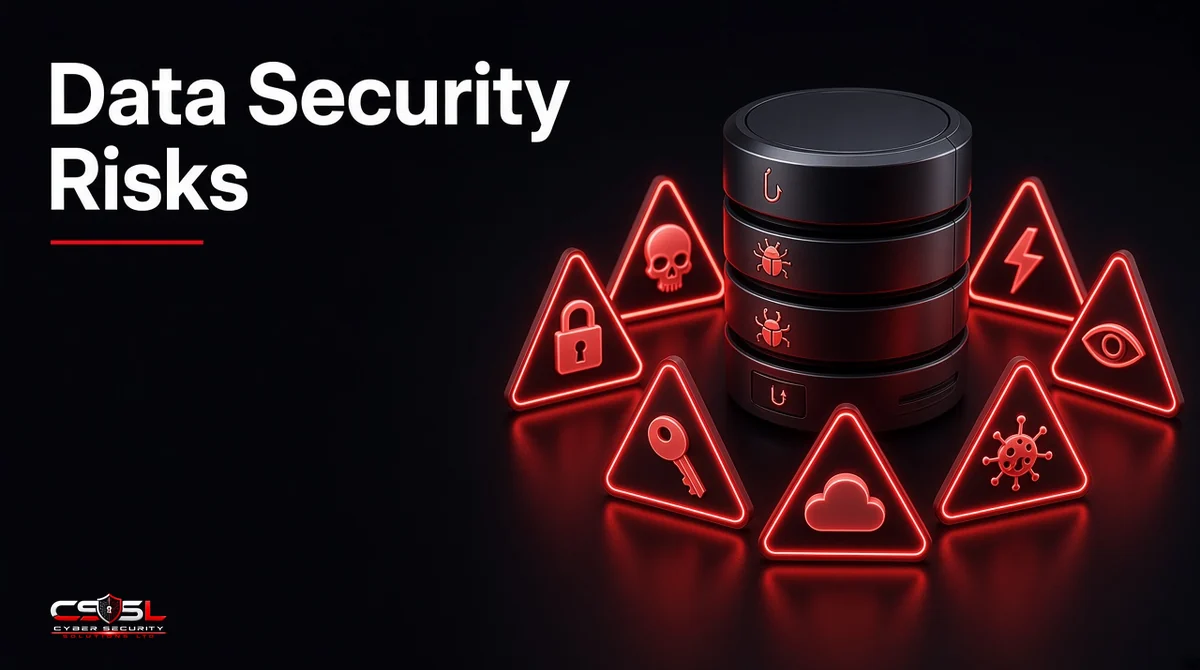
Data security risks are the threats that can expose, alter, destroy or lock up your business data. The ten that cause most losses are phishing and credential theft, ransomware, insider threats, human error, third-party and supply chain exposure, cloud misconfiguration, unpatched vulnerabilities, sensitive data exposure, shadow IT and unencrypted data. Data security itself is the practice of protecting that data from unauthorized access, corruption and theft across its whole life.
The scale is measurable. IBM’s Cost of a Data Breach Report 2025 put the global average breach cost at $4.44 million and the US average at $10.22 million. Verizon’s 2025 Data Breach Investigations Report found a human element in about 60% of breaches and third-party involvement in 30%, double the prior year. In the UK, the government’s Cyber Security Breaches Survey 2025 found 43% of businesses reported a breach or attack in the previous 12 months.
Data Security Risks at a Glance
| # | Risk | Typical cause | Main control |
|---|---|---|---|
| 1 | Phishing and credential theft | Fake emails, reused passwords | MFA, training |
| 2 | Ransomware | Stolen credentials, unpatched systems | Offline backups, patching |
| 3 | Insider threats | Malicious or careless staff | Least privilege, monitoring |
| 4 | Human error | Misaddressed email, wrong sharing setting | DLP, defaults, training |
| 5 | Third-party exposure | Vendor access and breaches | Vendor review, access limits |
| 6 | Cloud misconfiguration | Public storage, open ports | Configuration scanning |
| 7 | Unpatched vulnerabilities | Slow updates on edge devices | Patch management |
| 8 | Sensitive data exposure | Data in logs, URLs, open files | Discovery, masking |
| 9 | Shadow IT | Unapproved apps and AI tools | App discovery, policy |
| 10 | Unencrypted data | Plain text storage or transfer | Encryption at rest and in transit |
The Ten Threats in Detail
1. Phishing and Credential Theft
Phishing remains the most common attack in the UK survey, experienced by 85% of businesses that had a breach or attack. Stolen credentials then give attackers ordinary-looking access to email, cloud apps and file stores.
2. Ransomware
Attackers encrypt systems and now usually steal data first, then threaten to publish it. Even with good backups, the data theft still counts as a breach that may need reporting.
3. Insider Threats
Employees, contractors or former staff with access can steal or leak data on purpose. Broad access rights and accounts left open after someone leaves make this far easier.
4. Human Error
An email sent to the wrong person, a spreadsheet attached by mistake or a sharing link set to “anyone” causes many reportable incidents. Errors are frequent because the defaults allow them.
5. Third-Party and Supply Chain Exposure
Vendors that host your data or connect to your systems extend your risk. Verizon’s 30% third-party figure reflects incidents such as credential reuse in partner environments and breaches at software and service providers.
6. Cloud Misconfiguration
Public storage buckets, open databases and overly broad permissions expose data without any attack at all. Cloud providers secure the platform, but your settings are your responsibility.
7. Unpatched Vulnerabilities
Exploited flaws in VPNs, firewalls and file transfer tools gave attackers direct entry to many networks in 2024 and 2025. Internet-facing systems need the fastest patch cycle.
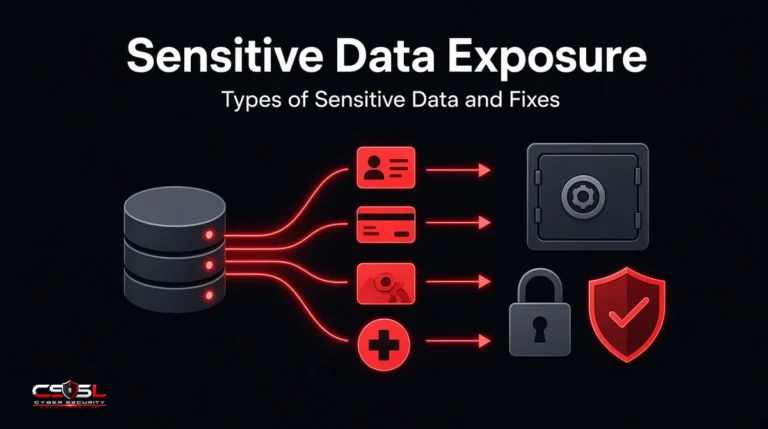
8. Sensitive Data Exposure
Personal and payment data often ends up in places it should not be: application logs, URLs, test databases and old exports. You cannot protect data you do not know exists.
9. Shadow IT and Unapproved AI Tools
Staff use file sharing apps, personal accounts and AI chat tools that IT has not approved. IBM’s 2025 report links shadow AI use to higher breach costs, and data pasted into these tools leaves your control.
10. Unencrypted Data at Rest and in Transit
Data stored or sent in plain text turns a lost laptop, stolen backup or intercepted connection into a breach. Encryption is also a factor regulators weigh when deciding how serious an incident is.
Business Impact
Financial loss. Response, legal costs, lost business and recovery add up quickly, as the IBM figures show. UK survey respondents reported lower self-estimated costs, but smaller firms often absorb losses they never measure.
Regulatory penalties. Fines can follow under UK GDPR, HIPAA, state privacy laws and sector rules, along with mandatory breach notification.
Downtime. Ransomware and cleanup can stop operations for days or weeks.
Reputation and customers. Customers and partners may leave, and contracts may require breach disclosure.
Reducing Data Security Risks: 8 Controls
- Turn on multi-factor authentication for email, remote access, cloud apps and admin accounts.
- Apply least privilege. Give staff only the access their role needs, and review it quarterly.
- Classify and discover data. Know where sensitive data lives so you can protect and minimize it.
- Encrypt data at rest and in transit. Cover laptops, databases, backups and every network connection.
- Patch quickly. Prioritize internet-facing systems and known exploited vulnerabilities.
- Keep offline or immutable backups and test restores.
- Review vendors. Check security practices, limit their access and put breach notice terms in contracts.
- Train staff and monitor activity. Run phishing exercises and alert on unusual downloads or logins.
Data Security Risks for US and UK Businesses
US Rules
There is no single US federal privacy law for all businesses. The FTC Safeguards Rule covers non-bank financial institutions, HIPAA covers health data, and all 50 states have breach notification laws. State privacy laws such as the CCPA add security duties. Public companies must disclose material cybersecurity incidents under SEC rules adopted in 2023.
UK Rules
UK GDPR Article 32 requires security appropriate to the risk, and Article 33 requires reporting a personal data breach to the ICO within 72 hours where it poses a risk to individuals. The NCSC’s guidance and the Cyber Essentials scheme give practical baselines. Confirm specific obligations with counsel.
Most Risk Comes From Ordinary Gaps
Look again at the list: stolen passwords, broad access, missed patches, open settings and unknown data stores. These data security risks rarely need advanced defenses; they need basic controls applied consistently and checked. Treat the table above as a working register, assign an owner to each row and review it every quarter. For an assessment of where your data is most exposed, contact Cyber Security Solutions Ltd through our contact page.
FAQs
Stolen or phished credentials lead the list in most studies. Verizon's 2025 DBIR found a human element in about 60% of breaches, and the UK Cyber Security Breaches Survey 2025 found phishing affected 85% of businesses with a breach or attack. Multi-factor authentication blocks most credential-based access.
Start by listing where sensitive data lives and who can reach it. Then rate each threat by likelihood and impact, and record existing controls. Focus first on high-impact gaps. A formal data risk assessment repeats this on a schedule and after major changes to systems or vendors.
A threat is something that could cause harm, such as a ransomware group. A vulnerability is a weakness it could use, such as an unpatched VPN. Risk is the chance the threat exploits the vulnerability, combined with the damage that would follow. Controls reduce risk by fixing vulnerabilities.
Yes. The UK Cyber Security Breaches Survey 2025 found 43% of businesses overall reported a breach or attack in the previous year, with phishing identified by 35% of micro businesses. Smaller firms often lack dedicated security staff, so basic controls like MFA, backups and patching give them the largest return.
IBM's Cost of a Data Breach Report 2025 put the global average at $4.44 million and the US average at $10.22 million, a record high. Healthcare breaches averaged $7.42 million. Costs include investigation, notification, legal fees, lost business and recovery, and they rise the longer a breach goes undetected.
Leadership owns the risk and the budget, IT and security teams run the controls, and every employee handles data safely day to day. Under UK GDPR and many US laws, the organization is accountable even when a vendor causes the breach, so vendor oversight is part of the job.