DevSecOps and Cloud Security: Building Security Into Your Pipeline
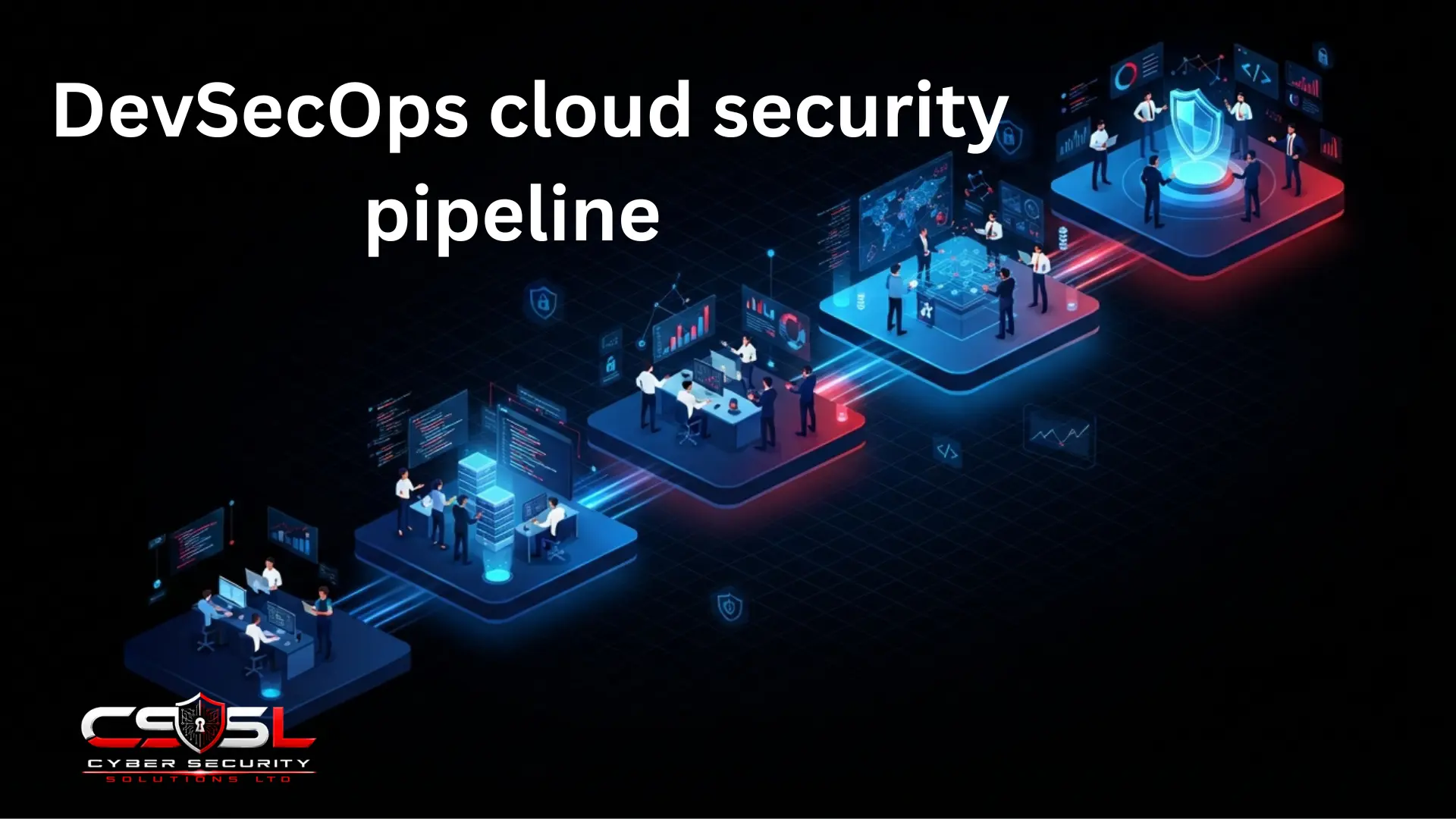
DevSecOps is the organizational and cultural practice of making security a shared, continuous responsibility across development, security and operations teams, distinct from the technical pipeline mechanics that implement it. If your developers still only hear about security findings right before release, even though your organization says it practices DevSecOps, this guide explains exactly why that gap exists.
What Is DevSecOps, and How Is It Different From the Pipeline Mechanics Already Covered in This Cluster?
A prior post in this series answers what scan runs at what pipeline stage and what tool enforces what policy. This post answers how teams need to work together and what organizational maturity actually looks like.
Neither substitutes for the other. Excellent pipeline tooling with no genuine cross-functional ownership tends to get bypassed, exactly the developer bottleneck problem already named elsewhere in this series, while cultural commitment with no concrete technical mechanism has nothing to actually operate.
DevSecOps, CloudSecOps and CCoE: Resolving Three “Ops” Terms This Cluster Has Now Accumulated
DevSecOps is a team-level practice for building and shipping software. CloudSecOps, covered elsewhere in this series, is the operational function running ongoing monitoring and triage. CCoE, also covered elsewhere, is enterprise-wide governance spanning business units.
| Concept | Organizational Altitude | What It Governs |
| DevSecOps | Individual engineering team | How security gets built into software as it ships |
| CloudSecOps | Operational function | Ongoing monitoring, triage and response |
| CCoE | Enterprise-wide | Guardrails across multiple business units |
All three genuinely coexist rather than compete. A mature organization has DevSecOps practice within engineering teams, a CloudSecOps function watching the live environment, and a CCoE setting the guardrails both operate within. This is the last of the three to arrive in this series, the natural place to finally draw the map connecting all three.
Why Do Most Organizations Claim DevSecOps Adoption Without Actually Practicing It?
Industry research has found that while roughly two-thirds of organizations claim to have adopted DevSecOps, only around one in eight actually perform security scans on every commit, a genuine, well-documented gap between stated adoption and daily practice.
Why does this matter so much? It is the identical failure pattern this series has already named repeatedly at the technical level, now appearing at the cultural level. Findings without a committed remediation process were established across multiple prior posts as delivering documentation without risk reduction. Claiming DevSecOps culturally without actually practicing continuous scanning and shared ownership is the same failure, one level up.
Further evidence backs this up. Industry survey research has found that even organizations with high infrastructure-as-code adoption still deploy a meaningful share of production workloads manually, and only a minority consider their own DevSecOps practice genuinely mature. Tool adoption and cultural maturity get measured separately, and they do not automatically track together.
What Is the OWASP DevSecOps Maturity Model, and How Do You Use It as a Roadmap?
OWASP maintains SAMM as its broader software assurance maturity model. DSOMM, the OWASP DevSecOps Maturity Model, is the more precisely relevant, sibling framework specifically for pipeline and culture-level DevSecOps maturity, organized across six dimensions and five maturity levels.
| Level | Typical Characteristics | Realistic Transition Time |
| 1 | Manual, reactive, late-stage security review | Starting point |
| 2-3 | Growing awareness, embedded champions | 12-18 months per level |
| 4-5 | Standardized, automated, predictive practice | 12-18 months per level |
Organizations progress from manual, late-stage review through growing awareness and embedded champions, toward standardized, automated controls, and eventually toward proactive, predictive practice. Moving between adjacent levels typically takes many months, commonly cited around 12 to 18 months per transition.
Use DSOMM as a structured self-assessment across its dimensions. Identify your genuine current level honestly before setting a staged plan.
What Is a Security Champions Program, and Does It Work?
A security champions program embeds a security-minded developer within each engineering team, acting as a local liaison who translates security requirements into practical guidance their own team will actually follow, rather than relying solely on requests from a separate, external security function.
Organizations running these programs commonly report improved application security posture and better working relationships between security and development teams. Finding developers with genuine appetite and aptitude for this role is not trivial, and champions typically need ongoing security training themselves rather than being expected to already hold deep expertise from day one.
Champions succeed when positioned as helpful local advocates, not as informal enforcers or a second layer of gatekeeping, echoing the same protective, not punitive, framing already established elsewhere in this brand’s content.
Why Does Blameless Culture Matter as Much Here as It Does in Incident Response?
A prior post named blameless post-incident review as a deliberate cultural choice, arguing a punitive review process discourages the honest reporting a genuine review depends on to be useful.
Apply the identical logic here for the first time, to a new context. A developer whose code triggers a finding that a SAST scan later catches is not a security failure to punish. That finding is the exact, intended function of the pipeline working as designed. Treating every finding as evidence of individual fault teaches developers to view security tooling as a threat to route around.
The practical expression asks “what did we learn, and what does this tell us about our process” rather than “who made this mistake.” Picture a developer publicly called out in a team meeting for a flaw a scanner caught before release. Next quarter, that developer quietly disables the scanner’s pre-commit hook on their own branch. The tool did its job. The culture around it did not.
This connects directly to the developer bottleneck risk already named elsewhere in this series. A punitive culture around findings compounds that same disengagement risk, making blameless culture a practical precondition for pipeline tooling actually being used honestly.
What Does the Real Cost of “Shifting Right” Instead of Left Look Like in Numbers?
A prior post stated plainly that catching a vulnerability in source code costs a developer minutes to fix, while the same vulnerability discovered in production can mean a significantly more expensive remediation effort, without ever putting a number on that gap.
Here is the concrete figure. Industry cost analysis commonly finds fixing a vulnerability caught early in development costs on the order of one hundred dollars, while the same issue discovered in production can run closer to ten thousand dollars, a roughly hundredfold difference. Exact figures vary meaningfully by study and severity, so treat this as a directional gap rather than a precise universal number.
The organizational-level figure matters just as much. IBM’s own Cost of a Data Breach research, already cited repeatedly throughout this series, has found organizations with higher DevSecOps maturity experience meaningfully lower average breach costs.
Presenting both figures together matters. The per-finding number makes the case concrete for engineering teams. The breach-cost figure makes the identical case credible for the executive audience this series’ own ROI content is written for.
Where Does AI Fit Into DevSecOps Culture as It Matures?
Current industry research on DevSecOps highlights AI’s growing role from two directions at once. AI-assisted code generation introduces new review considerations developers and security teams both need to adapt to. AI-powered security tooling is increasingly embedded within the scanning and prioritization tools already covered elsewhere in this series.
Full depth on AI’s role across cloud security tooling lives in a dedicated post elsewhere in this series. This section’s job is simply flagging that DevSecOps culture itself is one more place that trend is reshaping practice.
How Do You Build Genuine DevSecOps Culture Step by Step?
Running an honest DSOMM self-assessment before recommending a single tool or program change is exactly the starting point Cyber Security Solutions Ltd insists on for any organization asking about DevSecOps maturity.
- Conduct an honest DSOMM self-assessment to establish your genuine current maturity level.
- Appoint security champions within engineering teams, positioning the role as a helpful advocate rather than an enforcer.
- Establish blameless review practices for security findings, applying the same principle already established for incident response.
- Set a realistic, staged improvement timeline, typically many months rather than a single quarter.
- Pair every cultural initiative with the technical mechanisms already established elsewhere in this series.
- Track culture-specific metrics, champion coverage, time-to-fix trends, training participation, alongside technical pipeline metrics.
- Present the shift-left argument to both engineering and executive audiences using the cost figures above.
- Reassess DSOMM maturity periodically rather than treating any single improvement program as a one-time project.
Conclusion
DevSecOps is not a badge you earn once by adopting new tools and announcing a culture shift. It is a maturity progression measured in scans per commit, champions actually consulted, and findings treated as process signals rather than blame. Start with an honest DSOMM assessment, not a tooling purchase. To get help running that assessment, visit cybersecuritysolutionsltd.com for expert support from Cyber Security Solutions Ltd.
FAQs
DevSecOps is a team-level practice for building and shipping software securely. CloudSecOps is the operational function running ongoing cloud monitoring and triage. A Cloud Center of Excellence is enterprise-wide governance spanning business units. All three coexist at different organizational altitudes.
Research has found roughly two-thirds of organizations claim adoption, but only around one in eight actually scan every commit. Tooling gets purchased and cultural language gets adopted faster than the daily practice of continuous scanning and shared ownership actually changes on the ground.
SAMM is OWASP’s broader software assurance maturity model covering governance, design, implementation, verification and operations generally across an organization. DSOMM is a separate, sibling project focused specifically on pipeline and culture-level DevSecOps maturity, making it the more precisely relevant framework for this exact topic.
Organizations running these programs commonly report improved application security posture and better working relationships between security and development teams. The realistic challenge is finding developers with genuine aptitude for the role, who typically need ongoing security training rather than pre-existing expertise.
A developer whose code triggers a scan finding is not a failure to punish, but the pipeline working as designed. Punitive responses teach developers to view security tooling as a threat to avoid rather than a safeguard worth engaging with honestly and openly.
Industry cost analysis commonly finds a vulnerability caught early in development costs around one hundred dollars to fix, while the same issue found in production can run closer to ten thousand dollars, though exact figures vary by study, organization and severity.