Cloud Security Automation: How to Reduce Manual Risk at Scale
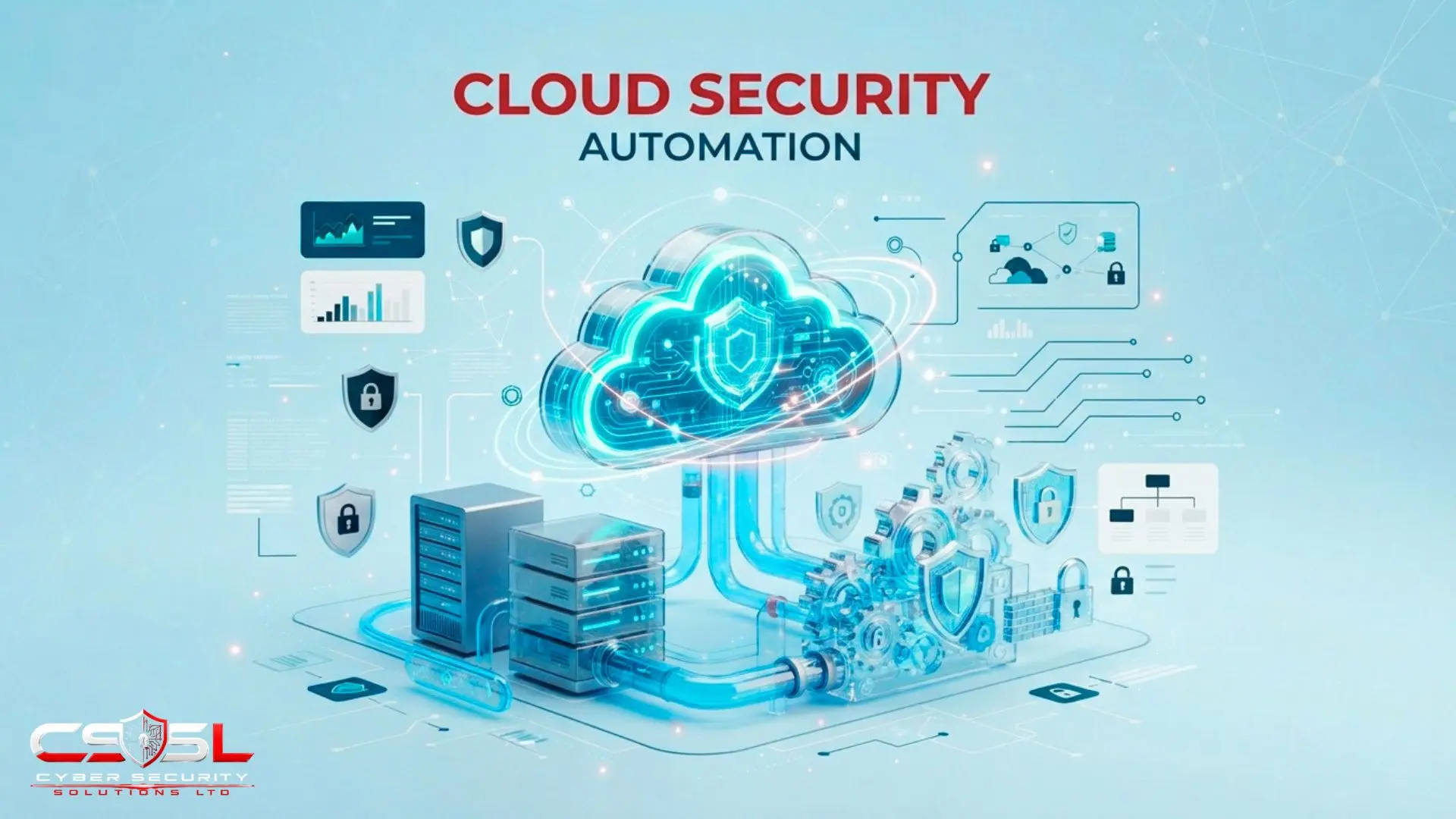
Cloud security automation uses codified logic to detect, investigate and act on cloud findings without manual, one by one human action. If you have thousands of CSPM findings and nowhere near enough people to fix them one at a time, this guide explains what is actually safe to automate and what still needs a human.
What Is Cloud Security Automation and What Does Automate?
This uses codified, repeatable logic to detect, investigate and act on cloud security findings and events without requiring a human to manually perform each individual action, spanning two categories: automated remediation of already existing misconfiguration or entitlement findings, and automated, orchestrated response to active security events monitoring surfaces.
Shift left automation prevents bad configuration and code from ever reaching a live environment in the first place. This post’s automation acts on an environment that is already running, where something has already drifted, been misconfigured, or is actively compromised.
Both halves of the lifecycle are necessary, not competing, exactly the point already made when insisting shift left does not remove the need for runtime protection. This post’s automation is the operational counterpart to that same argument.
How It Different From Shift-Left, DevSecOps and Cloud Security Operations?
Shift left is pre-deployment prevention. DevSecOps is the organizational culture and team structure question, covered separately in this series. Cloud security operations is the human staffing and process side of running a monitoring function.
This post’s specific territory is the automated technical mechanisms, auto-remediation logic, SOAR playbooks, automation frameworks, that make a lean CloudSecOps team viable at cloud scale, and that a mature DevSecOps culture ultimately relies on operationally, without this post itself being about either team structure or culture.
What Is Auto-Remediation?
Auto-remediation means an automated system correcting a known-bad configuration or entitlement finding without a human manually performing the fix.
| Finding Type | Confidence Level | Blast Radius | Recommended Automation Tier |
| Exposed credential rotation | High | Low | Fully automated |
| Public storage bucket exposure | High | Low to medium | Fully automated |
| Dormant privileged account | High | Low | Fully automated |
| Production network routing change | Medium | High | Human-approved only |
| Data deletion | Low | High | Never fully automated |
Not every finding deserves equal treatment. High-confidence, low-blast-radius findings suit full automation: rotating an exposed credential, revoking public access on a storage bucket matching a known-bad pattern, disabling a dormant privileged account CIEM has flagged, blocking a known-malicious IP. Findings touching production network routing or customer-facing availability need human approval before automated execution. Irreversible, high-blast-radius actions with low confidence, data deletion, production instance termination, should never be fully automated.
Findings representing a genuine, correlated toxic combination, sensitive data, excessive access and external exposure occurring together, are frequently the strongest automation candidates precisely because their severity and confidence are both unusually high. The maturity progression runs alert-only, then human-approved automated remediation, then fully automatic execution reserved only for the highest-confidence, lowest-risk finding types once a track record is established.
What Is SOAR, and How Do Playbooks and Runbooks Work?
SOAR, Security Orchestration, Automation and Response, coordinates action across multiple, otherwise disconnected systems, identity provider, cloud provider API, chat tool, ticketing system, in response to a defined trigger, rather than automating within a single tool alone.
A worked example makes this concrete. A CIEM finding that a service account received newly-elevated admin permissions outside business hours triggers an automated sequence: suspend the credential immediately, notify the on-call analyst via chat with supporting evidence attached, and open a ticket documenting the action, all without a human needing to be awake to initiate any single step.
Orchestration is the operative word. The value is coordinating several systems’ APIs into one coherent response sequence, not simply scripting a single action within one tool. Native cloud automation, AWS Systems Manager Automation, Azure Logic Apps and Sentinel playbooks, Google Cloud automated response, sits alongside dedicated SOAR platforms like Palo Alto Cortex XSOAR, Splunk SOAR and Tines.
How Does Automation Finally Solve the “The Tool Alone Doesn’t Fix Anything”?
CSPM, DSPM, CIEM, CNAPP, formal audits, risk assessments and monitoring each independently stated some version of the same caveat across seven separate prior posts in this series: findings without a committed remediation process deliver documentation, not risk reduction.
| Criteria | Manual Remediation | Automated Remediation |
| Response speed | Limited by human availability | Immediate, 24/7 |
| Consistency | Varies by analyst and time pressure | Consistent every time |
| 24/7 capability | Rarely genuinely staffed | Native |
| Risk if incorrect | Contained to one action | Amplified at speed and scale |
| Human oversight required | Full, every time | Selective, by confidence tier |
This caveat stayed unresolved for a specific reason. Manual remediation simply cannot scale to the volume of findings a mature, multi-tool cloud security stack generates, precisely the alert fatigue problem already named at the monitoring layer, recurring at the remediation layer too.
Automation is the direct answer this post provides. It converts a backlog of correctly-identified but unaddressed findings into genuine, closed risk, at the volume and speed cloud environments actually require, without needing to staff an impossibly large team. Naming this pattern explicitly matters, because it turns a caveat repeated seven times into an actual resolution rather than an open problem this series has flagged without ever answering.
How Does Automation Reduce Mean Time to Respond Specifically?
Mean time to respond, the gap between an alert firing and a human taking meaningful action, is frequently the largest and most under-addressed component of total incident cost.
Here is the specific, uncomfortable reality behind that gap. Cloud environments run continuously, but most human security teams are not genuinely staffed for 24/7 response across every finding category, the 3am problem. Automation is what provides real around-the-clock capability for well-understood scenarios without requiring round-the-clock human staffing for all of them.
This connects directly to cost, not just speed. IBM’s Cost of a Data Breach Report data consistently shows faster detection and containment correlating with materially lower breach costs, making mean time to respond reduction through automation a direct, quantifiable financial lever, not just an operational nicety. A business case built on that number tends to land with a finance director in a way a vague efficiency claim never will.
How Do You Automate Compliance Evidence Collection?
This is the second, genuinely distinct automation category this post covers, not fixing a finding, but continuously and automatically capturing proof that a control is operating, MFA enforcement, encryption status, access review completion, rather than manually assembling evidence in a scramble immediately before an audit.
Vanta, Drata, Secureframe and OneTrust automate exactly this continuous evidence collection across multiple frameworks simultaneously, the practical instance of this principle already introduced elsewhere in this series.
This materially changes the audit experience. An organization with continuous, automated evidence collection enters a formal external audit with months of already-assembled, timestamped evidence, rather than the compressed, error-prone documentation scramble that undermines audit readiness elsewhere.
What Does a Cloud Security Automation Framework Look Like?
The architectural pattern worth naming explicitly runs trigger, a finding from posture tooling or an event from monitoring, decision logic, does this meet the confidence and blast-radius threshold for automatic action or does it require human approval, action, the remediation or response executed, verification, confirming it genuinely succeeded, and logging, feeding directly into the compliance evidence automation covered above.
Human-in-the-loop approval gates are a deliberate design choice, not a limitation. Chat-based or ticketing-based approval steps for higher-risk automated actions preserve human judgement exactly where confidence is not yet high enough to remove it entirely. This trigger-through-logging structure is exactly what Cyber Security Solutions Ltd builds out first when designing an automation framework for a client, before a single playbook gets written.
Rollback capability is a non-negotiable design requirement. Every automated remediation action should have a tested, corresponding rollback path, since an automated action that cannot be undone if wrong compounds risk rather than reducing it.
What Are the Risks of Over-Automating Cloud Security Remediation?
Automation amplifies incorrect actions at exactly the same speed and scale that makes it valuable when actions are correct, meaning a poorly-designed automated remediation can cause its own outage or its own security gap just as efficiently as it prevents one.
Here is a concrete, direct example. An automated policy revoking permissions unused for 30 days, CIEM’s own least-privilege remediation logic, already flagged elsewhere in this series as carrying genuine risk, could break a legitimate but infrequent quarterly batch process if applied automatically without validation. Nobody notices until the quarterly job fails and someone spends a stressful afternoon working out why an account that had not logged in for weeks suddenly lost the access it needed.
Testing in monitor-only mode first is essential before enabling live execution, directly mirroring the phased audit-mode-to-enforcement progression already established for posture management, applied with even greater force once automation can act without a human reviewing each instance.
Maintain audit trail and human oversight even after trust is established. Automation should never become fire-and-forget. Every automated action remains reviewable and reversible regardless of how long it has operated without incident.
How Do You Implement Cloud Security Automation Step by Step?
Implementing automation starts with inventorying findings currently handled manually, classifying each by confidence and blast radius, beginning in alert-only or human-approved mode, building playbooks for the highest-volume safest types first, ensuring tested rollback paths exist, automating compliance evidence separately, tracking outcomes including rollbacks, and expanding scope progressively rather than all at once.
- Inventory the findings and events currently requiring manual remediation across your CSPM, DSPM, CIEM and monitoring outputs.
- Classify each finding type by confidence and blast radius to determine which automation tier it genuinely belongs in.
- Begin new automation types in alert-only or human-approved mode before enabling full automatic execution.
- Build playbooks for your highest-volume, safest-to-automate finding types first, rather than attempting broad coverage immediately.
- Ensure every automated action has a tested, working rollback path before it goes live.
- Automate compliance evidence collection in parallel, as a distinct category from remediation automation.
- Track automation outcomes as their own metric, including any automated actions that required rollback.
- Expand automation scope progressively as track record and confidence are established, never as a single, wholesale rollout.
Conclusion
Cloud security automation is not about removing humans from cloud security. It is about making sure a human only gets involved where judgement genuinely matters, instead of drowning in findings that a well-designed playbook could have already closed. Start with your highest-volume, safest finding types, test in monitor-only mode, and expand only as your track record earns it. To get help designing an automation framework and playbooks tailored to which of your specific findings are genuinely safe to remediate automatically, visit cybersecuritysolutionsltd.com for expert support.
FAQs
For the right finding types, yes. High-confidence, low-blast-radius findings like an exposed credential or a public storage bucket suit full automation. Anything touching production routing or availability needs human approval first, and irreversible actions like data deletion should never be fully automated.
Shift left prevents bad configuration and code from ever reaching a live environment, acting before deployment. This automation acts on an environment already running, where something has already drifted, been misconfigured, or been compromised. Both halves of the lifecycle are necessary, not competing.
A single script automates one action within one tool. SOAR coordinates action across multiple, otherwise disconnected systems, identity provider, cloud API, chat tool, ticketing system, in response to one trigger. The value is orchestrating several APIs into one coherent sequence, not scripting in isolation.
Yes, and this is a genuine risk, not a theoretical one. A policy automatically revoking permissions unused for 30 days could break a legitimate but infrequent quarterly process. Test new automation in monitor-only mode first, and validate before enabling live execution.
By providing real around-the-clock capability for well-understood scenarios. Cloud environments run continuously, but most teams are not genuinely staffed for 24/7 response across every finding type. Automation covers that gap without requiring round-the-clock human staffing for every single category of finding.
Yes. Remediation automation fixes a finding. Evidence automation continuously captures proof a control is operating, MFA enforcement, encryption status, without manually scrambling before an audit. They are genuinely distinct categories, and a mature programme needs both running independently, side by side.