Types of Network Security: A Complete Breakdown
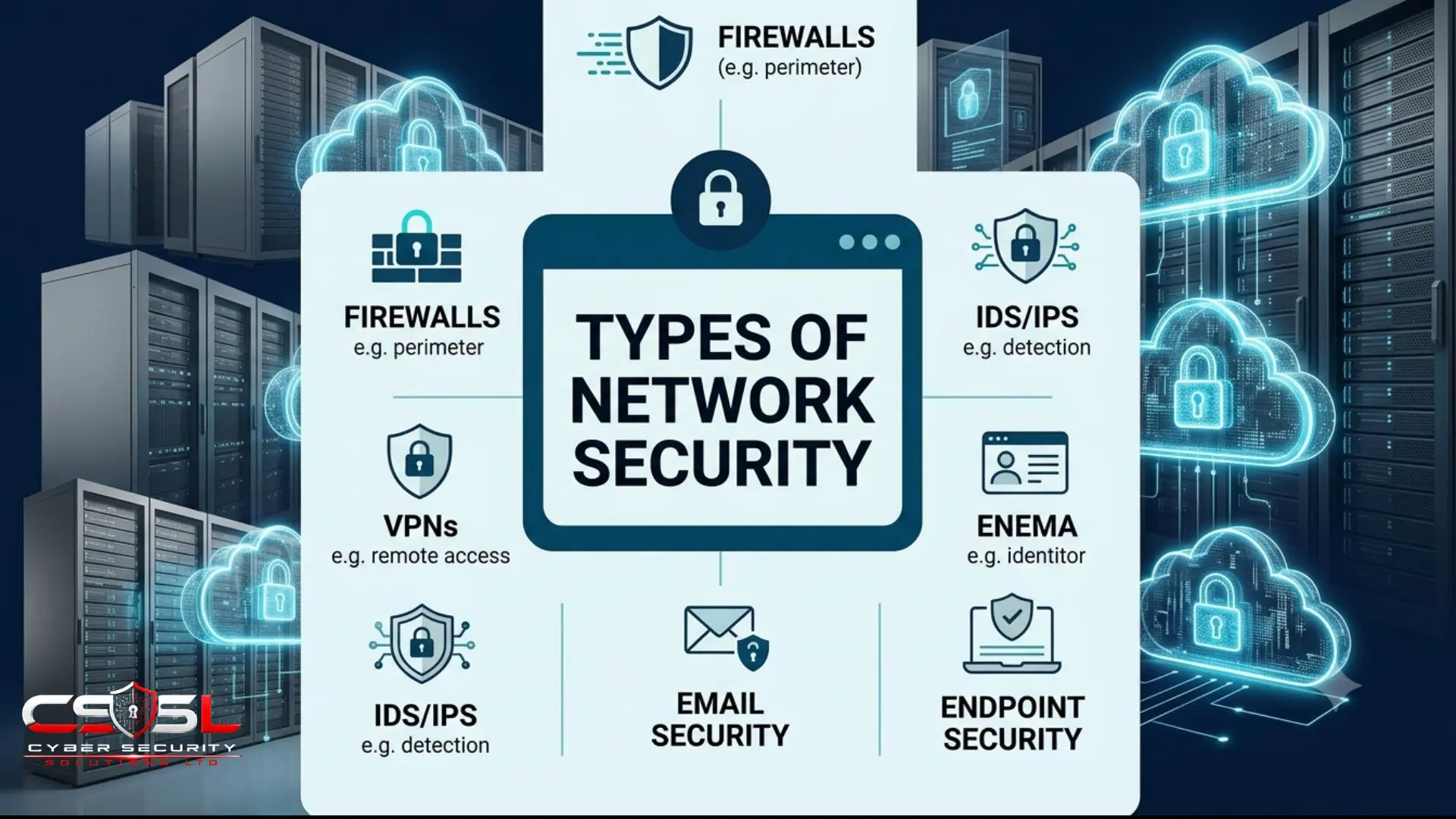
Network security controls generally fall into three broad categories: technical, physical and administrative. Commonly cited “four types” include firewalls, network segmentation, remote access VPNs and email security, though the complete picture spans access control, threat detection, encryption, wireless and governance together. If every article gives you a different answer, this guide explains why, then gives you the full map.
Types of Network Security
Different credible sources define this differently, and pretending otherwise would not serve you well. One source’s “four types” is firewalls, network segmentation, remote access VPNs and email security. Another organizes the entire discipline into three broader categories with no “four” named at all. Others list eight, ten or more individual technologies under the same banner.
This variation is not a sign of bad content. The word “type” can mean a broad control category, like technical versus physical. It can mean a specific technology, like a firewall. Or it can mean a functional grouping, like access control. Different sources choose different levels of detail without saying so, which leaves readers guessing which answer is right.
Here is what this guide commits to doing about it. It answers the specific, commonly searched “four types” question directly with its most cited version, then gives you the fuller, more complete categorical breakdown this guide’s own title promises.
What Are the Three Broad Categories Every Network Security Control Falls Into?
Nearly every specific network security control falls into one of three broad categories: technical, physical and administrative.
| Category | What It Covers | Example |
| Technical | Hardware and software enforcing security directly | Firewalls, encryption, access control systems |
| Physical | Restricting physical access to network hardware | Locked server rooms, cabling security |
| Administrative | Policies and governance shaping how controls get used | Security policy, employee training, incident planning |
Technical controls are hardware and software mechanisms directly enforcing security, including firewalls, encryption, intrusion detection and access control systems. Physical controls restrict physical access to network hardware itself, including locked server rooms, cabling security and controlled facility access. Administrative controls are the policies, procedures and governance decisions shaping how technical and physical controls get used day to day, including security policy, employee training and incident response planning.
This three-part framework gives you a mental model for classifying any new control you encounter later, rather than treating each new technology as an unrelated, standalone topic.
What Are the Four Types of Network Security?
One of the most commonly cited “four types” framings names firewalls, network segmentation, remote access VPNs and email security as the foundational categories most businesses encounter first.
Firewalls control and filter traffic at defined points between trusted and untrusted networks. Network segmentation divides a network into smaller, isolated zones to limit how far an attacker can move if one area gets compromised. Remote access VPNs create encrypted connections for users accessing the network from outside its physical location. Email security protects the single most common entry point for phishing and malware, covered in full depth by this brand’s separate email security content.
This is one commonly cited answer, not the only correct one. If you want the genuinely complete picture, keep reading.
The Complete Breakdown: Network Security Organized by Function
A genuinely complete breakdown spans eight functional categories, each covering several specific technologies with their own dedicated coverage elsewhere in this series.
1. Access and Identity Controls
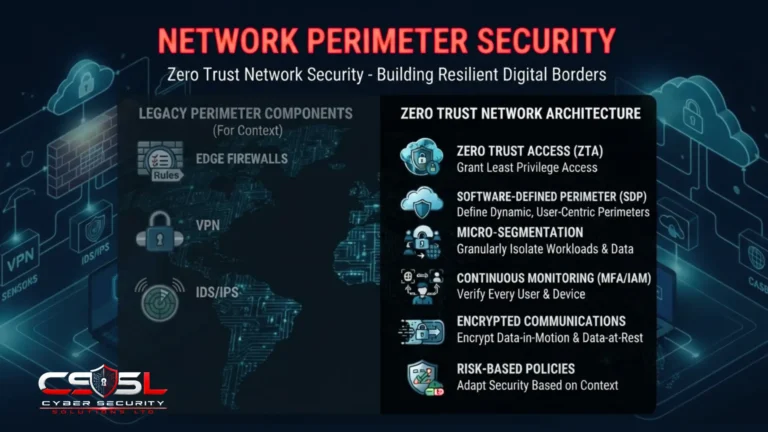
Access and identity controls govern who and what can connect to your network. This category includes network access control, authentication and authorization systems, and zero trust approaches that verify every request rather than trusting a device once connected.
2. Perimeter and Traffic Filtering
Perimeter and traffic filtering controls inspect and manage traffic entering or leaving your network. This category includes standard firewalls, next generation firewalls, content filtering, web application firewalls, and unified threat management platforms combining several functions in one.
3. Threat Detection and Prevention
Threat detection and prevention controls actively look for suspicious activity rather than just enforcing static rules. This category includes intrusion detection and prevention systems, sandboxing suspicious files, deep packet inspection, and broader network threat detection.
4. Network Architecture and Segmentation
Network architecture and segmentation controls shape how your network is structured. This category includes segmentation itself, software defined network security, fully isolated air gapped networks for sensitive systems, and the limits of relying on perimeter security alone.
5. Data Protection and Encryption
Data protection and encryption controls keep information unreadable to anyone who should not see it, whether stored or moving. This category includes cryptography applied across the network and the encrypted access VPNs provide as data travels.
6. Wireless and Connected Device Security
Wireless and connected device security protects devices that connect without a physical cable. This category includes dedicated wireless network security and the often overlooked challenge of securing IoT devices on the same network.
7. Modern and Cloud-Adjacent Architecture
Modern and cloud-adjacent architecture reflects how networks now extend beyond a single office. This category includes secure access service edge, combining networking and security into one cloud-delivered service, and hybrid network security spanning on-premise and cloud together.
8. Governance, Monitoring and Response
Governance, monitoring and response controls tie everything above into an ongoing practice rather than a one-time setup. This category includes continuous monitoring, incident response planning, policy management, automation, and compliance with named regulatory frameworks.
| Functional Category | Protects Against | Example Control |
| Access and identity | Unauthorized connections | Network access control, zero trust |
| Perimeter and filtering | Malicious inbound traffic | Firewalls, content filtering |
| Threat detection | Active intrusions | IDS/IPS, sandboxing |
| Architecture and segmentation | Lateral attacker movement | Segmentation, air gapping |
| Data protection | Interception, theft | Encryption, VPN |
| Wireless and devices | Unsecured connections | Wireless security, IoT controls |
| Cloud-adjacent architecture | Distributed exposure | SASE, hybrid security |
| Governance and response | Slow or missed detection | Monitoring, incident response |
What Counts as Network Security and What Belongs to a Different Discipline?
This series covers network layer and infrastructure level controls specifically: traffic, perimeter, access and transport. That focus is deliberate, and it means some genuinely important topics sit just outside this map.
Email security is its own, closely related but distinct discipline. Phishing, spam filtering and email authentication are covered in full depth in a separate part of this brand’s content, referenced here rather than treated as another type of network security.
Endpoint security is a distinct, adjacent discipline too. Protecting individual devices themselves, rather than the network connecting them, gets its own direct comparison elsewhere in this series, since the two disciplines overlap constantly without being the same thing.
Cloud security is its own separate, extensively covered pillar. Securing cloud-hosted infrastructure has its own full, dedicated content from this brand, since cloud environments introduce concerns a traditional network map does not fully capture.
Drawing this boundary matters. Several sources list email, endpoint, application and cloud security as simply more types of network security, flattening genuinely distinct disciplines into one undifferentiated list that makes the picture less useful, since a reader cannot tell which discipline owns a given problem when everything gets treated as interchangeable.
Network Security Types vs Network Security Standards
Types and controls, this guide’s own subject, describe the actual technical and procedural mechanisms protecting a network. Standards, in the more formal sense, refer to named regulatory and industry compliance frameworks like NIST, ISO 27001 and PCI DSS that organizations get measured against during an audit.
This guide uses the word “standard” casually throughout, in the sense of “the current standard set of controls.” Formal compliance standards are a distinct topic with their own full treatment elsewhere in this series.
How Do You Decide Which Types Your Business Needs?
Not every category above applies with equal urgency to every organization. A small business with no wireless guest network has little immediate need for deep wireless investment, while an organization with significant remote staff should prioritize VPN and access control considerations first.
Start with the categories addressing your organization’s most immediate, highest-likelihood risk, commonly access control and perimeter filtering for most businesses, rather than attempting every category from this breakdown at the same time.
Helping a business work out which categories from this map genuinely deserve priority, rather than attempting everything at once, is exactly the assessment Cyber Security Solutions Ltd runs with new clients. A complete best practices checklist and a structured assessment guide, both elsewhere in this series, build directly on this categorical map once you know where to start.
Conclusion
Network security is not one product or one category. It is eight functional areas working together, built from three broad kinds of control, and no business needs all of it at maximum strength on day one. Use this breakdown to identify where your own gaps sit, then prioritize from there.
FAQs
A commonly cited answer names firewalls, network segmentation, remote access VPNs and email security. This is one popular framing, not the only correct one; other credible sources organize network security differently, using three broader categories or eight or more specific technologies.
Technical controls, hardware and software mechanisms like firewalls and encryption; physical controls, restricting physical access to network hardware; and administrative controls, the policies and governance shaping how the other two get used across an organization on a daily basis, every single day.
Not exactly. Email security is a closely related but genuinely distinct discipline, covering phishing, spam filtering and email authentication specifically. It has its own full, dedicated coverage rather than being simply another type folded into network security’s own broader taxonomy of controls.
No, cloud security is its own separate, extensively covered discipline focused specifically on cloud-hosted infrastructure. Network security focuses on network layer and infrastructure level controls: traffic, perimeter, access and transport, a genuinely different scope worth keeping distinct from cloud coverage.
Types and controls describe the actual technical mechanisms protecting a network, like firewalls or segmentation. Standards refer to formal regulatory and industry compliance frameworks, like NIST or ISO 27001, that organizations get measured against during an audit, a genuinely different concept entirely.
Access control and perimeter filtering typically matter most first for most businesses. Beyond that, prioritize based on real risk: a business with significant remote staff should prioritize VPN and access control, while one with minimal wireless use can deprioritize deep wireless investment.