Data Security in Cloud Computing: How to Protect Sensitive Data
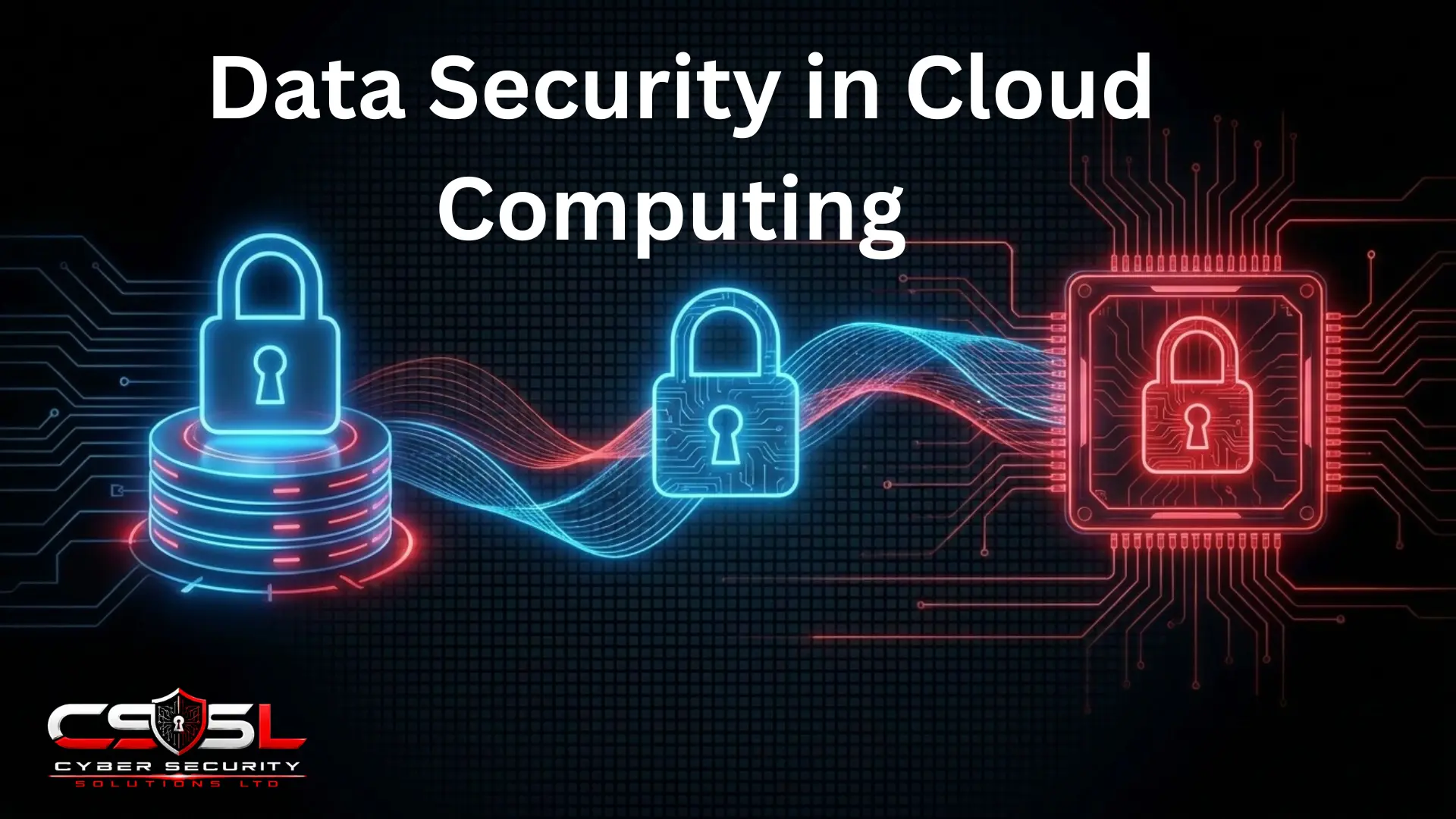
Cloud data security covers the complete practice around your sensitive data: encryption across every state, control while moving, backup against ransomware, and genuine destruction. If you encrypt data at rest and in transit and just learned there is a third state you have never addressed, this guide explains why that gap matters.
What Does Data Security in Cloud Computing Cover, Beyond DSPM Alone?
Cloud data discovery tools find sensitive data and flag how exposed it is. This guide covers the complete practice sitting around that discovery layer: how data is actually encrypted, controlled while moving, backed up, and eventually destroyed.
This guide covers data security specifically as it shows up in cloud computing: cloud storage, cloud-managed databases, cross-cloud replication, cloud-native data loss prevention, and backup tooling. Broader, cross-environment data security theory sits in a separate part of this brand’s content.
Encryption practice, data loss prevention, backup architecture, and secure deletion each get named in passing constantly, without ever being assembled into one coherent treatment. That is exactly what this guide does.
The Three States of Data Encryption, and Why Most Organizations Only Properly Cover Two of Them
Data exists in three distinct encryption states: at rest, stored on disk; in transit, moving across a network; and in use, actively being processed in memory.
| State | What It Protects | How It Is Achieved |
| At rest | Data stored on disk | Default encryption, verified key access governance |
| In transit | Data moving across a network | TLS, largely automatic on modern platforms |
| In use | Data actively being processed | Confidential computing, hardware-based isolation |
At rest, verify encryption is genuinely enabled on resources confirmed to hold sensitive data, since key access governance matters as much as the encryption setting. In transit, TLS encryption is largely automatic on modern platforms, but worth verifying rather than assumed. Most providers handle these first two states well by default. The third state, data actively decrypted in memory during processing, has historically been a largely unaddressed blind spot.
What Is Confidential Computing, and Why Does “Encryption In Use” Finally Matter?
Confidential computing uses hardware-based Trusted Execution Environments to keep data encrypted even while actively processed, preventing access by the cloud provider’s own hypervisor, privileged administrators, or a compromised host operating system.
Before processing, data must ordinarily be decrypted in memory, leaving a window of exposure that at-rest and in-transit encryption never covered. Confidential computing closes that window.
Named implementations exist across all three major hyperscalers. AWS offers Nitro Enclaves. Azure offers Confidential VMs and Confidential Containers. Google Cloud offers Confidential VMs, Confidential GKE Nodes, and Confidential Space, running on hardware including AMD SEV-SNP and Intel TDX.
Remote attestation makes this verifiable rather than a marketing claim: a cryptographic process confirming code is actually running inside a genuine, verified enclave before releasing sensitive data to it.
Overhead is modest, commonly low single digits for CPU-bound workloads and somewhat higher for memory-intensive ones, moving this from a laboratory curiosity to a deployable option for genuinely sensitive workloads. These protections reduce trust in the platform rather than making a system invulnerable, and ongoing research continues to surface and patch side-channel issues. Homomorphic encryption is a related, more specialized alternative achieving a similar outcome mathematically rather than through hardware isolation, though far less mainstream.
Reserve confidential computing for your genuinely highest-sensitivity workloads, health records, financial transactions, or proprietary algorithms, rather than a blanket requirement everywhere.
How Do You Secure Cloud Database Services Specifically?
Managed database services like AWS RDS, Azure SQL Database, and Google Cloud SQL enable encryption at rest by default. Sensitive fields benefit from column-level encryption, rather than relying on whole-database encryption alone.
Row and column-level access control restricts which rows or columns an identity can query, finer-grained than resource-level decisions alone. Database activity monitoring extends audit logging to the database layer, logging query-level access to sensitive tables.
Tokenization is a genuine alternative to encryption for structured, high-sensitivity data. It replaces sensitive values, like card numbers, with a token bearing no exploitable mathematical relationship to the original, reducing compliance scope since systems handling only tokens fall outside the strictest boundary.
Cloud DLP vs DSPM: What’s the Difference, and Do You Need Both?
Data discovery and classification tooling discovers and classifies sensitive data primarily at rest, answering where sensitive data lives and how exposed it is. Cloud DLP inspects and controls data in motion, answering whether sensitive data is currently being sent somewhere it should not go.
| Criteria | DSPM | Cloud DLP |
| What it inspects | Data at rest | Data in motion |
| Primary question | Where does sensitive data live? | Is it going somewhere it should not? |
| Timing | Continuous scanning | Real-time inspection |
This boundary has genuinely blurred in practice. One major cloud provider’s own data protection service offers concrete proof: it was previously, and is still sometimes, referred to by a name built around “DLP” even though it also performs discovery and classification, reflecting real convergence rather than a permanently clean taxonomy.
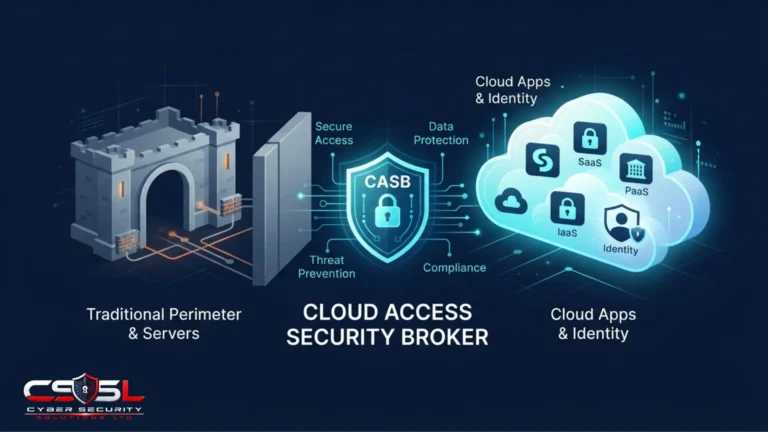
Cloud DLP specifically catches sensitive data uploaded to an unsanctioned personal storage account, emailed externally from a cloud-hosted mailbox, or copied between services in a way that violates policy, none of which discovery tooling’s own scanning catches. Cloud DLP frequently operates alongside cloud access security broker tooling for data moving toward unsanctioned destinations. These two categories are complementary layers, not substitutes.
How Do You Build Genuinely Ransomware-Resistant Cloud Backups?
Modern ransomware specifically targets and attempts to delete or encrypt cloud backups alongside primary data. A strategy that assumes backups are automatically safe is a dangerous assumption.
The 3-2-1 principle: maintain at least three copies of critical data, on at least two different storage types, with at least one copy stored genuinely separate from your primary environment. Immutable and air-gapped copies close the exact deletion risk ransomware groups target, since they cannot be modified or deleted, even by an identity holding otherwise-legitimate admin access.
Versioning is a complementary, lighter-weight control, retaining prior object versions so an overwrite can be reversed without a separate backup system. Testing restores is non-negotiable. A backup never actually restored carries genuine, undiscovered risk it will not function correctly during a real incident.
What Do You Need to Know About Data Residency and Sovereignty on an Ongoing Basis?
Data residency deserves treatment as its own steady-state practice, independent of any single triggering event like a migration project or an employee relocation. Confirming which cloud region your data actually resides in, and reviewing that placement periodically as services evolve, matters continuously, not just at decision points.
UK GDPR’s territorial and international transfer provisions remain relevant to any organization whose cloud data may be accessed from a jurisdiction outside the UK or EU, and deserve the same ongoing review.
Why Is “Deleting” Data in the Cloud Harder Than It Sounds, and What Is Crypto-Shredding?
Cloud storage frequently distributes and replicates data across multiple physical locations, retaining historical snapshots or versions. A single delete action does not necessarily purge every copy immediately or completely.
Crypto-shredding is the elegant solution to this exact problem. Rather than locating and destroying every physical or replicated copy, you deliberately and irreversibly destroy the encryption key protecting it. Every remaining copy becomes permanently unreadable, regardless of where it still exists.
This connects directly to key governance. An organization using customer-managed encryption keys, rather than provider-managed keys, retains the direct ability to perform crypto-shredding on demand, an additional reason those keys are worth the added overhead for genuinely sensitive data.
Picture a company offboarding a former client whose contract required guaranteed data destruction. Rather than chasing every backup and replicated copy across three regions, the security team destroys one key. Every copy becomes permanently unreadable in seconds.
How Do You Build a Complete Cloud Data Security Program Step by Step?
Reviewing encryption coverage, backup resilience, and secure deletion practice together, not just posture scanning alone, is exactly the complete cloud data security review Cyber Security Solutions Ltd offers.
- Deploy data discovery tooling to find and classify sensitive data across your full cloud estate.
- Confirm encryption across all three states, adopting confidential computing for your highest-sensitivity processing.
- Apply database-specific controls, row and column-level access, tokenization, beyond generic access controls alone.
- Deploy cloud DLP alongside your discovery tooling, recognizing the two as complementary, not duplicate.
- Build backups following the 3-2-1 principle, with immutable or air-gapped copies resistant to ransomware.
- Test backup restoration on a regular, scheduled basis.
- Review data residency placement periodically, not just at initial migration.
- Use customer-managed encryption keys for your most sensitive data, preserving crypto-shredding capability.
Conclusion
Cloud data security is not one tool or one checkbox. It is encryption across three states, backups that actually restore, and deletion that genuinely deletes. Start with whichever gap your organization has never properly addressed, since most have at least one. To get a complete cloud data security review, visit cybersecuritysolutionsltd.com for expert support from Cyber Security Solutions Ltd.
FAQs
Data exists at rest, stored on disk, in transit, moving across a network, and in use, actively processed in memory. Most cloud providers handle the first two well by default. The third state, addressed by confidential computing, has historically been the largest unaddressed gap.
It is genuinely practical today. AWS Nitro Enclaves, Azure Confidential VMs, and Google Cloud Confidential VMs are current, deployable implementations with modest performance overhead, commonly low single digits for CPU-bound workloads, reserved for your genuinely highest-sensitivity processing rather than every workload.
Data discovery tooling finds and classifies sensitive data primarily at rest. Cloud DLP inspects and controls data in motion, catching sensitive data being sent somewhere it should not go. Most organizations need both, since they answer genuinely different questions about the same sensitive data.
Maintain at least three copies of critical data, on at least two different storage types, with at least one copy genuinely separate from your primary environment. Add immutable or air-gapped copies specifically to resist the deletion ransomware groups actively target.
Crypto-shredding deliberately and irreversibly destroys the encryption key protecting data, rendering every remaining copy permanently unreadable, regardless of where it still physically exists. This solves the problem of cloud storage replicating data beyond easy reach, but requires customer-managed encryption keys to execute.
Test the restore process on a regular, scheduled basis, rather than assuming it works. A backup that has never actually been restored carries genuine, undiscovered risk that it will fail exactly when you need it most during a real incident.