IT Security Solutions for Business: A Complete Buyer’s Guide for 2026
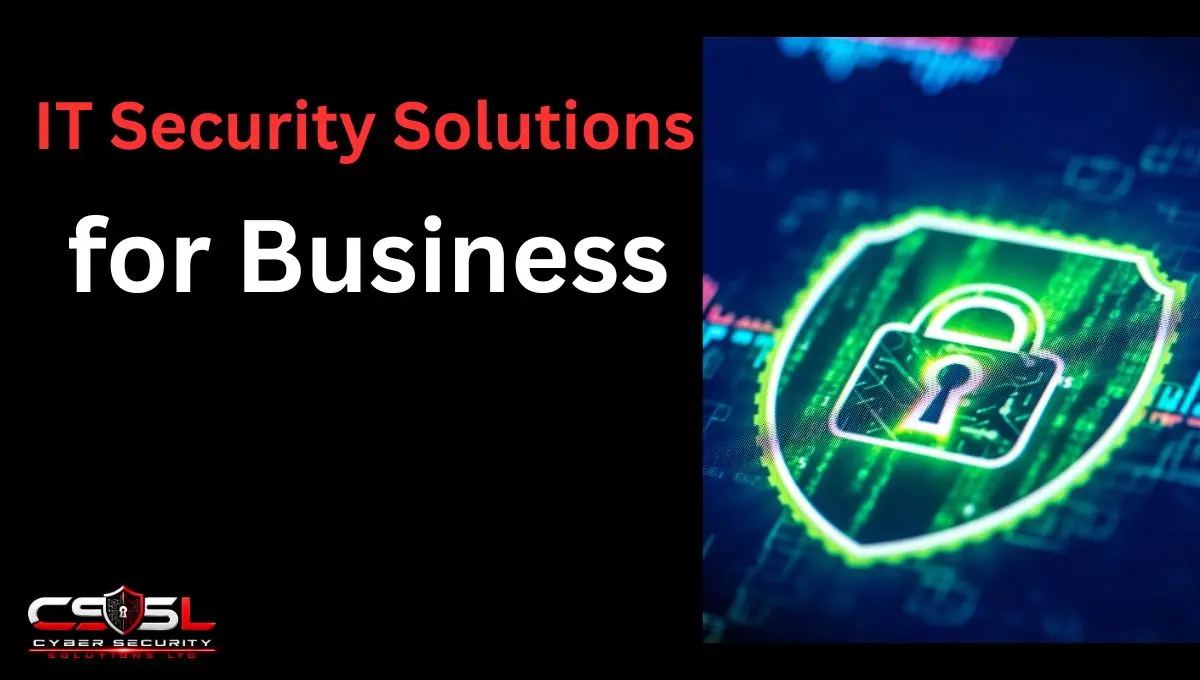
IT security solutions for business means a layered stack of tools and services, identity, endpoints, email, backups, monitoring, working together, not one product marketed as a complete answer.
Cyber security products sold individually rarely close a business’s real risk alone, since most successful attacks exploit gaps between layers, a compromised login with no MFA, an unmonitored endpoint, a backup an attacker can also encrypt, not a single missing tool.
The Security Stack: Layers You Need, in Buying Order
This buying order matters because each layer closes the specific gap attackers exploit most, meaning the sequence below reflects genuine risk priority, not arbitrary listing.
1. Identity and Access (MFA, SSO, Password Management)
Multi-factor authentication buys the most protection per dollar of any single control, directly blocking account takeover even when a password is already compromised.
2. Endpoint Detection and Response (EDR/MDR)
Endpoint detection and response catches behavioral threats signature-based antivirus misses; managed detection and response adds active human response on top.
3. Email Security and DMARC
Layered email filtering plus DMARC authentication closes the leading initial access point most businesses still underprotect.
4. Patch and Vulnerability Management
Attackers routinely exploit known, already-patched vulnerabilities, making timely patching one of the highest-leverage, lowest-cost controls available.
5. Backup and Recovery (Immutable Backups)
Immutable backups can’t be altered or deleted for a defined retention window, directly defeating ransomware specifically designed to target and encrypt backup locations first.
6. 24/7 Monitoring (SOC/MDR/MSSP)
Continuous monitoring catches what happens between business hours, since attackers deliberately target the gaps in coverage most internal teams can’t staff around the clock.
7. Network, Cloud and Data Protection
Segmentation, cloud posture management, and DLP limit how far an attacker can move and what they can exfiltrate even after gaining initial access.
8. Governance and Risk (vCISO)
A vCISO provides strategic oversight tying every layer above back to actual business risk, rather than accumulating tools independently of any coherent plan.
Server Security Solutions: What to Buy and Why
Server security solutions need dedicated attention beyond standard endpoint tooling, since servers run continuously, often hold the business’s most sensitive data, and require hardening, disabling unnecessary services, enforcing least privilege, and applying network segmentation specifically around server access, not just endpoint-style protection extended without adjustment.
How Much Do IT Security Solutions Cost in 2026?
US Pricing by Business Size
Small businesses typically spend $1,500 to $5,000 monthly on managed security covering the core stack layers above. Mid-market organizations scale into the $10,000-plus monthly range as coverage deepens, with vCISO retainers separately running $3,000 to $30,000 monthly depending on scope and seniority.
UK Pricing by Service
UK businesses typically pay a few hundred pounds annually for Cyber Essentials Basic certification, with vCISO retainers spanning £2,500 to £15,000 monthly and EDR or MDR services priced per endpoint, scaling directly with device count.
MSP vs MSSP vs MDR: Which Do You Need?
An MSP manages general IT infrastructure. An MSSP delivers dedicated, ongoing security monitoring and response. MDR specifically combines EDR-style technology with active, managed threat hunting, a narrower, security-focused service many MSSPs now bundle directly into their broader offering.
Most SMBs genuinely need MSSP or MDR-level security coverage layered on top of, not instead of, standard MSP-managed IT infrastructure, since general IT support and dedicated security monitoring solve different problems even when delivered by the same provider under one contract.
Common Buying Mistakes to Avoid
The most common mistake is buying advanced tooling, a sophisticated SIEM, a premium EDR platform, before foundational layers like MFA and backups are genuinely solid, spending on sophistication before covering basics. A close second: assuming built-in platform security, Microsoft 365’s default settings or Google Workspace’s standard tier, provides business-grade protection without additional configuration or layered tooling on top.
US Framework: Mapping Solutions to NIST CSF 2.0
NIST CSF 2.0‘s six functions, Identify, Protect, Detect, Respond, Recover, and Govern, map directly onto the buying-order stack above: identity and patching cover Protect, EDR and monitoring cover Detect, backups cover Recover, and vCISO oversight covers Govern specifically.
UK Framework: NCSC Guidance and Cyber Essentials
NCSC guidance and Cyber Essentials certification cover the same foundational layers, MFA, patching, access control, firewall configuration, giving UK businesses a recognized, verifiable baseline before layering additional, more advanced tooling on top.
A 90-Day Rollout Plan for Businesses Starting from Zero
Weeks 1 to 4: deploy MFA across every account and establish immutable backups, the two highest-leverage, lowest-cost controls available. Weeks 4 to 8: deploy EDR and email security with DMARC enforcement. Weeks 8 to 12: establish continuous monitoring and conduct an honest risk assessment defining what governance and network-layer investment comes next.
How Cyber Security Solutions Ltd Builds Your Security Stack
Cyber Security Solutions Ltd builds this exact layered stack in the buying order above, starting with foundational controls before recommending advanced tooling most businesses don’t yet need.
FAQs
No single product qualifies as “the best,” small businesses need the layered stack covered above, starting with MFA and immutable backups, the two highest-impact, lowest-cost controls, before investing in more advanced monitoring and governance layers.
Small businesses typically spend $1,500 to $5,000 monthly in the US covering core stack layers, scaling up with organization size and regulatory complexity. Budget proportionally to actual risk exposure rather than an arbitrary percentage of revenue.
An MSP manages general IT infrastructure. An MSSP delivers dedicated security monitoring and response. MDR specifically combines EDR technology with active threat hunting, a narrower security-focused service many MSSPs now bundle directly in.
Not typically, out of the box. Default settings on both platforms require additional configuration, MFA enforcement, DMARC setup, DLP policies, to reach genuine business-grade protection, a common gap businesses assume is already covered.
Most businesses without dedicated internal security leadership benefit from vCISO oversight, since it ties every stack layer back to actual business risk and provides board-level reporting, at a fraction of a full-time executive’s cost.
NIST CSF 2.0 organizes security into six functions, Identify, Protect, Detect, Respond, Recover, and Govern. It’s voluntary but widely used as a structured benchmark, mapping directly onto the practical buying-order stack covered throughout this guide.