Network Security Tools: The Complete List for IT Teams
The network security tool landscape spans perimeter filtering (firewalls, NGFW, WAF), deep inspection (sandboxing, DPI, IDS/IPS), access control (NAC, AAA), monitoring (SIEM, flow analysis), assessment and testing tools, and increasingly converged platforms like SASE and Hybrid Mesh Firewall consolidating what were once separate point tools.
How to Use This Network Security Tools List
Here’s something worth stating plainly before diving in. This is a reference, not a ranking. Every category below links to a dedicated resource already covering that specific tool type in full technical and buying depth. This list’s job is helping you quickly locate the right category for your current need, not repeating that depth here all over again.
Here’s how this differs from a platform comparison you may have already read. That kind of comparison evaluates eight comprehensive platforms against each other, ranking them by fit and use case. This list catalogues every distinct tool category this discussion has covered, including several categories a platform comparison never touches individually: NAC, SIEM, SOAR, and audit and testing tools among them.
Navigate by need rather than reading end to end. If you’re evaluating perimeter filtering, unknown-threat detection, access control, a monitoring gap, or compliance evidence specifically, jump directly to that matching section below.
Perimeter and Traffic Filtering Tools
- Firewalls (stateful/traditional): the foundational, rule-based traffic control device, tracking connection state and applying rules accordingly.
- NGFW: stateful firewall capability plus application awareness, integrated IPS, sandboxing, and content filtering bundled together. Examples include Fortinet FortiGate, Palo Alto Strata, and Check Point Quantum.
- Content and web filtering: DNS-based and inline filtering controlling destination access.
- WAF/WAAP: inbound protection for internet-facing web applications and APIs. Examples include Akamai App & API Protector, Cloudflare, F5, and Imperva.
- UTM: all-in-one, breadth-first consolidated appliances suited to SMB and branch deployments. Examples include WatchGuard Firebox and Sophos.
Deep Inspection and Threat Prevention Tools
- Sandboxing: dynamic, behavioral file detonation catching genuinely novel threats no signature yet exists for.
- Deep Packet Inspection engines: static, signature-based payload inspection underlying much of the threat detection and application identification across this space.
- IDS/IPS: signature and anomaly-based network traffic detection and, where active, blocking. Snort and Suricata stand out as widely-referenced, well-established open-source engines.
- HIDS/HIPS: host-based detection and prevention closing the same-segment blind spot network-based tools cannot see.
Access and Identity Tools
- AAA protocols: RADIUS, TACACS+, and Kerberos implementing authentication, authorization, and accounting.
- NAC: device compliance and posture-aware network admission control. Examples include Cisco Identity Services Engine and Aruba ClearPass.
Architecture and Segmentation Tools
- SDN controllers and platforms: centralized, programmable network control enabling genuine micro-segmentation at scale.
- VLAN and segmentation tooling: the practical, implementation-level mechanics of dividing a network into isolated zones.
Monitoring, Detection and Response Tools
- SIEM platforms: centralized log aggregation and correlation across every telemetry source.
- NetFlow/sFlow flow analysis tools: broad, lightweight traffic metadata visibility complementing DPI’s own deeper, narrower inspection.
- Threat detection and hunting methodology: the analytical practice built on top of monitoring’s own raw telemetry.
- Incident response tooling and IR retainer arrangements: pre-arranged, specialist support and the containment mechanics used during a genuine incident.
Cyber Security Solutions Ltd frequently helps businesses identify which of these four monitoring categories represents their most urgent gap before adding new tooling on top of an already-crowded stack, since it’s genuinely common to have three overlapping tools covering the same visibility gap while a completely different one sits unaddressed.
Assessment and Testing Tools
- Configuration compliance scanners: automatically comparing actual device configuration against a defined baseline.
- Vulnerability scanners: authenticated and unauthenticated scanning identifying known, documented weaknesses.
- Network discovery and mapping tools: confirming audit and assessment scope is genuinely accurate.
- Penetration testing methodology and tooling: active, adversarial exploitation proving real-world impact.
- Hardening and secure baseline tools: CIS Benchmarks and configuration standards reducing attack surface directly.
Modern, Converged Architecture Platforms
- SASE and SSE platforms: converging SD-WAN, SWG, ZTNA, CASB, and FWaaS into one cloud-delivered service. Examples include Versa, Check Point Harmony SASE, and Palo Alto Prisma Access.
- Hybrid Mesh Firewall platforms: unified firewall enforcement across hardware, virtual, and cloud deployment types under one management plane.
Automation and Orchestration Tools
- SOAR platforms: coordinating action across multiple, otherwise disconnected systems in response to a defined trigger. Examples include Palo Alto Cortex XSOAR, Splunk SOAR, and Tines.
Network Security Tool Categories at a Glance
| Category | What It Does | Example Tools |
| Firewalls/NGFW | Rule-based traffic control plus application awareness | Fortinet FortiGate, Palo Alto Strata, Check Point Quantum |
| Content/web filtering | Controls destination access | — |
| WAF/WAAP | Protects internet-facing web apps and APIs | Akamai, Cloudflare, F5, Imperva |
| UTM | All-in-one, breadth-first appliances | WatchGuard Firebox, Sophos |
| Sandboxing/DPI | Behavioral and signature-based inspection | — |
| IDS/IPS | Network traffic detection and blocking | Snort, Suricata |
| HIDS/HIPS | Host-based detection and prevention | — |
| AAA/NAC | Authentication and device posture admission | RADIUS/TACACS+, Cisco ISE, Aruba ClearPass |
| SDN/VLAN | Centralized control and segmentation | — |
| SIEM/NetFlow | Log aggregation and traffic visibility | — |
| Assessment tools | Compliance, vulnerability, discovery scanning | — |
| SASE/HMF | Converged networking and security platforms | Versa, Check Point Harmony SASE, Prisma Access |
| SOAR | Cross-system coordination and automated response | Cortex XSOAR, Splunk SOAR, Tines |
A Second Lens: Categorising Tools by Deployment Form
Here’s a genuinely useful, complementary way to think about this entire landscape, beyond just function. The same distinction already worth applying specifically to firewalls, hardware appliances versus software versus cloud-delivered service, applies across nearly every category covered above.
Hardware appliances are physical devices, historically the default for firewalls, UTM, and NAC. They offer strong, dedicated performance but require physical infrastructure, rack space, and ongoing maintenance.
Software and virtual editions run on general-purpose infrastructure you already own, increasingly common across nearly every category listed above as businesses move away from dedicated hardware toward virtualized deployments running alongside everything else.
Cloud-delivered and SaaS tools represent the dominant and fastest-growing deployment model, particularly across WAF/WAAP, SASE, and SIEM specifically. These require no physical infrastructure at all, updating continuously as part of the service itself.
Here’s why this matters as a genuinely separate, useful axis worth thinking through independently from the functional list above. The same functional need, firewall enforcement, for example, can be met through any of these three deployment forms. Two businesses with identical firewall requirements might land on completely different answers here: one running a dedicated hardware appliance because their environment already has the infrastructure and staff to maintain it, the other choosing a cloud-delivered service because they’d rather never think about hardware refresh cycles again. The right choice depends on your infrastructure, your scale, and your operational capacity, not on which security function you’re actually trying to fulfill. Treating deployment form as a separate decision from tool category, rather than assuming one automatically dictates the other, opens up genuinely more options than most businesses realize they have when they start evaluating tools.
How Do You Build a Tool Stack from This List?
Start from your own architecture and risk assessment, not this list. Tool selection should follow identified risk and architectural need, not the reverse; picking tools first and figuring out what problem they solve afterward tends to produce an expensive, poorly-fitted stack.
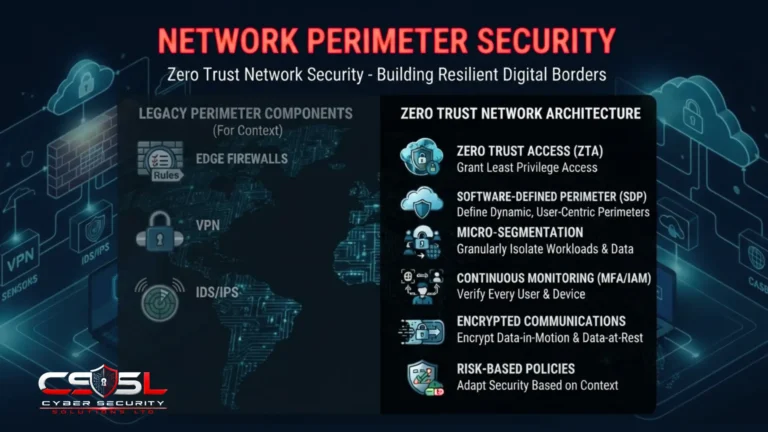
Most organizations don’t buy every category separately anymore. The Hybrid Mesh Firewall and SASE consolidation trend means firewall enforcement, SASE components, and increasingly WAAP capability are converging into fewer, broader platform purchases rather than many separate point tools each requiring its own vendor relationship and console.
Use a platform comparison once you know which categories you actually need. This list tells you what exists; a deeper, evaluative comparison helps you choose between specific comprehensive platforms once your category needs are genuinely clear.
Consider the build-versus-buy-versus-managed question for every category on this list, not just once for your entire stack. Owning a tool and having the operational capacity to run it well are two genuinely separate decisions, and conflating them is how businesses end up with expensive tools nobody’s actually tuning or watching.
Conclusion
This list only earns its value once you use it to find your actual gap, not as a shopping list to work through top to bottom. Match categories to genuine risk, check whether deployment form gives you options you hadn’t considered, and lean on a converged platform where it genuinely fits rather than assembling a dozen separate tools. If you want help mapping your current stack against what this list actually shows, Cyber Security Solutions Ltd can walk through it with you.
FAQs
AAA protocols like RADIUS, TACACS+, and Kerberos implement authentication, authorization, and accounting. NAC extends that identity foundation by adding device compliance and posture assessment as an additional admission gate before granting network access.
SIEM centralizes log aggregation and correlation across telemetry sources to surface patterns. SOAR coordinates automated action across multiple, otherwise disconnected systems in response to a defined trigger, combining coordination with automated response.
Firewall enforcement, SD-WAN, secure web gateway, ZTNA, and CASB increasingly converge into single SASE or Hybrid Mesh Firewall platforms, rather than being purchased and managed as separate, standalone point tools.
An appliance typically refers to a dedicated hardware device delivering one or more functions. A platform often spans multiple deployment forms, hardware, virtual, and cloud, unified under one management console across several security functions.
Audit-evidence-gathering tools include configuration compliance scanners comparing settings against a baseline, vulnerability scanners identifying known weaknesses, and network discovery tools confirming that audit scope is genuinely accurate.
Snort and Suricata are widely referenced, well-established open-source engines used for signature and anomaly-based network traffic detection and, where deployed inline, active blocking.