What Is Data Center Security? How to Protect Physical and Virtual Infrastructure
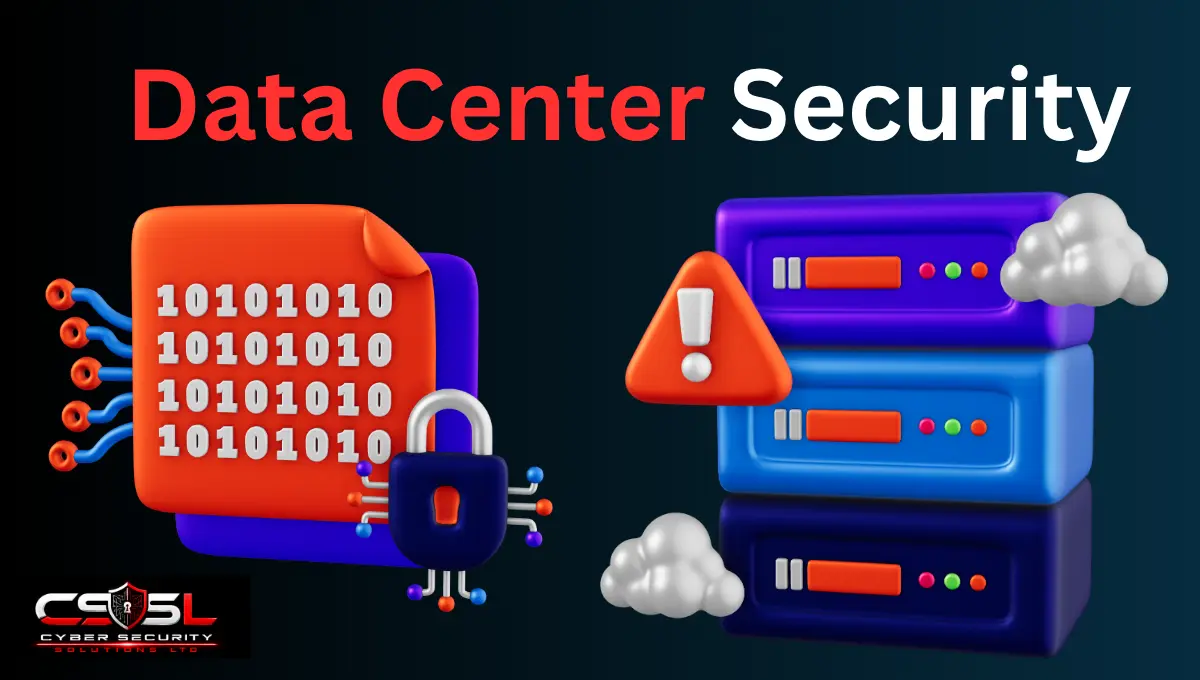
Data center security is the combination of physical and virtual controls protecting the facilities and infrastructure hosting your data, from mantraps and biometric access at the door to network segmentation once inside. If you have assumed encryption alone protects your data regardless of who can physically reach the hardware, that assumption deserves a direct, honest answer this guide provides.
What Is Data Center Security?
Data center security combines physical controls, restricting who can physically access the facility and its hardware, with virtual and network controls, protecting how data moves and who can reach it digitally once inside that infrastructure. Both layers matter together, since strong digital controls sitting inside a facility with weak physical access remain genuinely vulnerable to anyone who simply walks in.
This dual nature distinguishes data center security from purely digital security disciplines. A data center’s physical location, its access controls, its environmental protections, power redundancy, fire suppression, cooling, all sit alongside the network and virtualization security protecting what actually runs within that physical space.
Data Center Security vs Cloud Data Security vs Database Security: The Three Layers
These three terms describe genuinely distinct, though related, layers of protection.
Data center security protects the physical facility and its underlying infrastructure, regardless of what specific workloads or data ultimately run within it.
Cloud data security addresses the specific considerations of running data workloads within cloud infrastructure, shared responsibility boundaries between provider and customer, cloud-native access controls, configuration management particular to cloud platforms.
Database security protects the database itself specifically, its access controls, its encryption, its defense against attacks like SQL injection, regardless of where that database physically or virtually runs. A genuinely secure setup requires all three layers addressed together. A perfectly encrypted, well-designed database running within a cloud platform sitting on top of a data center with weak physical access controls remains meaningfully exposed, since the layers beneath your own direct control still shape your actual overall risk.
The Data Center Tiers, Explained (ANSI/TIA-942)
| Tier | Redundancy Level | Uptime Standard |
| Tier I | Single path, no redundancy | 99.671% |
| Tier II | Redundant components added | 99.741% |
| Tier III | Concurrently maintainable, multiple paths | 99.982% |
| Tier IV | Fully fault tolerant | 99.995% |
ANSI/TIA-942 defines four data center tiers based specifically on redundancy and fault tolerance, not simply overall size or reputation. Tier I represents the most basic level, a single delivery path for power and cooling with no redundancy, meaning any single component failure can cause an outage. Tier II adds redundant components on top of that same single path, improving resilience without eliminating the fundamental single-path limitation.
Tier III introduces genuinely concurrent maintainability, multiple independent delivery paths allowing maintenance on one path without disrupting operations, a meaningful step up in operational resilience. Tier IV represents full fault tolerance, with infrastructure specifically designed to withstand any single equipment failure without any impact on operations at all. Understanding which tier a specific facility actually holds matters directly when evaluating a provider, since the tier rating reflects genuine, measurable infrastructure resilience, not simply a marketing claim.
Physical Controls That Work: Mantraps, Biometrics, and Layered Zoning
A mantrap is a small, secured space between two interlocking doors, where the second door only unlocks once the first has fully closed, physically preventing tailgating, someone following an authorized person through a single open door without their own separate authentication. This single control closes a genuinely common, low-tech physical security gap that badge readers alone cannot address.
Biometric verification, fingerprint, iris or facial recognition, adds a genuine identity confirmation layer beyond a badge or access card alone, since a stolen or cloned badge cannot replicate a person’s actual biometric characteristics. Layered zoning structures physical access as a series of progressively restricted areas, a general reception zone, a more restricted operations floor, and finally the most restricted server room itself, each requiring separate, additional authentication to progress further inward. This layered approach means a single compromised credential or access point does not automatically grant access to the most sensitive areas, since reaching the server room specifically requires passing through multiple, separately secured zones in sequence.
If Someone Can Touch the Hardware, Does Your Encryption Even Matter?
This is a genuinely important, practical question worth answering directly rather than assuming digital encryption alone solves every physical access scenario. The honest answer depends specifically on how and where encryption keys are managed, a distinction covered in database security discussions but genuinely critical here too.
If an attacker gains physical access to server hardware and the encryption keys are stored separately, in a hardware security module physically isolated from the storage media itself, physical access to the drives alone does not grant readable access to the actual data, since the keys required to decrypt it remain genuinely out of reach. However, physical access still creates real, additional risk beyond data confidentiality alone. An attacker with hands-on hardware access can potentially install hardware-level monitoring devices, tamper with firmware, or simply steal the physical drives entirely, denying availability even if confidentiality holds through proper encryption. Physical access also opens the door to side-channel attacks and hardware-level compromise that no software-based encryption can meaningfully prevent, since these attacks target the physical device itself rather than attempting to read encrypted data directly. The honest conclusion is that encryption genuinely protects data confidentiality specifically against physical access, provided keys are properly separated, but it does not eliminate every risk physical access creates. Strong physical controls and strong encryption are complementary, not substitutes for one another, and treating either alone as sufficient leaves a genuine, specific gap the other was meant to close.
Securing the Inside: North-South vs East-West Traffic
North-south traffic describes data moving into and out of a data center, between the facility and the outside world, the traffic direction traditional perimeter firewalls were originally designed to inspect and control. East-west traffic describes data moving laterally within the data center itself, between servers, between virtual machines, traffic that historically received far less scrutiny since it never crossed the traditional network perimeter at all.
This distinction matters enormously for genuine security, since an attacker who successfully breaches perimeter defenses and gains a foothold on one internal system can move relatively freely through unmonitored east-west traffic to reach other systems, precisely the lateral movement pattern responsible for turning a single compromised system into a full-scale breach. Modern data center security increasingly applies the same rigorous inspection and segmentation to east-west traffic that perimeter firewalls have long applied to north-south traffic, using internal micro-segmentation to limit how far an attacker who breaches one system can actually reach without triggering additional detection or being blocked entirely.
SOC 2 Type I vs Type II: A Distinction Worth Getting Right
| Report Type | What It Assesses | Time Period |
| Type I | Control design at a single point in time | Snapshot |
| Type II | Control operating effectiveness over time | Typically 6-12 months |
A SOC 2 Type I report assesses whether a provider’s security controls are appropriately designed at a single point in time, essentially confirming the right controls exist on paper as of a specific date. A SOC 2 Type II report goes considerably further, assessing whether those same controls actually operated effectively over an extended period, typically six to twelve months, providing genuine evidence the controls work consistently in practice rather than simply existing in design.
This distinction matters directly when evaluating a data center or cloud provider. A Type I report tells you the provider has designed reasonable controls. A Type II report tells you those controls have demonstrably worked, day after day, across an extended, real operational period. For any decision involving genuinely sensitive data, prioritizing a provider’s Type II report specifically, rather than accepting Type I alone as sufficient assurance, reflects meaningfully stronger, evidence-based confidence in that provider’s actual, sustained security posture.
What Does NCSC’s Guidance Say About Where Your Data Physically Lives?
The UK’s National Cyber Security Centre addresses this directly within its own Cloud Security Principles, specifically under the principle covering physical location and legal jurisdiction. NCSC’s own guidance states organizations should be confident they genuinely know where their data physically resides and who can access it, extending beyond simple physical location to the legal jurisdiction governing that location and the circumstances under which data could be accessed without the organization’s consent.
Here is a genuinely useful, current fact most guidance misses: all three major hyperscale cloud providers, AWS, Microsoft Azure and Google Cloud, publish dedicated documentation mapping their own services directly against NCSC’s Cloud Security Principles specifically. AWS publishes a dedicated whitepaper addressing this exact mapping, and Microsoft maps its own compliance directly through Compliance Manager with automated assessment capability. This means an organization evaluating a hyperscaler specifically for UK data residency and NCSC alignment does not need to independently assess compliance from scratch, since these mapping documents already exist and are publicly available directly from each provider. Data classification matters directly here too, since UK government’s own classification framework treats different sensitivity levels with genuinely different residency and access expectations, meaning the right answer to “where should our data live” depends specifically on what that data actually is, not a single, universal rule applying identically to every organization regardless of what they store.
A Realistic Approach for SMBs Using Shared or Colocated Space
Most small and medium businesses will never build or operate their own dedicated, Tier IV data center, and a genuinely realistic security approach accepts this reality rather than treating enterprise-scale physical infrastructure as the only legitimate standard. Colocated or shared data center space means your organization does not directly control the building’s own physical security, making provider due diligence the actual control available to you.
Request and review the specific tier rating and SOC 2 Type II report directly from any colocation provider before committing, rather than assuming a facility’s general reputation alone reflects genuine, verified security posture. Confirm exactly what physical access controls apply to your own specific rack or cage space within that shared facility, since shared tenancy means other customers’ own staff and vendors may have legitimate access to the broader building even if your own specific space remains separately secured. For most SMBs, the genuinely proportionate approach combines choosing a colocation or cloud provider with verified, current SOC 2 Type II reporting and appropriate tier rating, applying strong encryption with properly separated key management as covered earlier, and accepting that direct physical control over the building itself is neither realistic nor necessary when the provider’s own verified controls genuinely meet your organization’s actual risk profile. Cyber Security Solutions Ltd routinely helps SMBs make exactly this proportionate assessment, matching genuine data center security expectations to what a smaller organization can realistically verify and control, rather than measuring every business against enterprise-scale infrastructure standards that were never built with SMB budgets or scale in mind.
Conclusion
Data center security requires physical and virtual controls working together, and neither strong encryption nor strong physical access controls alone fully substitutes for the other. Start by requesting your current provider’s tier rating and SOC 2 Type II report directly, rather than assuming their general reputation alone reflects verified security posture. To get a data center and cloud provider security review for your organization, visit cybersecuritysolutionsltd.com for expert support from Cyber Security Solutions Ltd.
FAQs
Data center security combines physical controls, like mantraps and biometric access, with virtual and network controls protecting data and infrastructure once inside the facility. Both layers matter together, since strong digital controls sitting in a facility with weak physical access remain genuinely vulnerable.
ANSI/TIA-942 defines four tiers based on redundancy and fault tolerance. Tier I has a single path with no redundancy. Tier IV is fully fault tolerant, designed to withstand any single equipment failure without operational impact, representing the highest verified resilience standard.
Yes, provided encryption keys are stored separately from the data itself, typically in a hardware security module. Physical access alone does not grant readable data access under proper key separation, though physical access still creates other risks encryption cannot address alone.
North-south traffic moves into and out of a data center, historically the focus of perimeter firewalls. East-west traffic moves laterally within the facility, between servers, and has historically received less scrutiny, making it a common path for attacker lateral movement after an initial breach.
Type I assesses whether security controls are appropriately designed at a single point in time. Type II assesses whether those controls actually operated effectively over an extended period, typically six to twelve months, providing stronger, evidence-based assurance than Type I alone.
NCSC’s Cloud Security Principles require organizations to know where their data physically resides and understand the legal jurisdiction governing it, rather than mandating one universal location. All three major hyperscalers publish documentation mapping their services directly against these principles.