Next Generation Endpoint Security: How It Goes Beyond Traditional AV

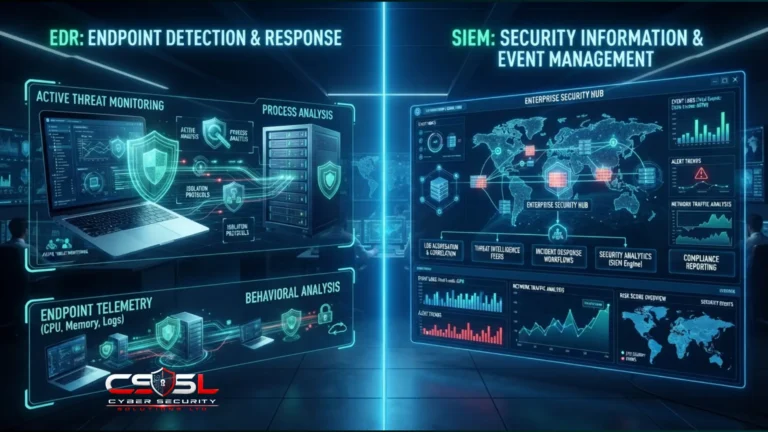
Next generation endpoint security uses kernel-level monitoring and behavioral analysis to see what’s genuinely happening on a device in real time, going well beyond traditional antivirus’s file-scanning approach. If you have wondered how EDR technology actually watches a system this closely, the answer runs deeper into the operating system than most explanations ever go.
What Is Next Generation Endpoint Security?
Next generation endpoint security combines EDR technology, behavioral analysis and kernel-level monitoring to detect threats based on what a process actually does, rather than matching files against a database of known malicious signatures. This lets it recognize genuinely novel attacks and fileless techniques that never produce a scannable malicious file at all.
The core shift is architectural, not simply a feature upgrade. Traditional antivirus asks whether a file matches something already known to be bad. Next generation endpoint security asks whether a process’s actual behavior looks consistent with an attack, regardless of whether that specific technique has ever been catalogued before.
How EDR Sees What’s Happening on a Device: Kernel Callbacks Explained
Here is the specific mechanism worth understanding directly, since it explains genuinely how EDR achieves the visibility antivirus never had. Windows provides kernel callback routines, specific registration points a driver can hook into to receive notification the instant a process starts, a thread gets created, or a handle to a protected object gets opened.
An EDR agent’s kernel-mode driver registers with these callback mechanisms directly, meaning it receives notification of these events as they happen, at the kernel level, before or as the action itself completes. This differs fundamentally from user-mode monitoring, which observes activity from a higher, more easily bypassed vantage point an attacker with sufficient privileges can potentially blind or deceive. Kernel callbacks give EDR a genuinely privileged, early view of system activity that user-mode tools structurally cannot match, since the operating system itself notifies the driver directly rather than the driver having to poll or infer what happened after the fact.
The Same Privilege Level as a Rootkit, and Why That Matters
This is worth stating directly, since it explains both EDR’s genuine strength and a real, current vulnerability simultaneously. EDR’s kernel-mode driver operates at Ring 0, the same maximum privilege level a rootkit itself uses to hide from detection. This is precisely why EDR can see what a sophisticated, kernel-level threat attempts to conceal, since both are operating at the identical, most privileged layer of the operating system.
Here is the honest, current flip side worth understanding directly. Because Ring 0 access is so powerful, it has become the specific target attackers pursue to disable EDR itself, not through a direct attack on the EDR software, but by exploiting a different, legitimately signed driver to gain that same Ring 0 access, then using it to terminate the EDR agent’s own kernel callbacks. This technique, called BYOVD, Bring Your Own Vulnerable Driver, has become genuinely widespread. Research published in early 2026 identified more than 50 distinct EDR-killer tools currently circulating, collectively abusing dozens of signed, legitimate Windows drivers to accomplish exactly this. The same Ring 0 positioning that gives EDR its genuine visibility advantage is precisely what makes it a specific, current target for attackers seeking to blind that advantage entirely before their actual attack proceeds.
Indicators of Attack vs Indicators of Compromise: Before vs After
| Indicators of Compromise | Indicators of Attack | |
| Timing | After compromise completes | While attack is in progress |
| Focus | Specific artifacts, hashes, IPs | Behavioral technique |
| Limitation | Attacker changes artifacts easily | Harder to evade, targets intent |
Indicators of compromise are specific, static artifacts confirming a compromise already happened, a known malicious file hash, a flagged IP address, a specific registry key. These are genuinely useful for confirming what occurred, but by definition, they only exist after the compromise itself already took place.
Indicators of attack instead focus on behavioral technique, the underlying pattern of what an attacker is trying to accomplish, regardless of which specific tool or file executes that technique. This distinction matters enormously in practice. An attacker can trivially change a file hash or swap an IP address, defeating IOC-based detection instantly. Changing the underlying behavioral technique itself, the actual sequence of actions credential theft or lateral movement requires, is considerably harder, meaning IOA-based detection catches an attack while it unfolds, not only after the specific artifacts it left behind get catalogued.
Why Signature Scanning Misses LOLBins and Fileless Attacks Entirely
Living-off-the-land binaries, LOLBins, are legitimate, pre-installed Windows tools, PowerShell, certutil, regsvr32, that attackers use to carry out malicious actions using software the operating system trusts completely. Since these tools are genuinely legitimate and digitally signed, signature-based scanning has structurally nothing suspicious to flag, the file itself is exactly what it claims to be.
Fileless attacks compound this further, operating directly in memory without ever writing a malicious file to disk at all. Neither category produces the kind of scannable artifact signature-based antivirus depends on, which is precisely why behavioral, kernel-level monitoring matters so directly here. Detecting these techniques requires watching what a legitimate tool actually does, PowerShell suddenly reaching out to an unfamiliar external address, rather than what file it happens to be.
What Happens After Detection: Isolation, Quarantine, and Automated Rollback
Once behavioral detection confirms genuinely suspicious activity, next generation endpoint security typically responds through several coordinated actions. Isolation disconnects the affected device from the network directly, cutting off an attacker’s active access without destroying the device’s own volatile memory the way powering it off would.
Quarantine contains the specific malicious process or file, preventing it from executing further while preserving it for later analysis. Automated rollback, available in more advanced platforms, reverses changes a confirmed malicious process made, restoring affected files to their pre-attack state without requiring a full system restore from backup. This combination lets a genuine threat get contained and partially remediated automatically, considerably faster than waiting for a human analyst to manually intervene at every step.
The Arms Race: What Happens When Attackers Target EDR Itself
BYOVD represents the current, active front line of this arms race, and understanding the specific escalation pattern matters directly for anyone evaluating endpoint protection today. Attackers load a legitimately signed but vulnerable driver, exploit a known flaw within it to gain kernel-level access, then use that access to directly terminate the EDR agent’s kernel callbacks and wipe its telemetry, all before the actual attack payload ever executes.
This has become commodity criminal tooling, sold and shared across multiple ransomware groups rather than remaining a rare, sophisticated technique reserved for elite attackers. This escalation directly shapes how vendors respond, increasingly hardening kernel driver signing requirements and monitoring specifically for unusual driver loading behavior itself, treating the loading of an unfamiliar, rarely-used signed driver as a genuine signal worth investigating, not simply trusting the signature alone. Cyber Security Solutions Ltd factors this specific arms race directly into how it evaluates endpoint platforms for clients, since a platform’s own resilience against having its kernel-level visibility deliberately blinded has become as important as its raw detection capability.
Where This Sits Against UK Cyber Essentials
NCSC’s Cyber Essentials scheme satisfies its malware protection requirement through baseline anti-malware software, application allow-listing, or sandboxing, none of which requires kernel-level EDR monitoring or behavioral detection at any tier. Next generation endpoint security genuinely exceeds what the scheme mandates as a minimum.
This means adopting kernel-level EDR capability reflects a genuine risk decision beyond compliance, particularly relevant given how thoroughly LOLBins and fileless techniques now feature in current attacks that signature-based baseline protection alone cannot detect.
Conclusion
Next generation endpoint security’s real advantage comes from kernel-level visibility and behavioral detection, but that same privileged position is precisely what current attackers now specifically target through BYOVD. Start by confirming your own EDR platform actively monitors for unusual driver loading behavior, not just traditional malware. To evaluate whether your endpoint protection genuinely accounts for this current threat, visit cybersecuritysolutionsltd.com for expert support from Cyber Security Solutions Ltd.
FAQs
Technology combining EDR, behavioral analysis and kernel-level monitoring to detect threats based on what a process actually does, rather than matching files against known malicious signatures, allowing detection of novel and fileless attacks traditional antivirus cannot recognize.
Through kernel callback routines, specific registration points in Windows that notify a driver the instant a process starts or a handle gets opened. EDR’s kernel-mode driver registers with these callbacks directly, receiving real-time notification at the kernel level.
Both operate at Ring 0, the most privileged operating system layer, which is why EDR can see what a kernel-level threat attempts to hide. This same positioning also makes EDR a specific target for BYOVD attacks seeking to disable it.
Indicators of compromise are static artifacts, like file hashes, confirming a compromise already happened. Indicators of attack focus on behavioral technique, catching an attack while it unfolds, since attackers can change artifacts easily but not the underlying technique itself.
LOLBins are legitimate, digitally signed Windows tools attackers use maliciously. Since the file itself is genuinely legitimate, signature scanning has nothing suspicious to flag. Detecting this requires behavioral monitoring of what the tool actually does, not what file it is.
Yes. Attackers exploit a vulnerable signed driver to gain kernel-level access, then use it to terminate the EDR agent’s own callbacks before their attack proceeds. This has become widespread commodity tooling shared across multiple ransomware groups.