What Is Reconnaissance in Cyber Security? How Attackers Map Your Network
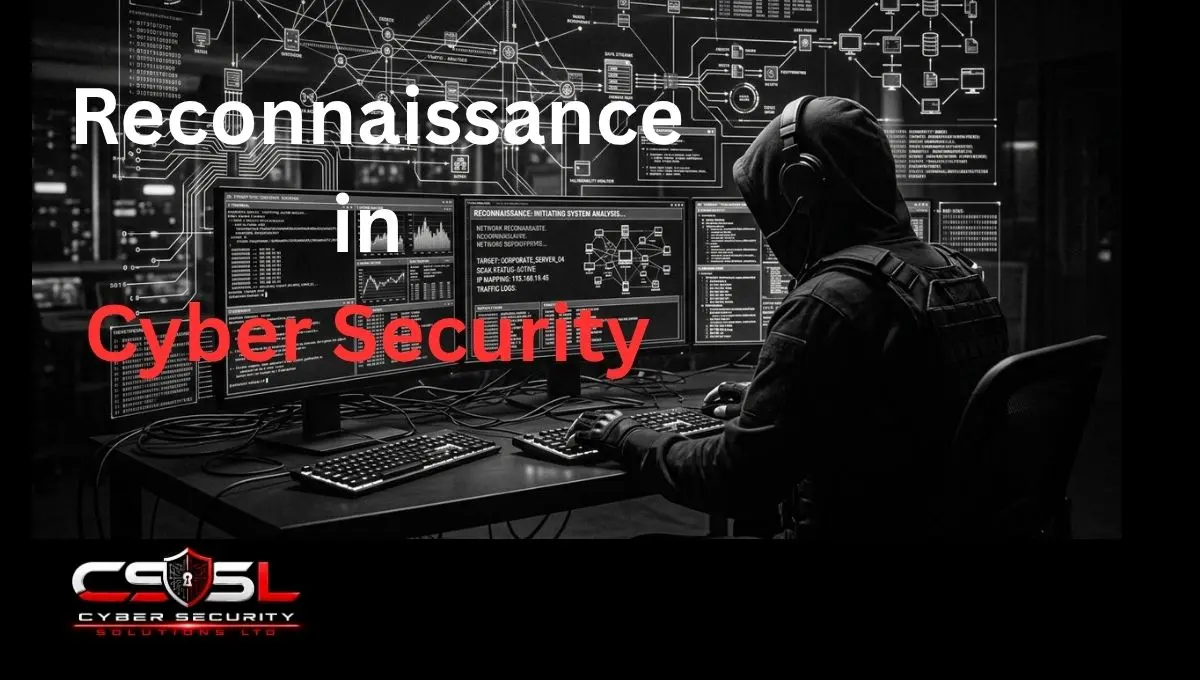
Reconnaissance in cyber security is the information-gathering phase where an attacker researches a target, its network, systems, employees and technology, before ever attempting to breach it, building the map they’ll use to plan every subsequent step of an attack.
What Is Reconnaissance in Cyber Security?
Reconnaissance is the research phase that happens before an actual attack begins. An attacker gathers information about a target, network structure, employee names, technology in use, exposed systems, building a detailed picture that shapes every decision made afterward.
Think of it as the planning stage. A break-in attempt built on genuine reconnaissance is fundamentally more effective than one attempted blind, since the attacker already knows what they’re walking into before they take a single risky action.
Passive vs Active Reconnaissance — the Same Distinction That Applies to Every Cyber Attack
Passive reconnaissance gathers information without ever touching the target’s own systems directly. Public records, social media profiles, job postings revealing internal technology stacks, all consulted from a safe, external distance. Since nothing ever interacts with the target’s actual infrastructure, passive reconnaissance leaves no trace at all.
Active reconnaissance works differently, interacting directly with target systems: port scanning, service probing, sending actual traffic toward the target’s own infrastructure. This gathers deeper, more specific detail, but at a genuine cost: activity that touches a real system can potentially be detected, logged, or flagged, unlike research conducted entirely from the outside.
Footprinting vs Enumeration — Getting the Terminology Precise
Here’s a distinction most content blurs entirely, using these two terms as though they mean the same thing. They don’t, and the difference matters.
Footprinting is the broad, largely passive process of building a comprehensive profile of a target: domain names, IP address ranges, employee names and roles, technology stack, physical locations. It’s the wide-angle picture, assembled mostly from publicly available sources.
Enumeration is a narrower, active follow-on step. Rather than building a broad profile, enumeration systematically extracts specific, granular details from systems already identified during footprinting, usernames, service versions, shared network resources, directly querying those systems for information they’re willing to hand over. Footprinting tells you what exists. Enumeration tells you the specifics of what you’ve already found.
How Attackers Actually Do This: OSINT, WHOIS, Nmap, and War Driving
Several concrete techniques and tools underpin real-world reconnaissance.
- OSINT (Open-Source Intelligence): gathering information from LinkedIn profiles, company websites, press releases, and social media, building a picture of an organization’s structure and technology without ever directly contacting it.
- WHOIS: querying public domain registration records, revealing details like registrant contact information, hosting provider, and domain creation dates.
- Nmap: an active network scanning tool identifying open ports, running services, and performing OS fingerprinting to determine exactly what operating system and software version a target system is running.
- War driving: physically moving through an area, often by car, specifically searching for exposed or poorly secured wireless networks broadcasting nearby.
Reconnaissance Techniques and Tools
| Technique | What It Reveals |
| OSINT | Organizational structure, technology stack, employee details |
| WHOIS | Domain registration, hosting provider, contact information |
| Nmap | Open ports, running services, OS fingerprinting |
| War driving | Exposed or poorly secured wireless networks |
Reconnaissance as the First Stage of an APT — Why It Matters More Than It Looks
Reconnaissance is the foundational first stage of the Advanced Persistent Threat lifecycle, and it deserves more weight than a simple checklist item, since it determines everything that follows. Which specific vulnerability gets targeted, which employee gets selected for a spear phishing attempt, which system becomes the initial entry point, all of that gets decided during reconnaissance, before the actual attack ever begins.
A sophisticated attacker spends genuine, deliberate time here specifically because a thorough map makes every later stage more efficient and considerably harder to detect. An attacker who skips straight to exploitation, guessing at vulnerabilities without first understanding the environment, moves faster but far more visibly, triggering the kind of obvious, clumsy activity that gets caught quickly. An attacker who spends weeks quietly footprinting an organization, identifying exactly which employee handles finance, which software version runs on the public-facing server, and which vendor relationships exist, can then execute a far more precise, targeted, and quiet attack once they finally act. This is precisely why reconnaissance deserves genuine attention rather than being treated as a minor preliminary step; the quality of an attack’s later stages is directly proportional to how thoroughly this first stage was done.
It’s Not Just a Threat — It’s Also How Accredited Penetration Testers Work
Here’s an honest point most competitor content skips entirely, presenting reconnaissance only through a threat lens. Reconnaissance isn’t exclusively malicious. The exact same techniques, OSINT gathering, active scanning, service enumeration, form the foundation of legitimate, authorized penetration testing.
NCSC’s CHECK scheme is worth naming directly here. It’s the UK scheme under which NCSC-assured companies conduct authorized penetration tests of government and critical national infrastructure systems and networks. CHECK Team Leaders must hold UK Cyber Security Council Professional Titles at Principal level minimum, and roughly 30 to 40 companies currently hold this accreditation.
Here’s why this framing genuinely matters, beyond simply being a fair, balanced point. A CHECK-approved tester performing reconnaissance against a government network is running the identical Nmap scans, the identical OSINT gathering, the identical enumeration techniques a malicious attacker would use. What separates the two entirely is authorization, contract, and reporting: the tester has explicit permission, operates within an agreed scope, and hands findings back to the organization being tested rather than exploiting them. Understanding reconnaissance this way, as a neutral technique rather than an inherently malicious one, genuinely helps a business think more clearly about its own exposure. If your organization’s public footprint would give a malicious attacker a genuine advantage, that exact same footprint is precisely what a legitimate penetration test would flag as worth reducing, well before anyone with bad intentions ever gets there first. Cyber Security Solutions Ltd frequently uses reconnaissance techniques in exactly this authorized, defensive capacity, helping businesses see their own exposure through the same lens an attacker actually would.
Can You Detect Reconnaissance Happening Against You?
Passive reconnaissance is genuinely, structurally undetectable from your own side. Since it never touches your systems directly, consulting public records and social media instead, there’s simply nothing on your own network for any monitoring tool to catch.
Active reconnaissance is a different story. Port scans and service probing generate real, detectable network traffic. Intrusion detection systems and log monitoring can identify scanning patterns, particularly the kind of rapid, broad scanning an unsophisticated attacker might run. Sophisticated attackers know this, though, and deliberately slow and space out their scanning activity specifically to blend in with ordinary network traffic, avoiding the obvious volume spike that would otherwise trigger an alert.
How Do You Defend Against Reconnaissance?
- Reduce your OSINT exposure deliberately, limiting how much technical detail, software versions, internal team structure, gets shared publicly on job postings, social media, or company websites.
- Harden wireless networks against war driving discovery, using strong encryption and disabling unnecessary broadcast of network names where appropriate.
- Monitor network logs specifically for scanning patterns, even slow, spaced-out activity that might otherwise blend into normal traffic.
- Minimize your external attack surface generally, since reconnaissance can only map what’s actually exposed; fewer unnecessary public-facing systems means less for an attacker to find in the first place.
Conclusion
Reconnaissance decides how effective everything that follows actually is, which is exactly why the businesses that reduce their own exposure early make every later stage of an attack harder to pull off. Limit what you share publicly, harden your wireless footprint, and watch your logs for the patterns a real scan leaves behind. If you want a clear picture of what your own organization’s exposure looks like from an attacker’s side, Cyber Security Solutions Ltd can walk through it with you.
FAQs
Reconnaissance is the information-gathering phase where an attacker researches a target, its network, systems, employees and technology, before attempting a breach, building the map used to plan every subsequent step of an attack.
Passive reconnaissance gathers information without touching target systems directly, through public records and social media, leaving no trace. Active reconnaissance interacts directly with systems, port scanning or probing, gathering deeper detail but potentially detectable.
Footprinting is the broad, largely passive process of building a comprehensive target profile. Enumeration is a narrower, active follow-on step, systematically extracting specific details like usernames and service versions from already-identified systems.
Nmap actively scans a target network to identify open ports, running services, and performs OS fingerprinting to determine exactly what operating system and software version a target system is running, informing which vulnerabilities to target.
Passive reconnaissance is genuinely undetectable since it never touches your systems. Active reconnaissance can be detected through intrusion detection systems and log monitoring, though sophisticated attackers deliberately slow scans to blend in with normal traffic.
CHECK is the UK scheme under which NCSC-assured companies conduct authorized penetration tests of government and critical national infrastructure systems, using the same reconnaissance techniques attackers use, but with permission and formal reporting.