Best EDR Solutions in 2026: Top Platforms Compared
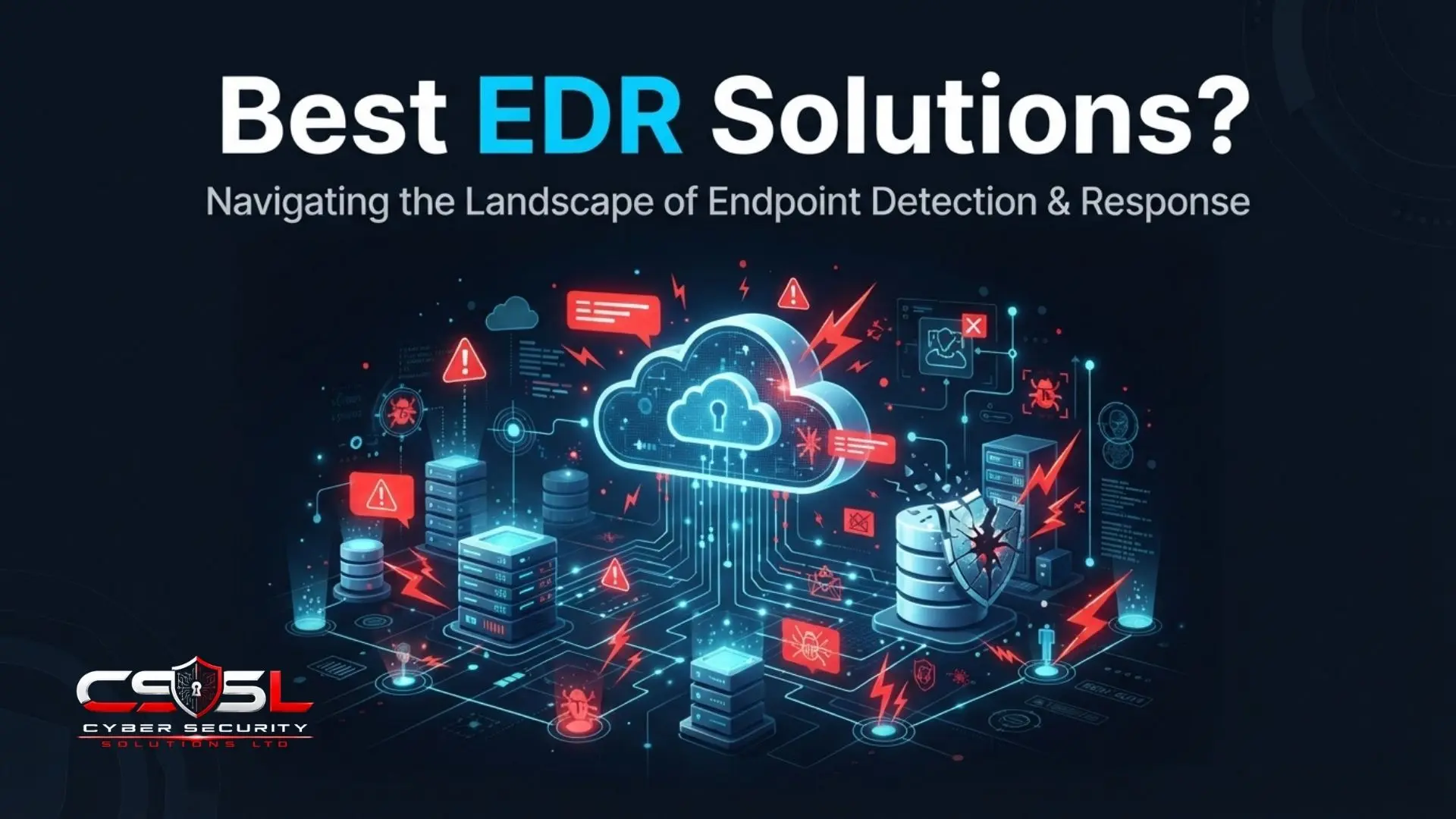
Best EDR solutions in 2026 combine verified detection performance, genuine cross-domain visibility, and a response model that matches your team’s actual capacity, not simply the highest score on a single benchmark. If you have assumed a top MITRE ATT&CK score settles this question definitively, the current, honest picture is considerably more complicated than that.
What Does Best EDR Mean, and Why a High MITRE Score Isn’t the Whole Answer
MITRE’s ATT&CK Enterprise Evaluations remain the most credible independent test of EDR detection capability, simulating real-world adversary behavior against participating platforms. Here is the genuinely important, current fact most comparison content glosses over: three of the largest EDR vendors, Microsoft, SentinelOne, and Palo Alto Networks, withdrew entirely from the 2025 evaluation round, citing resource-intensive commitment and a preference to allocate their teams elsewhere.
Only eleven vendors participated in 2025: Acronis, AhnLab, CrowdStrike, Cyberani, Cybereason, Cynet, ESET, Sophos, Trend Micro, WatchGuard, and WithSecure. This means a “top MITRE score” in 2026 reflects who chose to compete this specific round, not necessarily a complete ranking of the strongest platforms genuinely available on the market. CrowdStrike, notably, did participate and posted a genuinely strong result, but readers comparing platforms based purely on MITRE performance need to understand directly that Microsoft and SentinelOne simply have no current MITRE score to hold up against it, not because their detection capability is unproven, but because they opted out of this specific evaluation cycle entirely. A genuinely complete “best EDR” judgment has to weigh MITRE results alongside Gartner positioning, real-world review data, and fit for your own specific environment, since no single benchmark, however credible, currently covers every major vendor consistently.
The Current Gartner Leaders (May 2026), and What Separates Them
Gartner’s Magic Quadrant for Endpoint Protection, published May 26, 2026, names four vendors as Leaders. Sophos earned this recognition for the 17th consecutive report. CrowdStrike, recognized for the seventh consecutive time, was positioned furthest for Completeness of Vision and highest for Ability to Execute among all evaluated vendors. Microsoft, also recognized for the seventh consecutive time, positions Defender’s endpoint capabilities as the foundation for coordinated defense spanning identities, email, apps and cloud together. Palo Alto Networks, a Leader for the fourth consecutive year, has specifically positioned its platform around the emerging challenges of agentic AI.
What separates these four in practice comes down to genuinely different strategic emphases rather than a simple ranking. CrowdStrike leads on unified, cross-domain architecture and independently verified detection performance. Microsoft leads on ecosystem integration for organizations already invested in Microsoft 365 licensing. Sophos leads on sustained, long-term consistency across seventeen consecutive evaluation cycles. Palo Alto Networks leads on positioning specifically for the AI-agent security challenges covered later in this guide. None of these is simply “better” in isolation; each reflects a genuinely different set of priorities a specific organization might reasonably weigh differently.
Platforms vs Managed Services: Why Huntress Isn’t Compared on the Same Axis as CrowdStrike
A genuinely common mistake in “best EDR” comparisons treats every named vendor as competing on identical criteria, when providers like Huntress and platforms like CrowdStrike are not actually answering the same question at all. CrowdStrike, SentinelOne and Microsoft Defender are platform vendors, companies building and selling the underlying detection technology itself, evaluated directly against benchmarks like MITRE specifically because that technology’s own raw detection capability is what gets tested.
Huntress, by contrast, is fundamentally a managed service built on top of underlying EDR technology, SentinelOne’s engine in Huntress’s own case, combined with a 24/7 human-led SOC handling monitoring, triage and response. Comparing Huntress directly against CrowdStrike on a MITRE scorecard misunderstands what each company is actually selling. CrowdStrike is selling detection technology you or your team operate. Huntress is selling an operational outcome, detection technology already managed and responded to on your behalf, built using someone else’s underlying engine. This distinction matters enormously for how you should actually evaluate either option. If you are choosing a platform to operate yourself, MITRE performance and Gartner positioning are genuinely the right criteria to weigh. If you are choosing a managed provider specifically because you lack the internal capacity to operate any platform directly, the more relevant questions become response time SLAs, analyst-to-customer ratios and genuine 24/7 coverage, not which underlying engine technically scores highest on an evaluation neither you nor the managed provider’s own marketing will ever directly operate on your behalf.
What Top-Tier EDR Catches That the Rest Miss (Living-Off-the-Land Attacks, Explained)
Living-off-the-land attacks use an operating system’s own legitimate administrative tools to carry out malicious actions, meaning every individual action, by itself, looks like completely normal, authorized software behavior. This is precisely why signature-based detection alone cannot catch this category, and why top-tier behavioral detection specifically has become the differentiating capability separating leading platforms from weaker ones.
Current industry data shows the majority of successful initial-access attacks, roughly 79 to 81 percent by recent measurement, now involve no traditional malware at all, relying instead on exactly these living-off-the-land techniques alongside stolen credentials. A platform that only recognizes known-bad files will miss this dominant attack category entirely, regardless of how comprehensive its signature database happens to be. Top-tier EDR platforms specifically build behavioral models trained to recognize when a legitimate tool, a scripting engine, a remote management utility, gets used in a pattern inconsistent with normal, authorized activity, catching the malicious intent behind an otherwise unremarkable-looking action. This capability is precisely what MITRE’s own evaluation scenarios increasingly test for directly, since the evaluation body has specifically incorporated living-off-the-land and identity-abuse scenarios into recent testing rounds, reflecting how thoroughly this attack category now dominates real-world intrusion activity.
Head-to-Head: CrowdStrike, SentinelOne, Microsoft Defender, and Where Each Genuinely Wins
| Vendor | 2025 MITRE Status | Genuine Distinguishing Strength |
| CrowdStrike | Participated: 100% detection, 100% protection, zero false positives | Verified, unified cross-domain architecture |
| SentinelOne | Withdrew from 2025 evaluation | Autonomous response, one-click rollback |
| Microsoft Defender | Withdrew from 2025 evaluation | Zero marginal cost within existing E5 licensing |
An honest head-to-head here requires stating directly what can and cannot be fairly compared. CrowdStrike participated in the 2025 MITRE evaluation and posted a genuinely verified, strong result, 100 percent detection, 100 percent protection, zero false positives, across the most demanding evaluation scenarios MITRE has run to date, including its first cloud-based adversary emulation spanning identity, endpoint and cloud simultaneously. This is a real, independently documented result worth taking seriously.
SentinelOne and Microsoft Defender both withdrew from this specific evaluation round, meaning neither has a current MITRE score to place against CrowdStrike’s directly. This does not mean either platform performs poorly; it means the comparison genuinely cannot be made on MITRE grounds for this cycle. Where each still genuinely wins comes down to real, verifiable factors outside MITRE specifically. SentinelOne’s architecture emphasizes autonomous response capability, including one-click rollback restoring an affected endpoint to its pre-attack state, a genuinely useful capability for organizations wanting faster, less manual remediation. Microsoft Defender for Endpoint Plan 2 comes bundled at zero additional marginal cost within Microsoft 365 E5 licensing, a genuine, concrete cost advantage for any organization already holding that license tier, effectively making Defender’s advanced capability a sunk cost rather than a new line-item expense. CrowdStrike’s genuine win is independently verified detection performance under MITRE’s most demanding recent test. SentinelOne’s is autonomous remediation speed. Microsoft’s is total cost of ownership for organizations already deep in the Microsoft ecosystem. None of these wins cancels out the others, and the right choice depends on which specific factor matters most for your own organization.
What Does This Do to Attacker Dwell Time?
Dwell time, how long an attacker sits undetected inside a network, is the practical metric where EDR quality actually shows its value, more than any single benchmark score. The current global average breach lifecycle, per IBM’s 2025 Cost of a Data Breach Report, sits at 241 days, 181 days to identify plus 60 to contain, though this figure varies considerably depending on the detection capability actually deployed.
Organizations using AI-powered behavioral analytics and modern EDR platforms detect breaches meaningfully faster than the broader average, since behavioral detection specifically catches the living-off-the-land and credential-based techniques covered above that traditional tools miss for months at a time. This is the practical payoff a genuinely capable EDR platform delivers: not a marketing claim about “stopping every attack,” but a measurable, real reduction in how long an attacker’s presence goes unnoticed, directly correlating with lower breach cost and less accumulated damage the longer that presence would otherwise have continued undetected.
Who Should NOT Pick the Top-Ranked Platform?
Here is honest counter-guidance most “best EDR” content skips entirely. A small business without dedicated security staff should not necessarily choose the platform ranking highest on MITRE or Gartner criteria alone, since these evaluations measure raw platform capability, not whether your own team has the capacity to actually operate that platform’s full feature set effectively.
A sophisticated, feature-rich platform requiring genuine tuning expertise and continuous monitoring delivers less real protection in the hands of a team without capacity to run it properly than a simpler, well-supported managed service would provide the same organization. An organization already deeply invested in Microsoft’s licensing ecosystem, running Microsoft 365 E5 already, should think carefully before paying separately for a different platform’s premium tier, when Defender for Endpoint Plan 2 sits included at zero additional marginal cost within licensing already held. A regulated organization needing demonstrable, continuously staffed monitoring for audit purposes may find a managed service, evaluated on response SLA and analyst capacity rather than raw MITRE score, genuinely fits their actual requirement better than the highest-ranked self-operated platform alone. Picking the top-ranked platform without honestly weighing your own team’s capacity, existing licensing, and specific compliance needs against that ranking is precisely how organizations end up owning capable technology they cannot actually operate to its full potential.
How Does This Play Against UK Cyber Essentials’ Own Baseline?
NCSC’s Cyber Essentials scheme requires malware protection as one of five core technical controls, satisfied through any one of three approved approaches: anti-malware software, application allow-listing, or sandboxing. Baseline, properly configured antivirus is explicitly confirmed as sufficient to meet this specific requirement, including for Cyber Essentials Plus in many environments where an assessor actively attempts to deliver malware during testing.
This means every platform covered throughout this guide, from CrowdStrike’s top-tier, independently verified capability down to Microsoft’s bundled Defender licensing, genuinely exceeds what Cyber Essentials itself requires as a baseline. The scheme does not mandate MITRE-tested EDR at all. For UK businesses specifically, this creates a genuine, honest choice worth making deliberately rather than by default: certification alone, satisfied by basic anti-malware software, versus the meaningfully stronger, behaviorally-driven protection this guide’s top platforms provide against the living-off-the-land and credential-based attacks now dominating real-world intrusion activity. Cyber Security Solutions Ltd routinely helps UK clients understand this exact gap between passing certification and genuinely matching current threat reality, since the two questions, while related, are not the same question.
Conclusion
Choosing the best EDR solution in 2026 means weighing verified performance data honestly, including which vendors currently have it and which don’t, against your own team’s real capacity and existing licensing. Start by confirming whether MITRE, Gartner, or genuine operational fit matters most for your specific situation before comparing vendor claims. To get help matching the right EDR platform to your organization’s actual needs, visit cybersecuritysolutionsltd.com for expert support from Cyber Security Solutions Ltd.
FAQs
There isn’t one universal answer. CrowdStrike posted a verified, top-tier 2025 MITRE result. Microsoft and SentinelOne withdrew from that specific evaluation but offer genuine strengths in licensing cost and autonomous response respectively. The right choice depends on your own environment, licensing, and staffing capacity.
Both vendors, along with Palo Alto Networks, withdrew citing the resource-intensive commitment MITRE’s evaluation requires, choosing instead to allocate their teams elsewhere. This means neither has a current 2025 MITRE score to compare directly against vendors who did participate.
Not really. CrowdStrike is a platform vendor selling underlying detection technology, evaluated against benchmarks like MITRE. Huntress is a managed service built on top of a different vendor’s technology, better evaluated on response SLA and analyst capacity than on its underlying engine’s own MITRE score.
Living-off-the-land attacks, which use an operating system’s own legitimate administrative tools to carry out malicious actions, meaning every individual action looks completely normal. Top-tier behavioral detection specifically recognizes when legitimate tools are used in patterns inconsistent with authorized activity.
No. A small business without dedicated security staff may benefit more from a well-supported managed service than a feature-rich platform requiring tuning expertise they lack capacity to provide. An organization already on Microsoft 365 E5 may find bundled Defender coverage a better fit than a separate premium platform.
No. Cyber Essentials’ malware protection control is satisfied by baseline anti-malware software, including for Cyber Essentials Plus in many environments. Every platform covered in this guide genuinely exceeds this minimum requirement, making certification and current threat protection related but distinct questions.