Cyber Maturity Assessment: How to Measure Your Organisation’s Security Level
A cyber maturity assessment measures how consistently, deliberately, and systematically an organization applies its security practices, distinct from a compliance check confirming specific controls exist, evaluating whether those controls are genuinely embedded, repeatable, and improving over time rather than applied inconsistently.
What Is a Cyber Maturity Assessment?
A cyber maturity assessment evaluates how deeply and consistently security practices are actually embedded in an organization’s day-to-day operations, not just whether a specific control technically exists somewhere. It answers a genuinely different question than a compliance audit: not “do you have this control,” but “how reliably, consistently, and repeatably do you actually apply it.”
This distinction matters because two organizations can have identical technical controls on paper while sitting at completely different maturity levels in practice, depending entirely on how consistently and deliberately those controls actually get used.
Compliant vs Actually Safe: the Distinction That Changes Everything
Here’s a concrete example worth holding onto, since it makes an abstract distinction genuinely tangible. An organization can pass a compliance audit by having multi-factor authentication technically enabled somewhere in its environment, checking the box that says “MFA: Yes.”
Genuine maturity means something considerably more demanding. It means MFA is consistently enforced across every account, including service accounts and legacy systems that are easy to quietly exclude. It means there’s a documented, reviewed process for handling exceptions, rather than an informal understanding that “the IT team handles that somehow.” It means someone actually audits enforcement periodically to confirm it hasn’t quietly drifted.
That’s the real difference between a checkbox and a genuinely embedded practice. A business that’s technically compliant but not mature might have MFA enabled for 80% of accounts, with the remaining 20% sitting as legacy exceptions nobody’s revisited in years, exposure a compliance audit checking “is MFA present” would never catch, but a genuine maturity assessment absolutely would.
The Five Tiers Most Maturity Models Use
Most maturity models, regardless of their specific naming conventions, progress through a broadly consistent conceptual structure.
Initial or ad hoc practices describe security handled reactively, with no consistent process behind it.
Repeatable but informal means practices exist and get followed, but without full documentation.
Defined and standardized means practices are documented, consistent, and applied uniformly across the organization.
Quantitatively managed means practices are actively measured, with real metrics tracking their effectiveness over time.
Optimized means practices are continuously refined based on those measurements, genuinely improving rather than staying static once defined.
The Five Maturity Tiers
| Tier | What It Looks Like |
| Initial/Ad hoc | Reactive, no consistent process |
| Repeatable | Followed consistently but undocumented |
| Defined | Documented and standardized organization-wide |
| Managed | Actively measured with real metrics |
| Optimized | Continuously refined based on measurement |
Specific frameworks name and count these tiers differently, some using three levels, others five, but this underlying progression, from reactive to genuinely optimized, sits behind nearly every maturity model in use today.
CMMC, Explained: Who Needs It and What the Three Levels Require
CMMC, Cybersecurity Maturity Model Certification, applies specifically to Department of War contractors and subcontractors handling Federal Contract Information or Controlled Unclassified Information. If your business sells to, or subcontracts for, the Department of War, CMMC compliance is a genuine, binding contract requirement, not an optional best practice.
The framework defines three levels.
Level 1 covers 17 basic practices, verified through self-assessment, protecting Federal Contract Information specifically.
Level 2 requires compliance with all 110 controls from NIST SP 800-171 Revision 2, protecting Controlled Unclassified Information, historically requiring third-party assessment for many contracts.
Level 3 adds further controls drawn from NIST SP 800-172 on top of Level 2’s full requirement, reserved for the most sensitive CUI and assessed directly by the Defense Industrial Base Cybersecurity Assessment Center.
Here’s genuinely current, time-sensitive news worth understanding directly, since a lot of existing content on this topic is already outdated. On July 13, 2026, the Department of War announced the immediate suspension of CMMC Phase II, the milestone that would have made mandatory third-party C3PAO assessment a requirement for Level 2 contracts starting November 2026. The suspension, launched alongside a 60-day reform review examining compliance costs and administrative burden, means contracting officers can currently only include Level 1 or Level 2 self-assessment requirements in contracts, not the mandatory third-party certification originally scheduled. This doesn’t remove underlying cybersecurity obligations already built into DFARS clauses, contractors still must implement NIST SP 800-171 controls regardless. It specifically pauses the third-party verification layer that was about to become mandatory. If you’re a defense contractor evaluating your own CMMC posture right now, this suspension genuinely changes your near-term compliance timeline, and it’s exactly the kind of detail worth verifying directly against current Department of War guidance rather than relying on older content describing the original, now-paused schedule.
C2M2, Explained: the Free DOE Model for IT and OT Environments
Here’s a genuinely accessible framework most competitor content wrongly treats as an obscure, energy-sector-only tool. C2M2, the Cybersecurity Capability Maturity Model, was developed by the U.S. Department of Energy and remains completely free and voluntary to use.
The model covers more than 350 specific cybersecurity practices, organized into ten logical domains covering everything from asset management to incident response. Each practice gets scored against three Maturity Indicator Levels: MIL1, initial practices performed informally; MIL2, practices that are documented and consistently performed; and MIL3, practices that are fully institutionalized and adaptive, genuinely embedded into how the organization operates.
While C2M2 originated specifically for the energy sector, and remains particularly well-suited to organizations running both IT and Operational Technology environments, it’s genuinely usable by any organization wanting a real, no-cost maturity benchmark. The Department of Energy facilitates completely voluntary self-evaluations and never collects or shares assessment data, making it one of the lowest-friction, genuinely free ways to establish an honest maturity baseline without committing to a formal, paid certification process.
What KPIs Should You Track to Prove Genuine Maturity, Not Just Compliance?
Genuine maturity KPIs measure consistency and trend over time, not a single point-in-time snapshot.
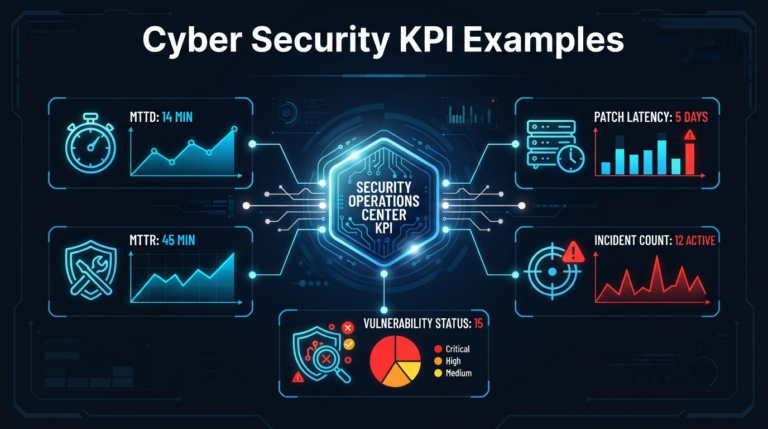
Track patch compliance rate as a trend across months, not a single figure captured the week before an audit. Track the percentage of accounts with MFA actively enforced, reviewed regularly rather than assumed static once configured. Track mean time to detect and mean time to respond, both revealing whether your monitoring and response capability is genuinely improving or quietly stagnant.
A single point-in-time snapshot only proves a control existed on the day someone happened to check it. A trend line proves whether that control is genuinely holding, or slowly drifting the way the MFA example above illustrated.
What’s the UK’s Own Equivalent to This?
NCSC’s Cyber Assessment Framework, CAF, provides the UK’s own structured maturity approach, particularly relevant for critical national infrastructure and organizations subject to NIS Regulations. CAF evaluates outcomes, whether specific security objectives are genuinely being achieved, rather than prescribing exact tools or technologies an organization must use.
Cyber Essentials offers a considerably simpler, more accessible baseline certification, better suited to smaller UK businesses without CAF’s fuller organizational scope. It’s a genuine, practical starting point rather than a comprehensive maturity model, verifying five foundational technical controls rather than evaluating organizational maturity across CAF’s broader outcome set. Cyber Security Solutions Ltd frequently helps UK businesses map their own current practices against whichever of these actually fits their sector and size, rather than defaulting straight to whichever framework name happens to be most familiar or most frequently mentioned.
A Realistic 90-Day Starting Plan If You’re Not Pursuing Formal Certification
Use C2M2’s free self-assessment tool to establish a genuine, honest baseline across all ten domains, giving you a real starting point without any cost or formal commitment.
Identify your three lowest-scoring domains specifically, rather than attempting improvement across all ten simultaneously, which realistically overwhelms most teams within the first few weeks.
Document one genuinely improved, repeatable process per identified domain over the 90-day window, moving each from an informal, ad hoc practice toward something consistently documented and followed.
Track a small, focused set of genuine KPIs monthly, patch compliance trend, MFA enforcement percentage, mean time to respond, building real, measurable maturity incrementally rather than chasing formal certification you may not need or be ready for yet.
Conclusion Maturity isn’t a certificate you earn once; it’s whether your controls actually hold up consistently, month after month, not just on the day someone checks. Start with a free tool like C2M2, track real trends instead of one-time snapshots, and choose the framework that genuinely fits your sector rather than the one that sounds most familiar.
FAQs
A cyber maturity assessment measures how consistently and deliberately an organization applies its security practices, evaluating whether controls are genuinely embedded and repeatable, distinct from a compliance check confirming specific controls simply exist.
A security maturity model is a structured framework, like CMMC or C2M2, that scores an organization’s cybersecurity practices against defined tiers, from initial and ad hoc through fully institutionalized and continuously optimized.
Compliance confirms a specific control technically exists, like MFA being enabled somewhere. Maturity evaluates whether that control is consistently enforced, documented, and reviewed across the entire organization, the difference between a checkbox and an embedded practice.
CMMC has three levels: Level 1 covers 17 basic practices via self-assessment, Level 2 requires all 110 NIST SP 800-171 controls, and Level 3 adds further NIST SP 800-172 controls for the most sensitive information.
C2M2 is a free, voluntary maturity model developed by the Department of Energy, covering 350-plus practices across ten domains. While originally energy-focused, any organization can use it as a genuinely no-cost maturity benchmark.
NCSC’s Cyber Assessment Framework, CAF, provides a structured maturity approach for UK organizations, particularly critical infrastructure. Cyber Essentials offers a simpler baseline certification better suited to smaller businesses.