SOC 2 Certification and Audit: Process, Cost and Timeline (2026)
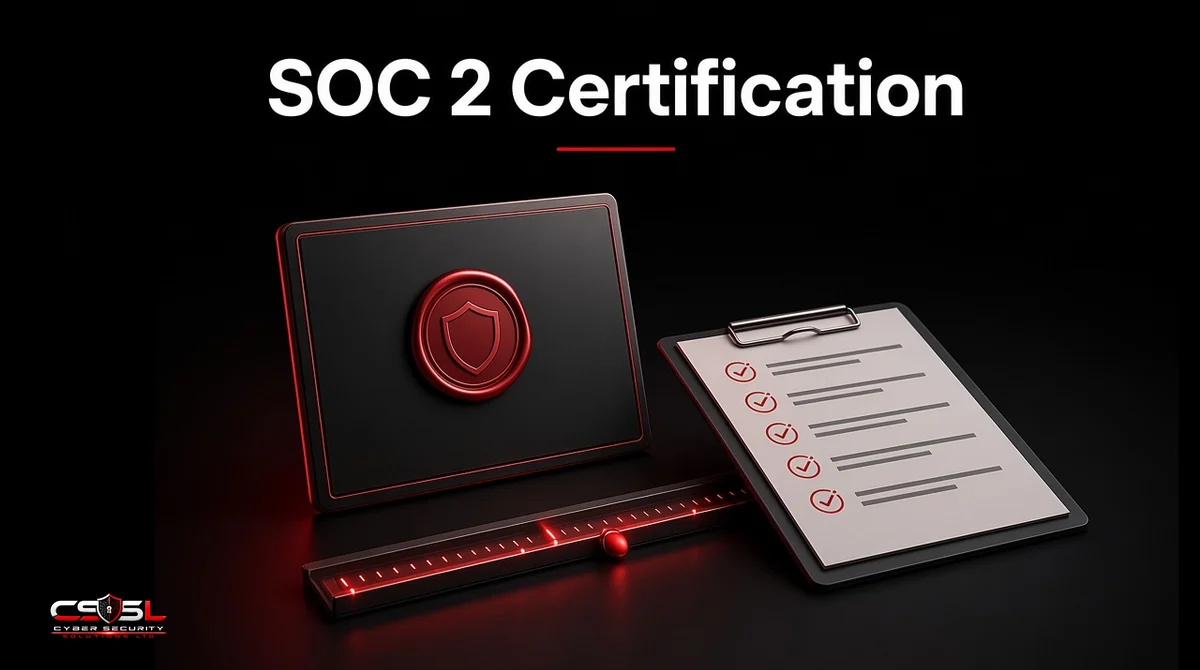
There is no formal SOC 2 certification: what companies call “SOC 2 certification” is an attestation report, issued by a licensed CPA firm after it audits your controls against the AICPA Trust Services Criteria. Getting one means scoping, fixing gaps, hiring an auditor and passing a Type 1 or Type 2 examination, usually over several months.
Certification or Attestation, and Who Needs a Report
The difference matters when you answer customers. An ISO 27001 certificate says you meet a standard. A SOC 2 report contains a CPA firm’s opinion on whether your controls are designed, and for Type 2 operating, as described. Saying “we are SOC 2 compliant, report available under NDA” is more accurate than “SOC 2 certified”.
SOC 2 reports are developed by the American Institute of Certified Public Accountants (AICPA). They are most often requested from software-as-a-service providers, managed service providers, data processors and any vendor that stores or handles customer data, especially when selling to US companies.
SOC 2 Requirements: The Trust Services Criteria
The audit tests your controls against the AICPA’s Trust Services Criteria, organized into five categories.
Security Is Mandatory
Every SOC 2 report covers Security, known as the Common Criteria. It includes access control, change management, risk assessment, monitoring and incident response.
Choosing Optional Criteria
You may add Availability, Processing Integrity, Confidentiality and Privacy. Add only what customers ask for or what your service promises. Each extra category adds controls, evidence and audit time.
Type 1 or Type 2: Pick Your Report First
A Type 1 report assesses control design at a single point in time. A Type 2 report tests whether controls operated effectively over an observation period, commonly several months to a year. Many enterprise buyers expect Type 2. Decide early, because it shapes your whole timeline.
The SOC 2 Audit Process Step by Step
Most organizations follow seven steps.
Step 1: Define Scope and Systems
Choose the service, systems, locations, people and Trust Services Criteria in scope. A tight scope keeps cost and effort down.
Step 2: Run a Readiness Assessment and Gap Analysis
Compare current controls against the criteria. This can be done internally or with an adviser, but the firm that audits you cannot also design your controls.
Step 3: Remediate Gaps and Write Policies
Fix missing controls, write the policies auditors will request, and start keeping evidence such as access reviews and change tickets.
Step 4: Choose a Licensed CPA Firm
Only a licensed CPA firm can issue a SOC 2 report. Ask about experience with companies your size and industry, team continuity and how they handle exceptions.
Step 5: Collect Evidence and Run the Observation Period
For Type 2, controls must operate consistently throughout the observation window, and you must be able to prove it with records.
Step 6: Fieldwork and Auditor Testing
The auditor interviews staff, inspects documents, samples evidence and tests controls.
Step 7: Receive the Report and Handle Exceptions
The report includes the auditor’s opinion, your system description and the test results. Exceptions are recorded with your management response.
How Long SOC 2 Takes, Phase by Phase
Timelines depend mostly on how mature your controls are at the start.
| Phase | What happens | What drives duration |
|---|---|---|
| Scoping and readiness | Define scope, find gaps | Number of systems and criteria |
| Remediation | Fix controls, write policies | Size of the gap |
| Observation (Type 2 only) | Controls run and are evidenced | Window chosen with auditor |
| Fieldwork | Auditor testing | Scope and evidence quality |
| Reporting | Draft and final report | Exceptions and review rounds |
Teams that already run ISO 27001 or a mature security program move through readiness and remediation much faster. A Type 2 report cannot be issued until the observation period ends, so plan sales commitments around that date.
How Much SOC 2 Costs
The AICPA does not publish SOC 2 prices, and quoted figures from compliance vendors and audit firms vary widely, so we do not give dollar amounts here. Get written quotes from at least two licensed CPA firms for your specific scope. These factors move the price most:
- Report type: Type 2 needs more testing than Type 1
- Scope: number of systems, locations and Trust Services Criteria
- Organization size and complexity: more people and systems mean more sampling
- Readiness: a large gap means more remediation and adviser time
- Auditor: firm size and reputation affect fees
Hidden Costs: Readiness, Tools, Testing and Staff Time
The audit fee is often not the largest cost. Budget for readiness work, new security tools such as MFA or endpoint protection, penetration testing if customers or your controls require it, compliance software if you choose it, and above all internal staff time.
How to Lower Your SOC 2 Cost
The most effective lever is scope. Picture an illustrative 30-person SaaS company that first scopes “everything we run”, including a legacy product with two customers and all five criteria. Its first quote is far beyond budget. Re-scoped to the main product and Security only, the work, evidence and fees drop sharply, and every customer who asked still gets what they need.
Use this decision rule: include a Trust Services Criterion only if a customer contract or security questionnaire has asked for it, and include a system only if it stores or processes customer data for the service being reported on. Add more next year if demand appears. Doing readiness yourself with good templates, reusing ISO 27001 evidence and staying with one auditor across years also reduce cost.
Do You Need a Compliance Automation Platform?
Not necessarily. Platforms can collect evidence automatically and track controls, which helps busy teams with many cloud systems. Small, simple environments can manage with good documentation and a shared evidence folder. Choose based on how much evidence you must gather, not on marketing.
Keeping SOC 2: Annual Renewals and Bridge Letters
The AICPA sets no formal expiry date, but customers commonly treat a report as current for about 12 months, so most companies run a new audit each year. If a customer asks between reports, a bridge letter from management covers the gap between your report’s end date and the next one.
SOC 2 for UK Businesses
UK companies selling to US customers are often asked for SOC 2. UK auditors can report under ISAE 3000, the international assurance standard, with similar content. Many UK firms already hold ISO 27001 certification or Cyber Essentials; much of that work maps to SOC 2 Security criteria, though the report format and auditor requirements differ.
FAQs
The audit is the examination by a CPA firm. "Certification" is an informal term; the result is an attestation report, not a certificate.
It depends on scope, report type and readiness. Request quotes from licensed CPA firms after a readiness assessment.
Yes, if your controls are already running and evidenced. Type 1 is useful when you need a report quickly or are unsure of readiness.
No. They can save time, but the AICPA does not require them.
There is no formal expiry, but customers commonly expect a report covering the last 12 months.
Yes. Any company can obtain a SOC 2 report, and UK firms often do to sell to US customers.
Planning Your SOC 2 Audit
A successful SOC 2 certification project starts with tight scope and an honest readiness check, not with an auditor’s quote. If you want expert-led help scoping and preparing, Cyber Security Solutions Ltd offers a free, no-obligation readiness conversation through our contact page.