What Is Network Security? A Beginner’s Guide for Businesses
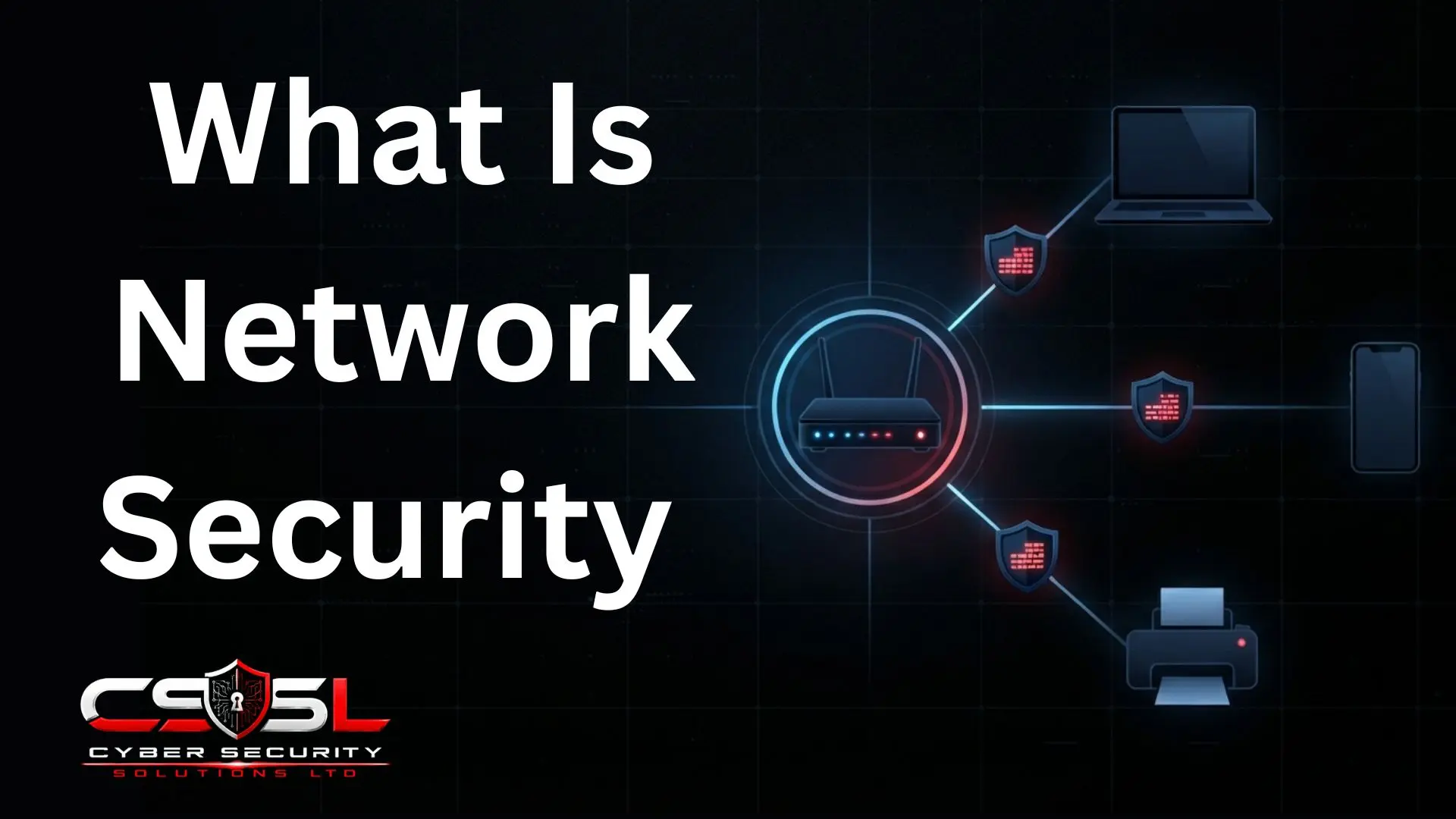
Network security is the practice of protecting your computer network and everything traveling across it from unauthorized access, misuse or disruption. It combines hardware, software, and clear rules working together as layers of defense. If you searched for network security key and are not sure if that means the same thing, this guide covers both, starting with the basics.
What Is Network Security?
This is the opening guide in a full, dedicated series on network security, and it is written to stand completely on its own. You do not need to have read anything else first.
Network security is the practice of protecting the usability, integrity, confidentiality and availability of a computer network and the data traveling across it, using a combination of hardware, software, configuration and policy to prevent unauthorized access, misuse or disruption.
Think of it this way. Network security is what stops someone outside, or inside, your organization from reading, stealing, altering or disrupting the traffic and systems connected to your network, whether that network is a single office or a global, spread-out business.
You will also see the longer phrase computer network security used in some places. Both terms mean the same discipline. The longer version is simply a more explicit way of searching for the same topic, and this series covers its own deeper technical side elsewhere.
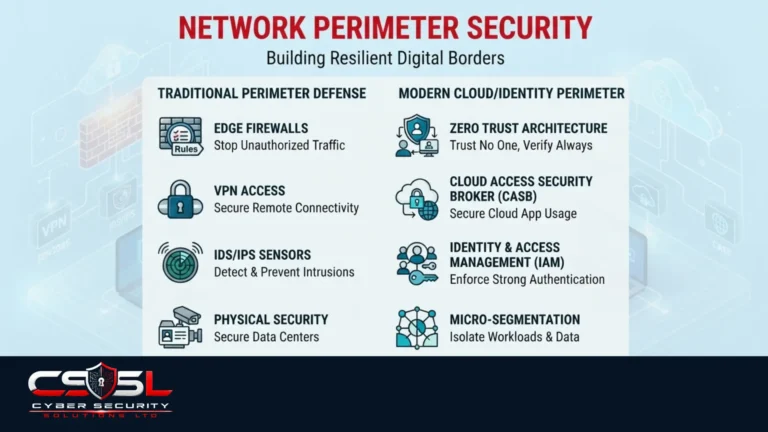
Network security has traditionally been described using a castle and moat idea: a defended perimeter with a small number of controlled entry points. That picture made sense for years. This series will revisit and challenge it later, since modern business networks rarely look like a single castle anymore.
What Does Network Security Key Mean?
A network security key is another name for a WiFi password. It is the passphrase you type in to connect a device to a secured wireless network.
This exact phrase gets searched constantly for a simple reason. Windows and most router setup screens use the words network security key when asking you to enter or view your WiFi password. That is where most people first meet the term, then go looking for what it means.
Where do you find yours? Look for a printed label on the underside or back of most home and small business routers. You can also find it inside your router’s own admin settings, or saved in a device’s WiFi network properties if it has connected before.
A quick technical note, kept brief on purpose: a WiFi network’s security key authenticates your devices under WPA2 or WPA3, the standards that protect wireless traffic from being read by anyone nearby. Full wireless security practice, including guest network setup and spotting unauthorized access points, gets its own dedicated guide later in this series.
Here is the clean pivot back to the main topic. A WiFi password is one small, specific control sitting inside a much bigger discipline. Everything else in this guide covers network security as a complete business practice, not just this one term.
What Does Network Security Protect?
Network security protects four things, and understanding all four explains why this is not just about one box in a server closet.
| What It Protects | Common Threat | Primary Control Type |
| Network infrastructure | Physical or remote tampering | Firewalls, access control |
| Data in transit | Interception, theft | Encryption, VPN |
| Network-accessible resources | Unauthorized access | Segmentation, permissions |
| Connecting devices and users | Rogue or compromised devices | Authentication, monitoring |
First, the network infrastructure itself: routers, switches, firewalls, wireless access points, and the cabling and wireless signals connecting them together. Second, data in transit, meaning information moving between devices, servers, applications and the internet, which is vulnerable to interception or theft while it travels. Third, network-accessible resources like shared drives, printers and applications reachable through the network, not just the network’s own hardware. Fourth, the people and devices connecting to it: employees, contractors, guests, and a growing number of smart devices, each one a potential entry point.
One quick distinction worth knowing. Network security protects the pathways data travels across. Protecting individual devices themselves, like a specific laptop or phone, is a related but separate job, covered in its own comparison guide in this series.
What Are the Main Types of Network Security?
Network security includes several main categories, each with its own dedicated guide later in this series. Firewalls control traffic at defined points. Intrusion detection and prevention systems watch for suspicious activity. VPNs encrypt and secure remote connections.
Network segmentation divides a network into isolated zones. Access control governs who and what can connect. Wireless security protects your WiFi specifically, tying back to the network security key section above.
Think of this list as a map for the rest of this series, not a full explanation on its own.
How Does Network Security Work?
Network security works through layered defense. No single control gets relied on alone, so if one layer fails, the network is not left fully exposed. A firewall might stop one kind of attack, while a separate monitoring tool catches something the firewall was never designed to see.
Picture traffic entering or leaving your network. It passes through controlled points where it gets inspected, then permitted or denied based on defined rules, and increasingly, the identity of the person or device requesting it.
The traditional model assumed a clear, defendable edge around the network, much like a building with one front door. Cloud services, remote work and mobile devices have made that edge far less clear cut than it used to be, a shift this series covers directly and in full later on.
Who Is Responsible for Network Security in a Business?
Smaller businesses often rely on general IT staff or an outsourced IT provider, sometimes without dedicated network security expertise. Larger organizations typically employ dedicated network security engineers, architects and security operations teams who focus on nothing else.
Where part of your network runs on cloud infrastructure, some of that responsibility shifts to your cloud provider, a topic with its own separate guide covering exactly where that split happens.
Everyone in your organization carries some responsibility regardless of title. Recognizing phishing attempts, using strong passwords, including a genuinely strong network security key rather than a router’s default, and never connecting unauthorized devices all matter no matter what a job title says. A single employee plugging in a personal device without asking can undo weeks of careful configuration elsewhere.
What Are the Most Common Network Security Threats?
A few threats show up again and again: malware and ransomware spreading across a network, phishing as a common way in, distributed denial-of-service attacks flooding a network with traffic, unauthorized access through weak or default credentials, and unsecured or rogue devices connecting without permission.
This is a preview only. A dedicated guide in this series covers the full picture, including real costs and business impact.
What Are the Basics Every Business Needs to Get Right?
A handful of basics make the biggest difference: a properly configured firewall, not just one that is switched on; strong wireless security, including a genuinely solid network security key instead of a shared or default one; basic network segmentation keeping sensitive systems apart from general traffic; regular patching of the network devices themselves, not only computers and servers; and a secure method for remote access.
Conclusion
Network security is not one product or one setting. It is a layered practice covering your infrastructure, your data, your connected devices and the people using them every day. Start with a properly configured firewall and a genuinely strong network security key, then build from there. To get a clear picture of where your business stands today, visit cybersecuritysolutionsltd.com for expert support from Cyber Security Solutions Ltd.
FAQs
Network security is the practice of protecting a computer network and the data traveling across it from unauthorized access, misuse or disruption. It uses a combination of hardware, software, configuration and policy, working together so no single point of failure exposes the whole network.
A network security key is another name for a WiFi password, the passphrase used to connect a device to a secured wireless network. Windows and most router setup screens use this exact phrase, which is why it gets searched separately from the broader business discipline.
Not exactly. Network security is a specific discipline focused on protecting the network itself and the traffic crossing it. Cyber security is the broader field covering all digital systems, with network security as one part of it, not the whole picture.
Network security protects the pathways and infrastructure data travels across. Endpoint security protects individual devices themselves, like laptops and phones. Most businesses need both working together, since each covers a genuinely different part of the same environment and neither one replaces the other.
Often general IT staff or an outsourced IT provider handle it, though not always with dedicated network security expertise. Regardless of who owns it formally, every employee carries some responsibility, from strong passwords to never connecting unauthorized devices to the network.
A properly configured firewall, strong wireless security with a genuinely solid network security key, basic network segmentation, regular patching of network devices, and a secure remote access method. These form a starting baseline for any business, not a complete program on their own.