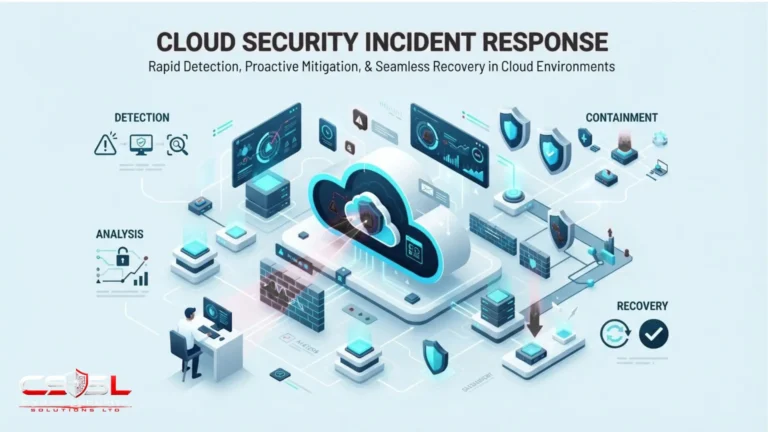
Why Is Cloud Security Important? Risks, Costs and Business Impact
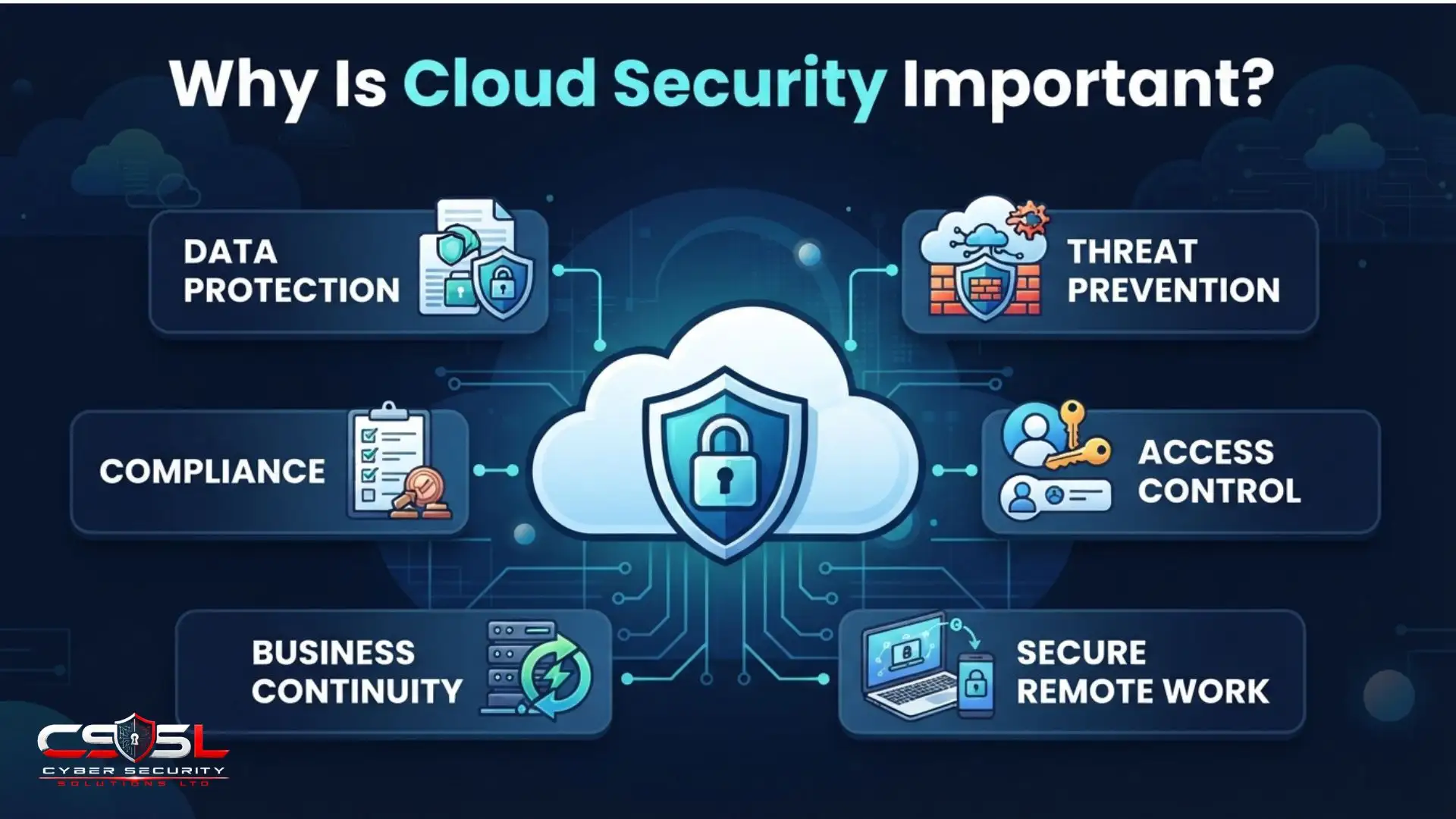
Cloud security is important because virtually every business now stores sensitive data and runs critical operations in cloud environments. Cloud misconfigurations, credential attacks, and insecure integrations are among the most common and costly causes of data breaches, with IBM data showing average breach costs consistently running into millions of dollars.
If you moved everything to the cloud and are not sure if your data is actually safe, or you cannot get leadership to approve cloud security budget without a clear business case, this guide makes that argument using evidence and commercial logic rather than generic warnings.
Why Is Cloud Security Important for Businesses Today?
Cloud security is important because the cloud is no longer optional for most businesses. Microsoft 365, Google Workspace, Salesforce, and cloud-hosted accounting, HR, and communication platforms mean virtually every organization stores sensitive data and runs critical operations in cloud environments, whether or not they think of themselves as cloud businesses.
The attack surface has fundamentally expanded. Every cloud account, API connection, and SaaS platform represents a potential entry point, and the number of these entry points grows with every new tool adopted across the business. Regulatory obligations under GDPR, HIPAA, and PCI DSS apply fully to cloud-hosted data: organizations remain fully responsible for the security and compliance of their data regardless of which provider hosts it.
The business dependency argument is perhaps the sharpest of all. A serious cloud security incident today would simultaneously disable email, file storage, customer data, financial systems, and communication tools for most organizations, a business continuity risk that simply did not exist when these functions ran on on-premise servers.
See What Is Cloud Security? A Plain-English Guide for Businesses for the foundational context this post builds on.
What Are the Biggest Cloud Security Risks Organizations Face?
| Risk Type | How It Occurs | Potential Business Impact | Primary Prevention Control |
| Misconfiguration | Incorrect storage, permission or network settings | Data exposed to the internet without any attack | CSPM tooling, configuration review |
| Credential compromise | Stolen credentials used without MFA | Full account access immediately | Multi-factor authentication |
| Insecure APIs | Misconfigured or unprotected API connections | Programmatic data access for attackers | API authentication and security controls |
| Accidental oversharing | Data shared too broadly via platform features | Breach with no external attacker involved | Access controls and sharing policies |
| Third-party supply chain | Connected tools with their own security weaknesses | Indirect customer data access | Third-party risk assessment |
Misconfiguration leads cloud security incidents, cited consistently by the Cloud Security Alliance and Gartner as the primary source. A single incorrectly configured storage bucket or permission setting can expose sensitive data to the internet without any technically sophisticated attack. Credential compromise gives attackers immediate full cloud account access when multi-factor authentication is not enforced. Insecure APIs provide programmatic data access that attackers actively probe. Accidental oversharing creates breaches through legitimate platform sharing features used incorrectly. Third-party integrations introduce supply chain risk from connected tools with their own vulnerabilities. See What Are the Security Risks of Cloud Computing? for the complete risk taxonomy.
What Are the Main Cloud Security Challenges Businesses Struggle With?
The main cloud security challenges are structural rather than simply organizational failures, and understanding this distinction determines what solutions actually work.
The visibility gap is the most pervasive. Cloud environments change rapidly as new resources, accounts, and integrations are added, making it genuinely difficult to maintain an accurate picture of what exists, who can access it, and how it is configured at any given time. Most organizations experiencing this challenge are not being negligent; they are operating in an environment that changes faster than any manual review process was designed to track.
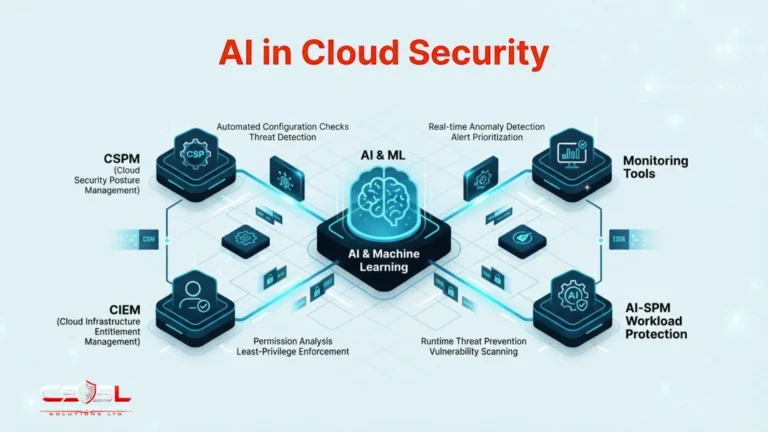
The visibility gap that enables cloud breaches is a structural consequence of adoption speed rather than a failure of effort. Cloud resources are provisioned through self-service in minutes. Business teams adopt new SaaS tools without formal IT review. API integrations multiply between platforms. An IT team performing quarterly manual configuration reviews in this environment is documenting a historical state that has already changed materially since the review began. The gap is not closed by applying more manual effort to the same broken process; it is closed by automated cloud security posture management tooling that monitors the actual environment continuously in real time rather than periodically. Organizations that understand this distinction invest in automation as a structural necessity rather than an optional enhancement for their cloud security programme.
The skills shortage combines traditional security expertise with platform-specific cloud knowledge across AWS, Azure, and Google Cloud that remains genuinely scarce. Cloud adoption consistently outpaces security review capacity as business teams adopt tools faster than IT can evaluate them. Multi-cloud complexity creates inconsistent posture across providers with different configuration tools. Shared responsibility misunderstanding leads businesses to assume providers cover more than they contractually do.
What Is the Real Cost of a Cloud Security Breach?
| Cost Category | Description | Typical Range or Example |
| Incident response and forensics | Investigation, containment and evidence collection | Tens to hundreds of thousands depending on scope |
| Regulatory fines | UK GDPR: up to 4% global annual turnover or £17.5M | ICO has issued fines reaching millions |
| Legal costs | External counsel, breach notification compliance | Significant in regulated sectors |
| Customer notification | Individual notification and credit monitoring | Scales directly with records affected |
| Reputational and customer churn | Pipeline loss and contract cancellations | Often larger than direct costs over 12-24 months |
| Operational downtime | Lost revenue and productivity during recovery | Can exceed all other costs for cloud-dependent businesses |
IBM’s Cost of a Data Breach Report shows average breach costs consistently running into millions of dollars, with misconfigured cloud environments and stolen credentials among the most expensive categories. Direct costs include incident response and forensic fees, regulatory fines, legal costs, and customer notification expenses. Indirect costs are often larger: customer churn, reputational damage affecting new business pipeline, and increased cyber insurance premiums frequently exceed immediate direct costs.
Operational disruption costs deserve particular emphasis for cloud-dependent businesses. Ransomware or a destructive attack that takes down cloud systems stops operations entirely when email, file storage, and financial systems are all cloud-hosted. Ponemon Institute data consistently shows that the financial and operational impact of a breach is proportionally more existential for SMBs than for large enterprises, since smaller organizations carry far less capacity to absorb and recover from even modest direct costs.
What Are the Benefits of Strong Cloud Security?
Business continuity protection means that when attacks occur, detection and response capability limits the blast radius rather than allowing a single incident to disable the entire business. Regulatory compliance confidence means properly secured cloud environments with documented controls provide the audit evidence needed for GDPR, HIPAA, and PCI DSS reviews. Reduced incident response cost follows directly: faster detection and containment consistently demonstrate lower breach costs in IBM research.
The commercial enablement argument is what most competitor articles treating cloud security importance through a purely threat-focused lens completely miss. Many organizations operate with an informal trade-off assumption: move fast with cloud adoption, or invest in cloud security and slow things down. This trade-off is false. Organizations that invest adequately in cloud security controls typically approve new cloud tool adoption faster and with greater confidence, not slower. The security team with appropriate controls in place can say yes to a new SaaS platform request in days rather than blocking it indefinitely while a review process stalls.
The same argument applies directly to commercial relationships. Enterprise clients and regulated industry partners increasingly require evidence of security maturity, specifically demonstrable cloud security controls, as a prerequisite for supplier onboarding and contract renewal. A business that can demonstrate MFA enforcement, documented access controls, and incident response capability opens commercial relationships that a business without these controls simply cannot access at all. Cloud security investment enables business growth rather than competing with it, by making the organization commercially credible to the clients and partners it is trying to reach.
See Cloud Security Best Practices: The Definitive 2026 Checklist for the implementation detail behind these benefits.
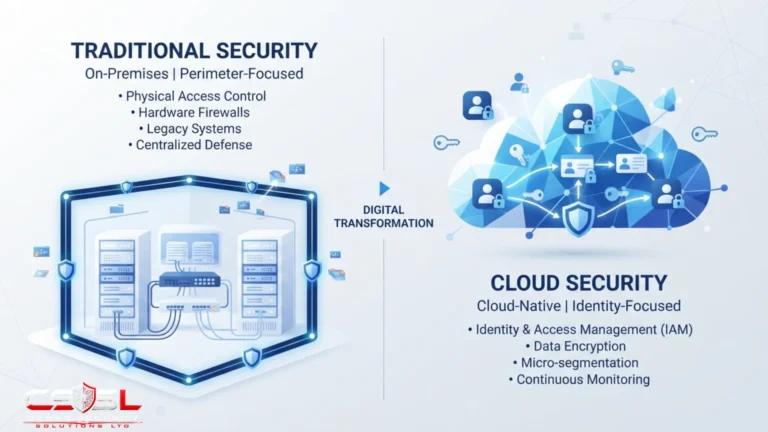
What Are the Advantages of Cloud Security Over Traditional Security?
Cloud security tools provide centralized visibility across all cloud resources in a single dashboard, rather than requiring physical site visits or hardware-based monitoring across multiple locations. Automated configuration monitoring continuously checks thousands of settings across complex cloud environments in real time, a scale simply not achievable through manual review.
Cloud security controls scale elastically with infrastructure, requiring no additional hardware purchases as usage grows. Built-in policy automation enforces controls consistently and immediately, reducing the human error risk inherent in manually applied security configurations. New security controls deploy across cloud environments in minutes rather than the days or weeks required to roll out hardware-based updates across physical infrastructure.
Why Does Cloud Security Matter More as Businesses Grow?
Every new employee, cloud tool, integration, customer, and market adds cloud accounts, data stores, and API connections that expand the security surface proportionally with growth. Regulatory exposure increases as growing businesses encounter enterprise clients with supplier security requirements, government contracts demanding security certification, and GDPR obligations scaling with the volume of personal data processed. The cost of a breach scales with customer records affected and regulatory penalties imposed.
Investor and acquirer due diligence is the cloud security consequence that growth-stage businesses most consistently fail to anticipate. The pattern is increasingly common: a business reaches a funding round or acquisition conversation and discovers cloud security posture is a specific due diligence line item. Deficiencies identified at this stage reduce valuations, introduce disclosed risk requirements, or delay transactions while remediation is completed under time pressure.
The business that invested in cloud security controls previously, documented its processes, and can demonstrate an MFA-enforced environment with regular access reviews and a tested incident response plan is a materially different commercial asset than one with identical revenue but an unsecured cloud environment. Acquirers and investors have become significantly more sophisticated about cyber risk assessment specifically because they have been caught before by discovering cloud exposure during or after a transaction. Cloud security investment, for growing businesses, is not just risk management. It is directly protecting the future commercial value of the organization. See Cloud Security Risk Assessment: Step-by-Step Guide for the structured process to identify and close these gaps.
What Happens to Businesses That Ignore Cloud Security?
A publicly accessible cloud storage bucket containing customer data creates a GDPR notification obligation, regulatory investigation, and reputational damage without any sophisticated attacker involvement. A single phished cloud account credential gives attackers access to financial systems and customer data, potentially undetected for weeks, consistent with breach patterns documented in Verizon DBIR research. A security weakness in a cloud-connected third-party tool provides indirect customer data access despite the business not being the direct target. Failure to implement appropriate technical measures for cloud-hosted personal data triggers ICO enforcement under UK GDPR, with penalties up to 4% of global annual turnover and mandatory remediation requirements.
Cyber Security Solutions Ltd helps organizations build the specific cloud security controls that prevent these outcomes, with assessments tailored to each organization’s cloud environment, size, and regulatory context. See Cloud Security Shared Responsibility Model for the precise boundary between what your provider protects and what falls to you.
Conclusion
Cloud security matters as much for business growth and commercial credibility as it does for risk management. Every control that protects cloud-hosted data also makes the organization commercially credible to enterprise clients, more attractive to investors, and better positioned for transactions. Visit cybersecuritysolutionsltd.com for a cloud security assessment identifying your specific risk exposure and the practical controls that address it most directly.
FAQs
Cloud security is equally important for small businesses because misconfiguration, credential theft, and accidental oversharing affect any organization using cloud services. Ponemon Institute data shows proportionally more devastating breach impact on smaller organizations, which have less capacity to absorb and recover from incidents. Baseline controls like MFA and access management are essential regardless of business size.
Misconfiguration is consistently cited by the Cloud Security Alliance and Gartner as the leading cause of cloud security incidents. A single incorrectly set storage permission or access control can expose sensitive data to the public internet without any attacker needing to perform any technically sophisticated action at all.
IBM data shows average global breach costs running into millions, with misconfigured cloud environments and stolen credentials among the most expensive categories. Direct costs include incident response, regulatory fines up to 4% of global annual turnover under GDPR, legal costs, and customer notification. Indirect costs from customer churn and reputational damage are frequently larger.
Strong cloud security delivers business continuity protection, regulatory compliance confidence, reduced incident response costs through faster detection, and customer and partner trust enabling commercial relationships. It also enables more confident and faster cloud adoption, since security teams with appropriate controls can approve new tools quickly rather than blocking adoption out of unmanaged risk.
Ignoring cloud security leads to publicly exposed data through misconfiguration, compromised cloud accounts used undetected for extended periods, cascading breaches through third-party integrations, and regulatory penalties under GDPR or HIPAA for inadequate technical measures applied to cloud-hosted personal data, including ICO enforcement action for UK organizations.
Yes, directly. Properly secured cloud environments with documented technical controls provide the evidence needed to demonstrate compliance with GDPR’s Article 32 security of processing requirements. Documented controls reduce both the risk of regulatory penalties and the burden of demonstrating compliance during investigations, audits, and enterprise client security questionnaires.